
I began photographing Cleveland’s Forgotten Triangle in 1978. By then it was ready to come apart. Initially called the Triangle, by the 1990s it was known as the Forgotten Triangle and it became more and more the epicenter for the city’s scrappers.
It was, by far, the largest, most evacuated urban areas i’ve seen and a complete dumping ground and ideal location for cheat spots and serious ducking out of sight.
The Triangle was really pieces of five different neighborhoods pushed together, with roadways cutting through them and forming triangles within the larger triangle of streets diesel that was it’s border. Snaking over and through all of it were mainline freight railroads — bridges, underpasses, grade crossings and switching tracks — with their clanking and whistles carrying across the neighborhood and far into the night.
The place had been built around enormous industrial plants — Van Dorn Iron Works, Eberhard Manufacturing, the Ashland Oil tank farm and refinery with a huge raiyard with a roundhouse, along with numerous small factories particularly machine shopa, that occupied most of the land. But squeezed into the spaces between them were complete neighborhoods: dense blocks of houses, commercial strips, schools, bars, stores and many churches. Industry, houses, railroads and streets were laid almost on top of one another. A challenge for nature.
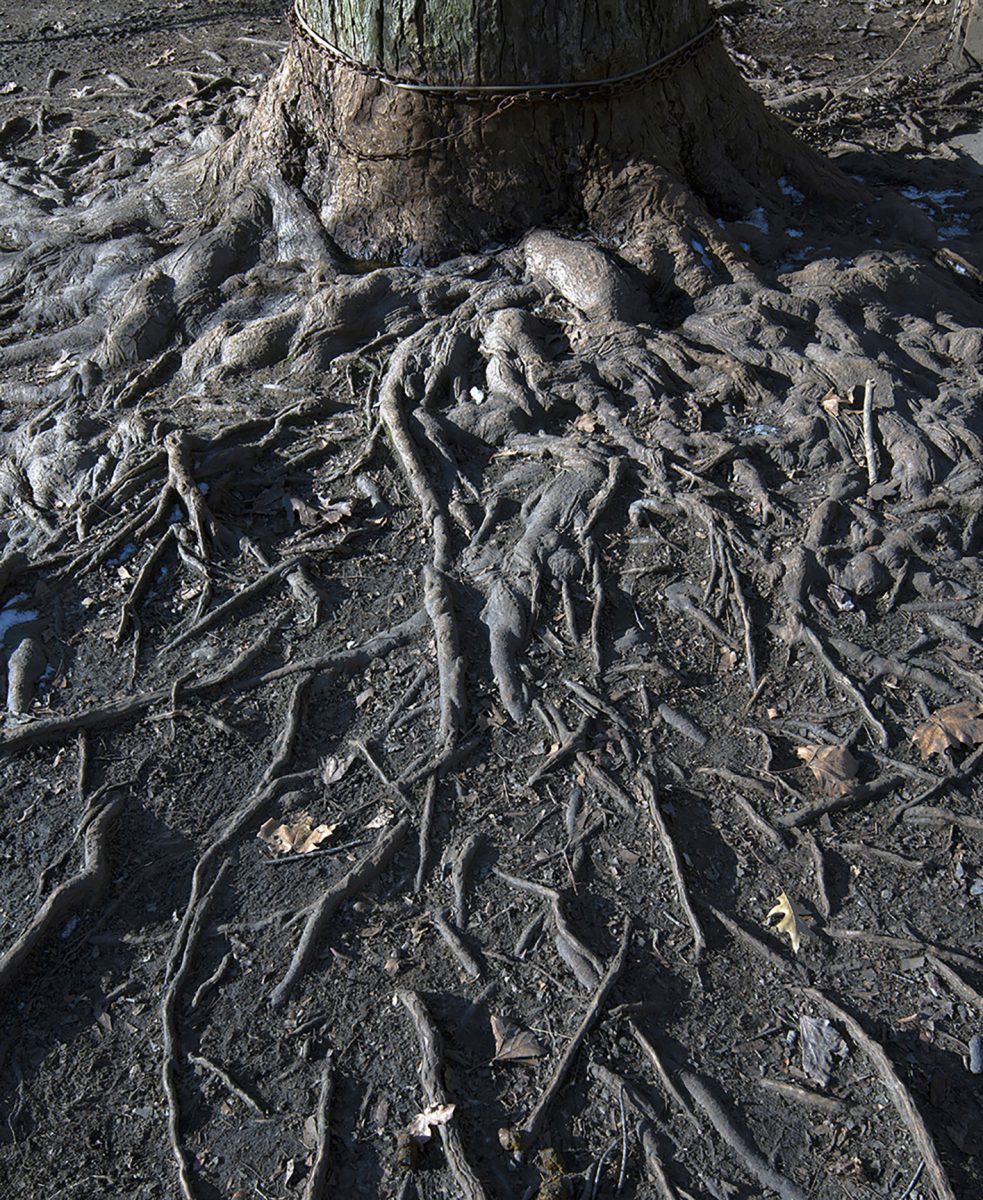
Originally much of the Trinagle was Hungarian, and by the late 1960s, it was a Black neighborhood. That arrangement had begun to collapse, beginning with the firestorm in the summer of 1975 that took out about thirty homes in the very center of what would become the Forgotten Triangle. From then on it was no longer considered a good place to live, and people left. The people in the housing projects stayed, and some homeowners held onto their houses, but the neighborhood had turned.
There were strange trees in the Triangle.
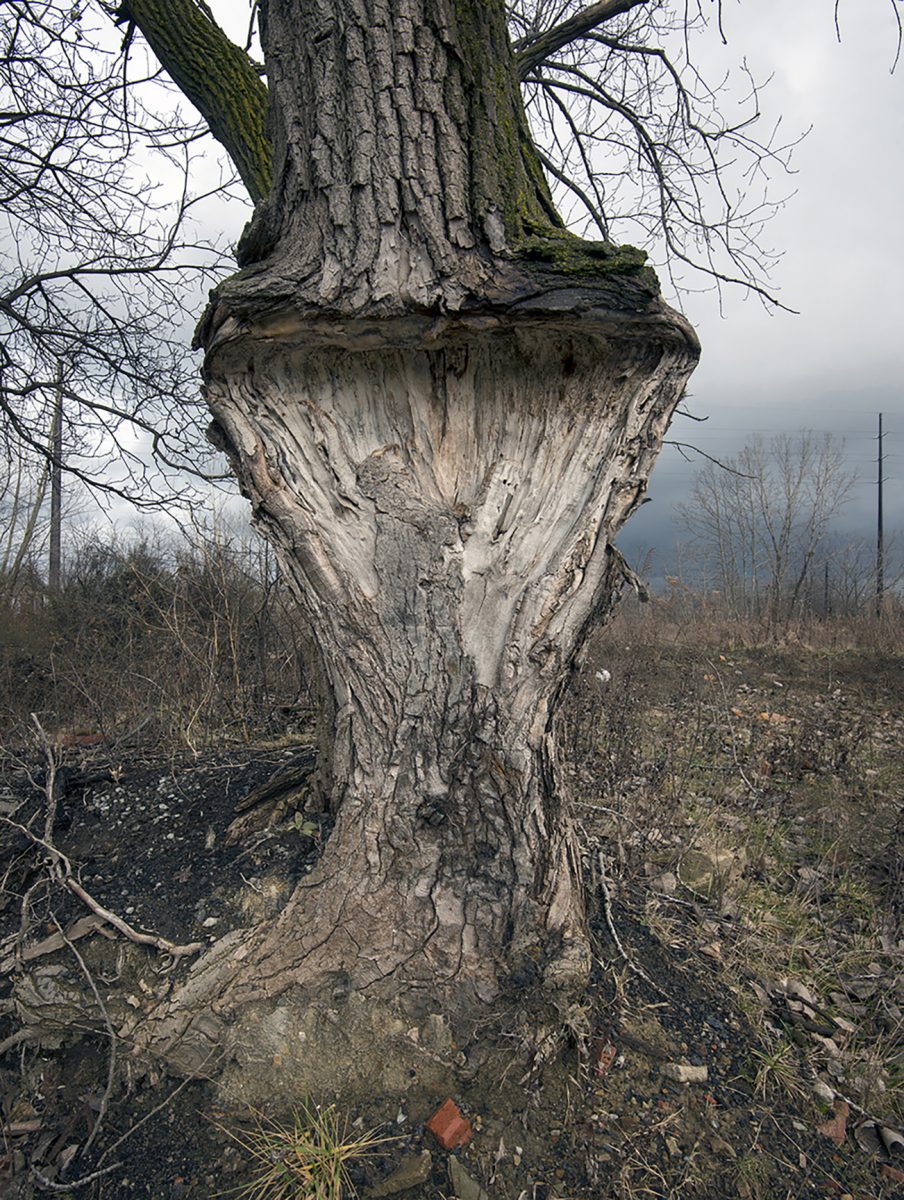
A splayed tree on East 82nd Street in the heart of the Trianagle where the firestorm occurred in 1975.
This was one of the strangest:
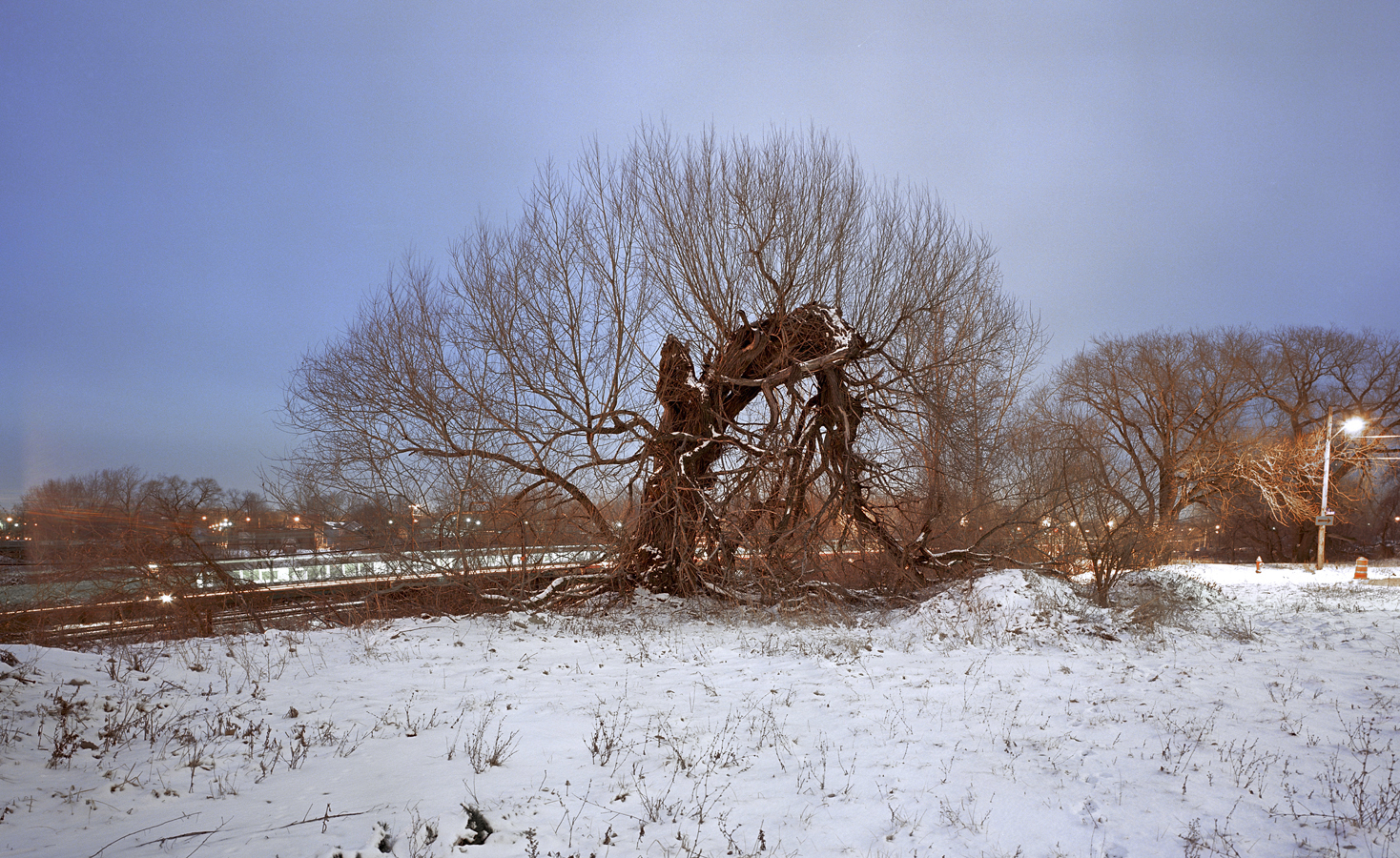
I first photographed it around 1988. It was already enormous, broken and badly misshapen, an old willow with a new crown shooting straight out of damaged wood. Whatever had happened to it had happened long before I knew it. The tree had survived and simply kept growing in another form.
So I kept going back.
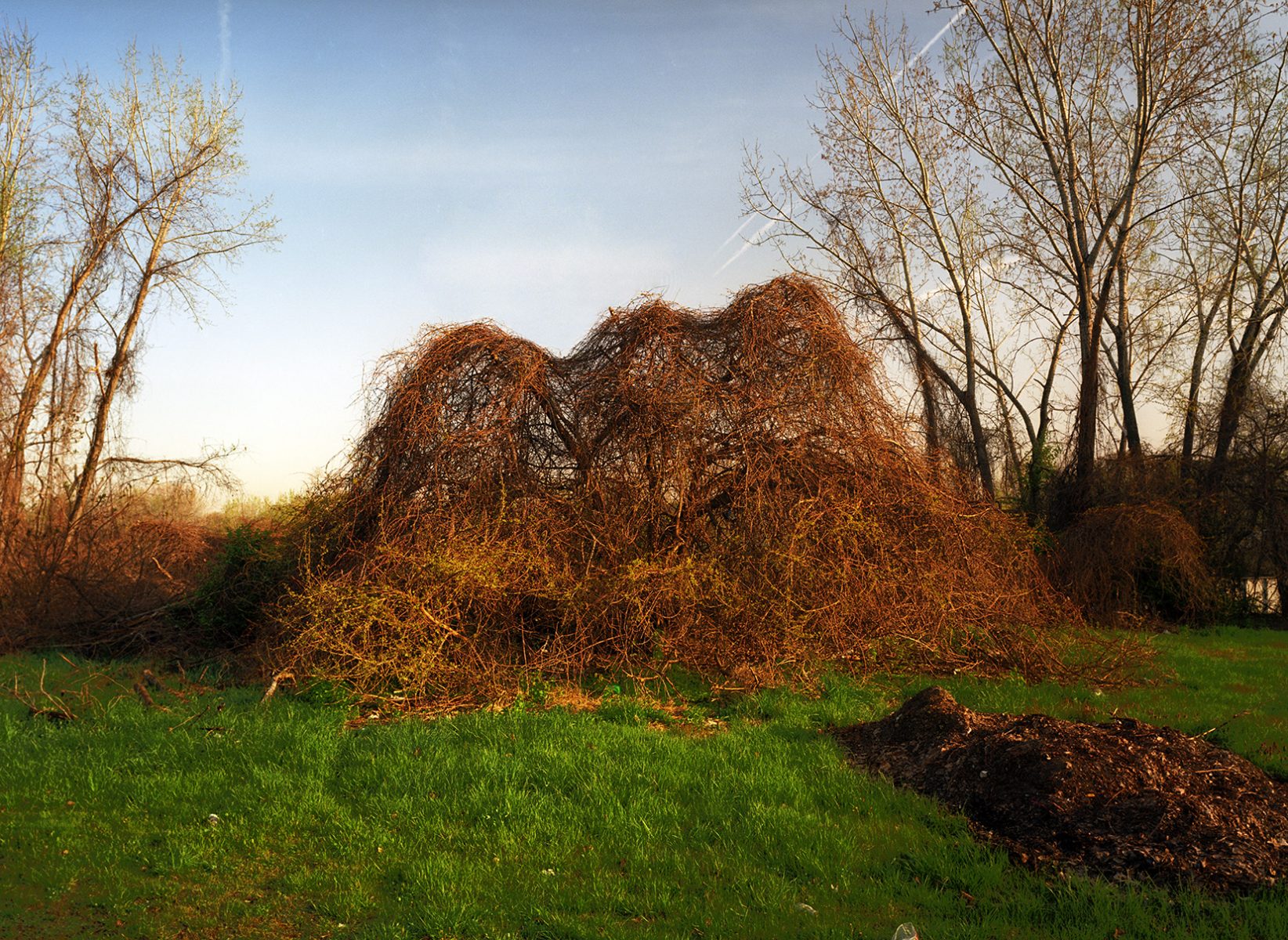

Over the years it changed continuously. Vines climbed over it and eventually swallowed it. In summer it became one great green mass. In fall the leaves thinned and the old shape came back. In winter it returned as bare structure. Snow changed it again until, in some photographs, it barely looked like a tree at all.

It was always changing, always getting stranger.
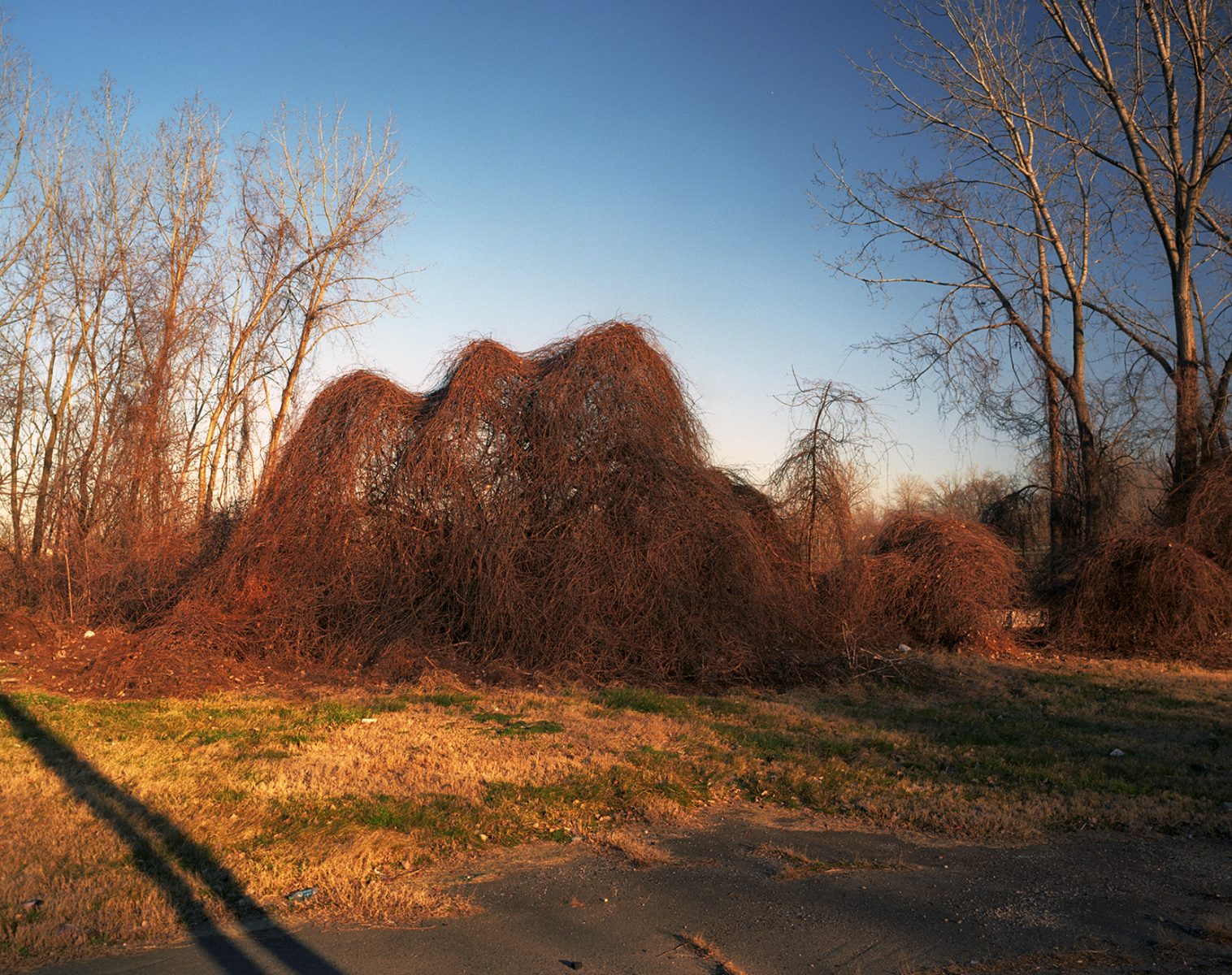
The Forgotten Triangle was doing the same thing around it, becoming more and more swallowed up in its own organic descent, falling apart through time, largely untouched. Houses disappeared into fields. Factories became ruins. Ruins disappeared into weeds. Trees, vines, buildings and abandoned ground grew into one another.
At night it was another place entirely. Freight trains blasted through on the main lines while rapid transit cars crossed the district. Cheap bars, illegal gambling places and scattered little businesses stayed open among the empty land. It was also one of those places where bodies got dumped. I had never seen anything quite like it.
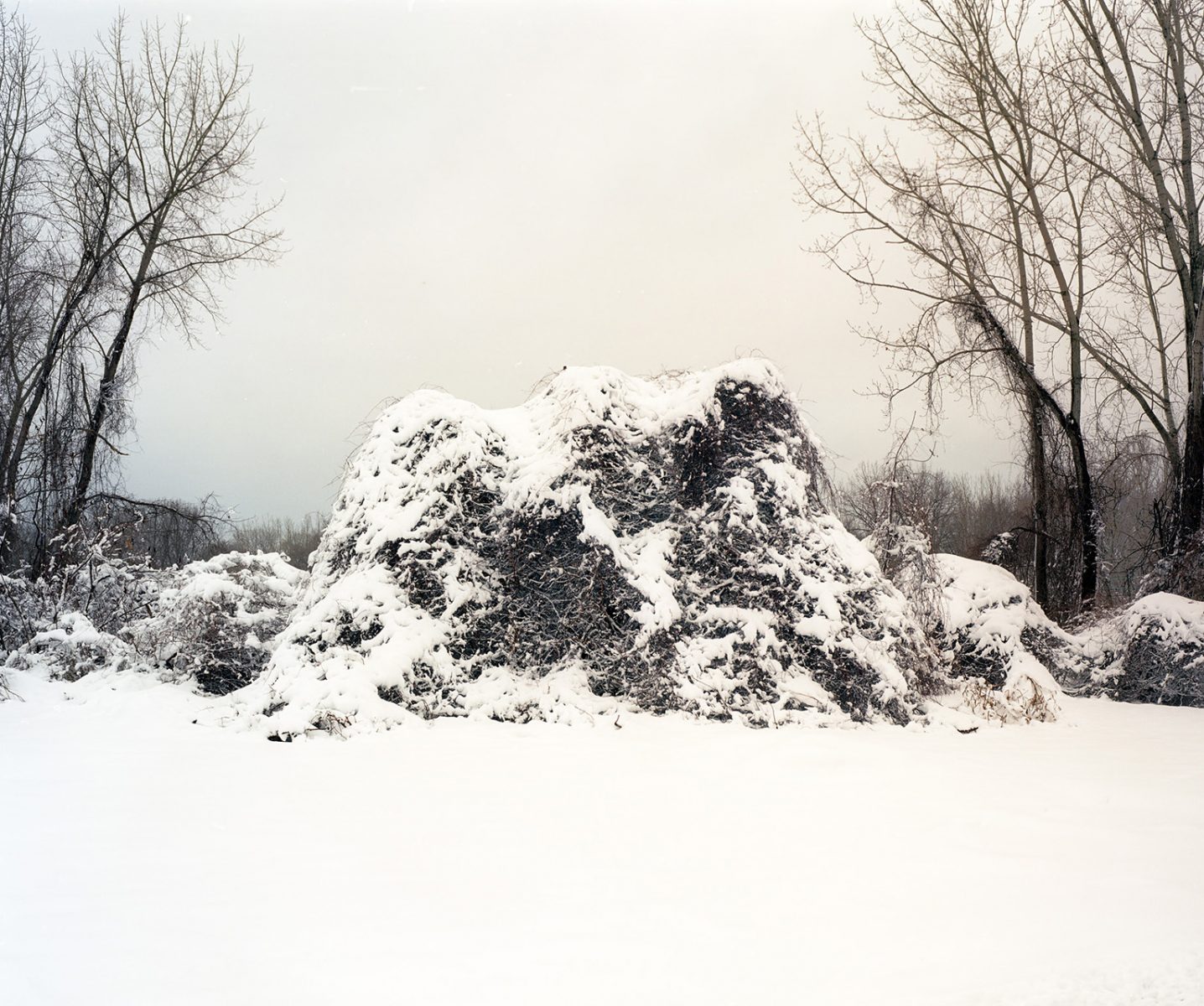
Eventually the Opportunity Corridor came through the Triangle and the tree was cut down. By then much of the old district had already disappeared, along with most of the churches that once served those neighborhoods. Saint Elizabeth on Buckeye Road survives, along with a few scattered small Baptist churches, but most of that world is gone.
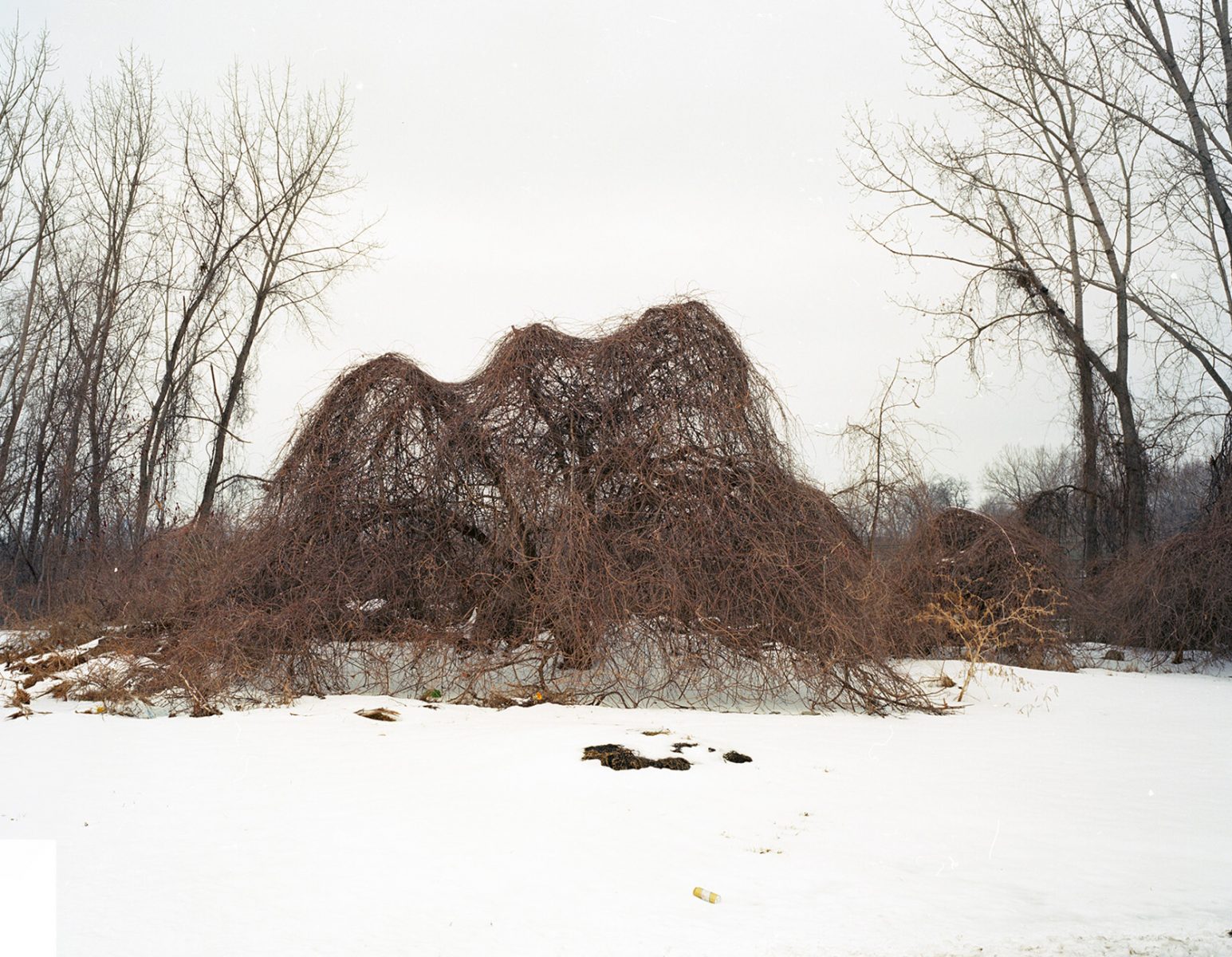
Including its trees.

For years the tree stood stupidly in the middle of everything — damaged, overgrown, seasonal, continually changing, and alive.
Like nearly everything else in the Triangle, it is gone now too. Only this time what followed was not another empty field. Since the 1970s, the Triangle had been by far the most abandoned section of Cleveland, with almost no through traffic and little reason for anyone to enter unless they lived, worked, drank, gambled or dumped something there. The Opportunity Corridor changed that almost immediately. It became a major city artery, heavily traveled and often jammed with traffic, and development followed it back onto the land.
New forms of commerce, production, medicine and industry returned. The place no longer looks strange.
In fact, it looks like almost any place in America.