The air in Cleveland hangs heavy and thick, sitting over the asphalt and the old brick like a weighted blanket, turning a northern afternoon into the slow-moving quiet of the deep South.
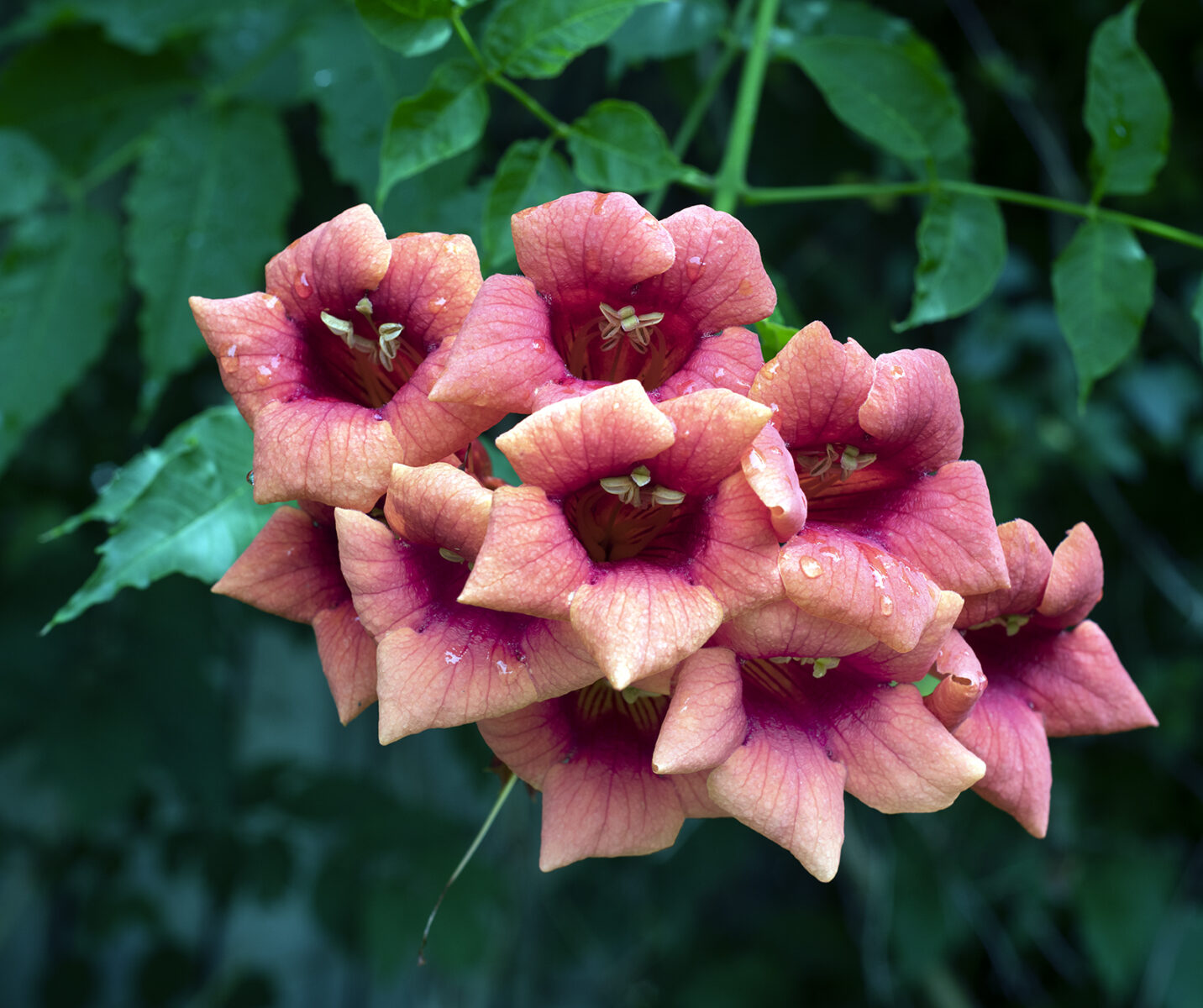
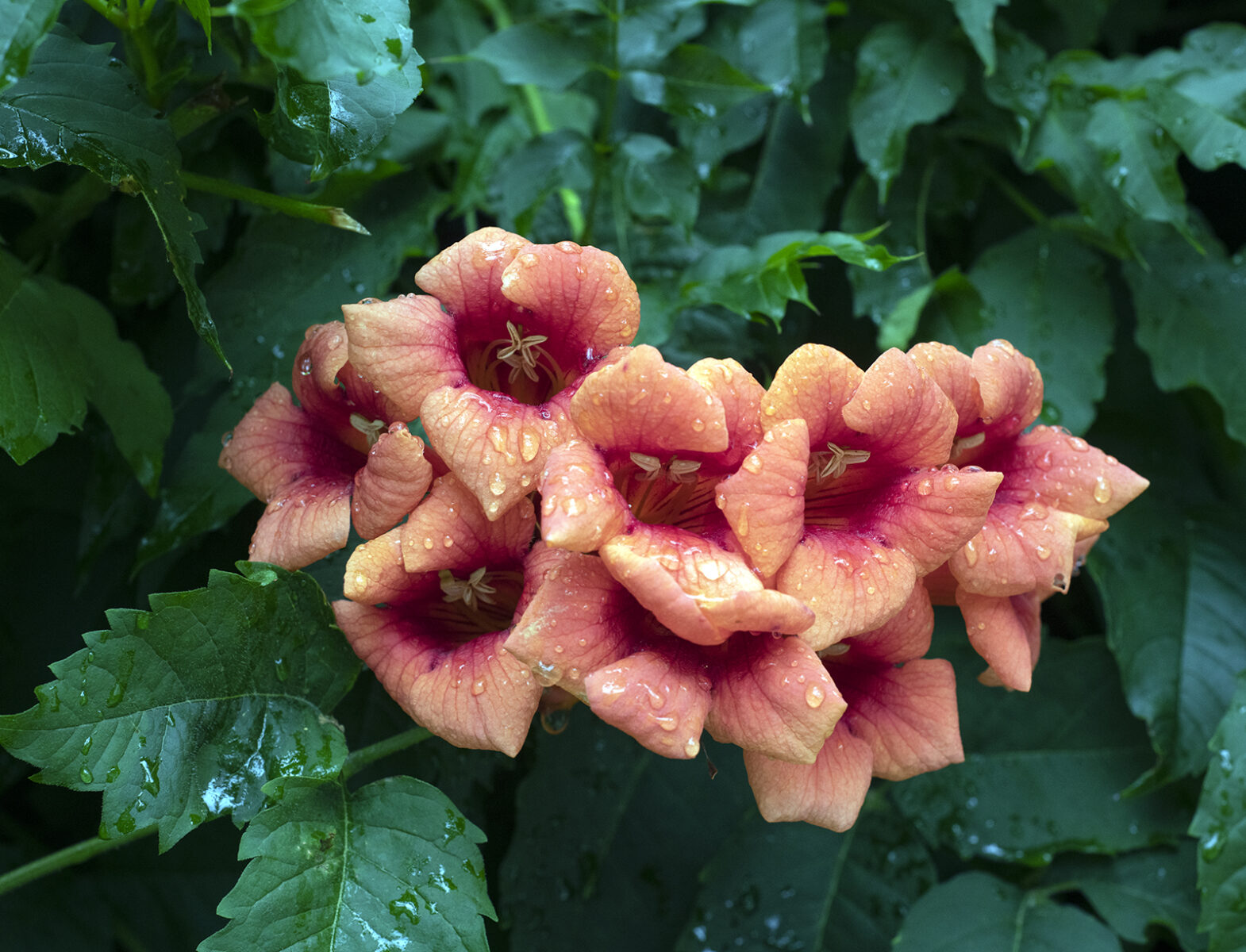
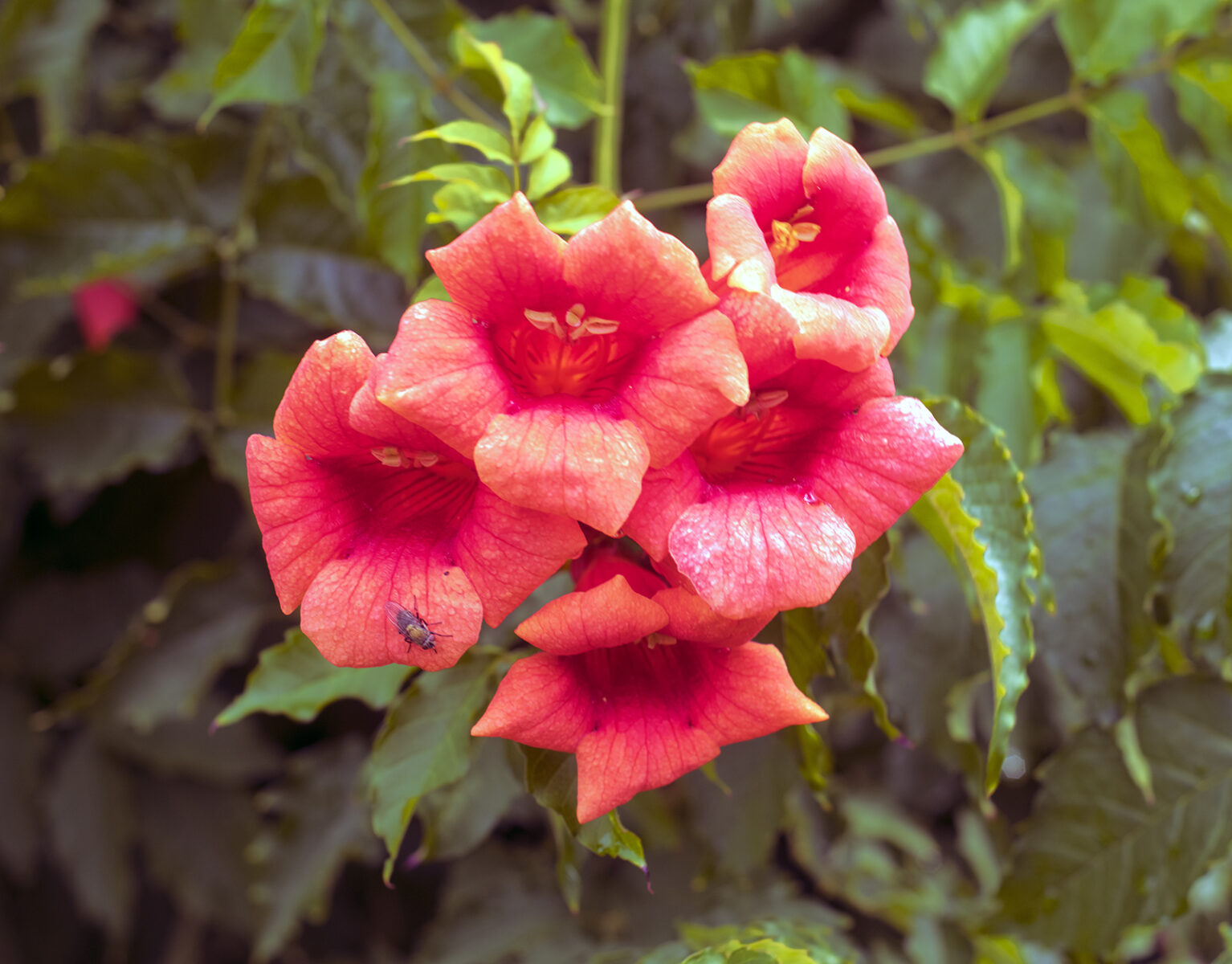
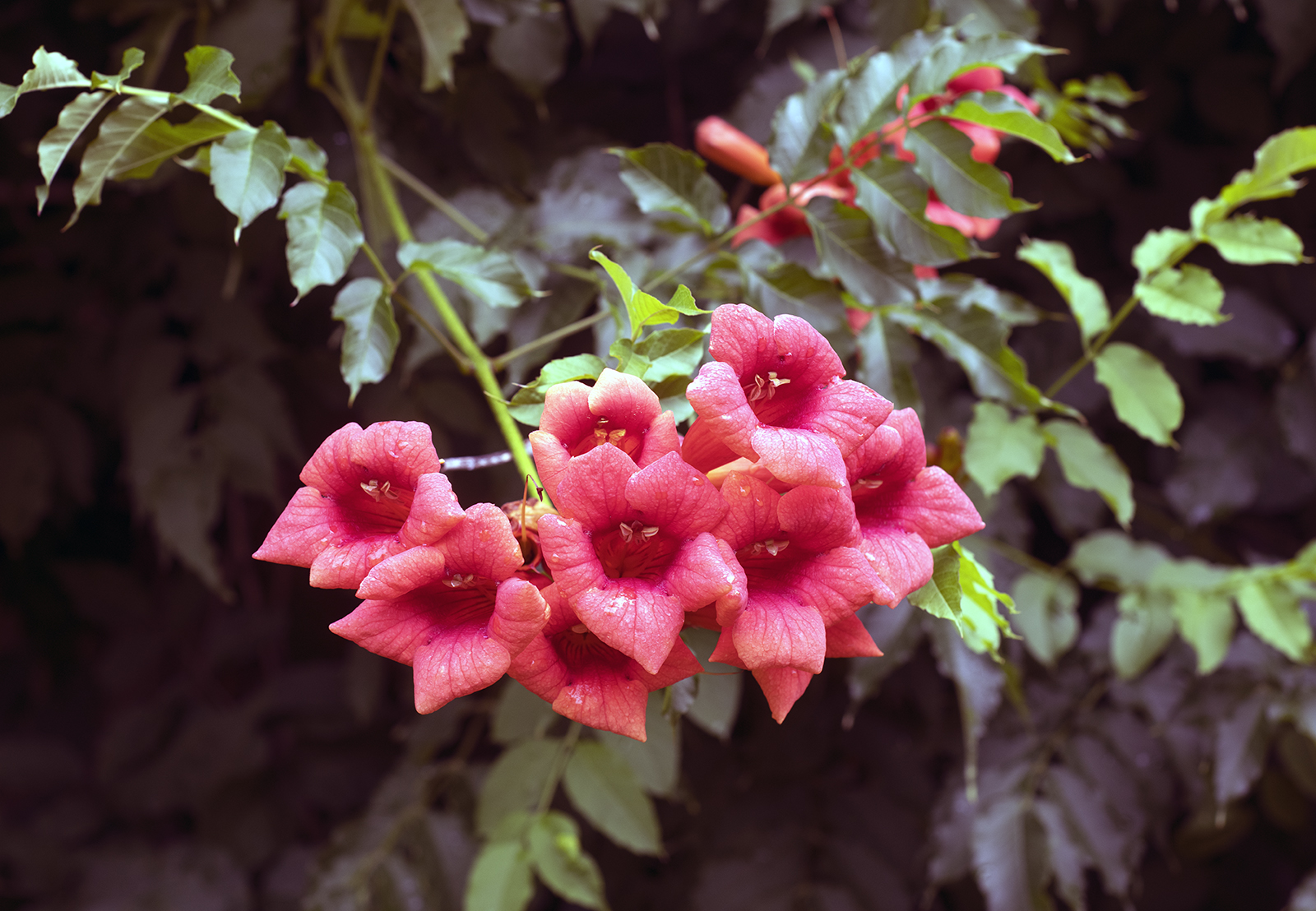
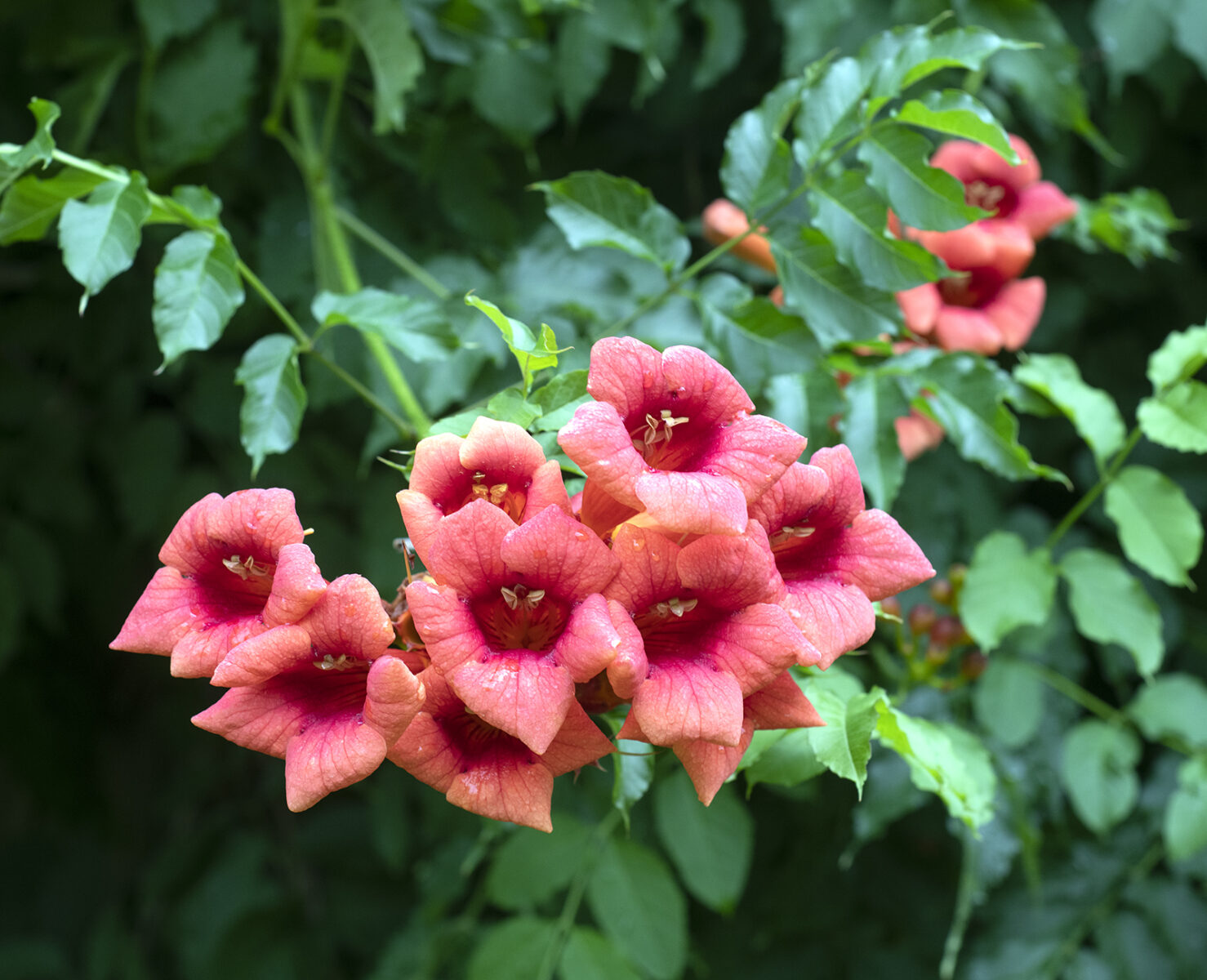
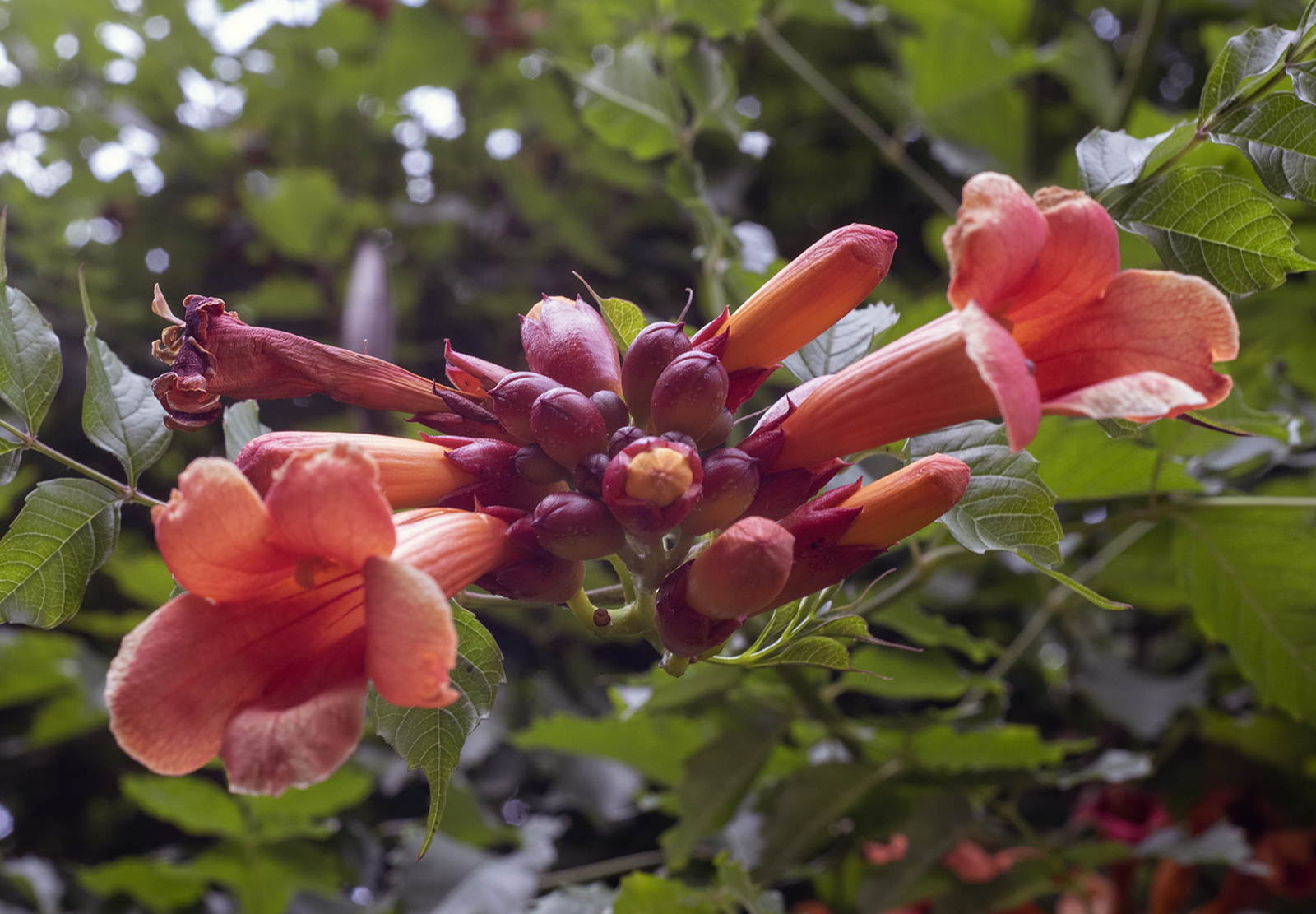
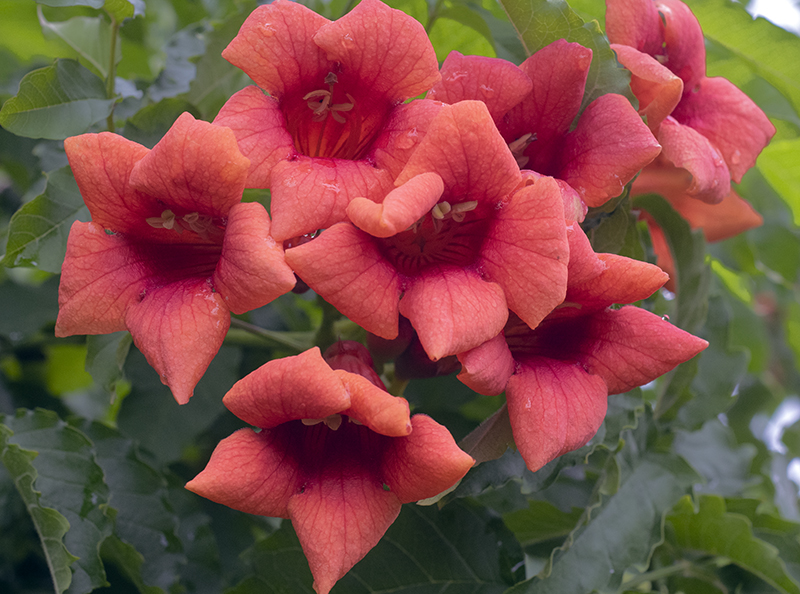
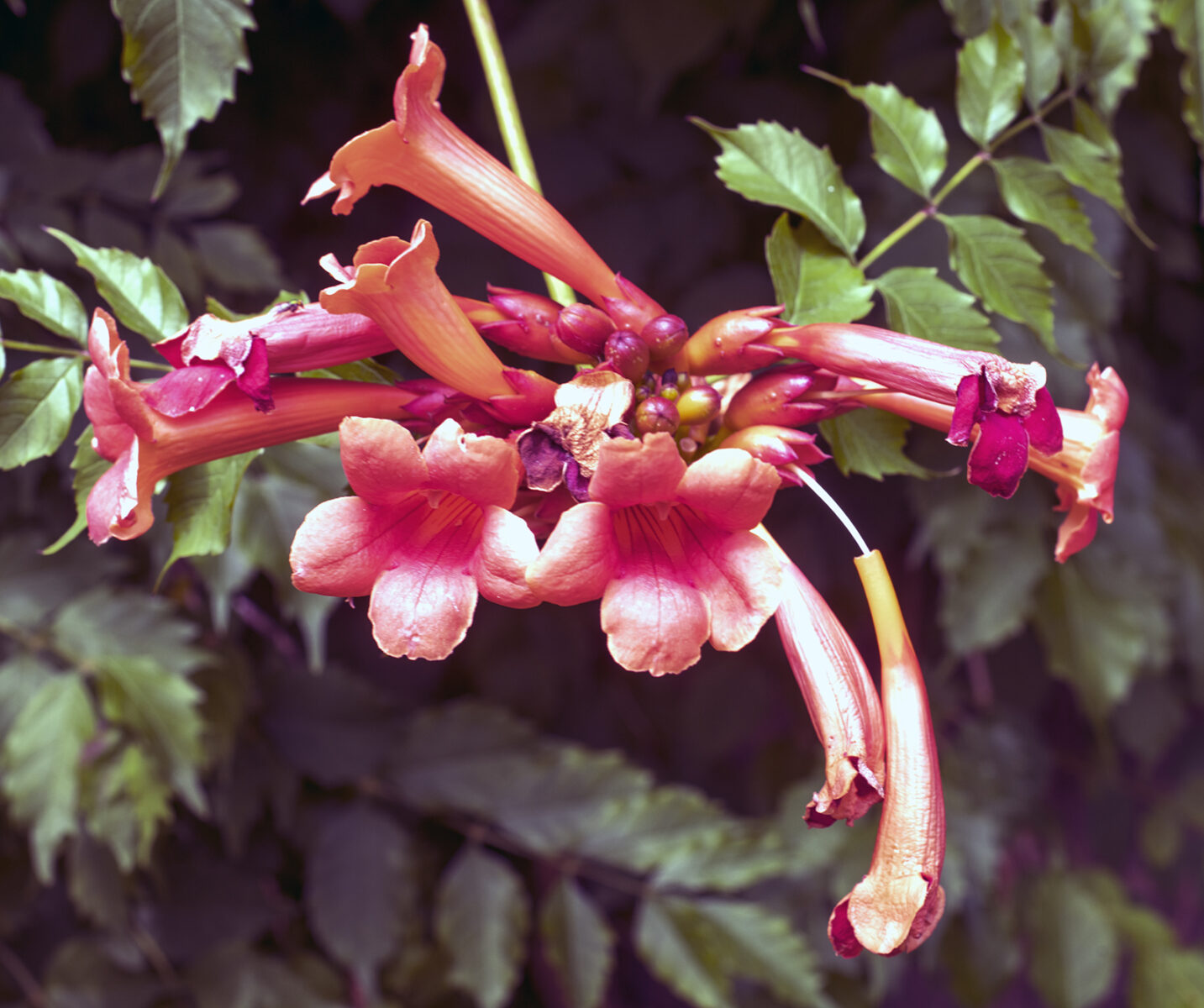
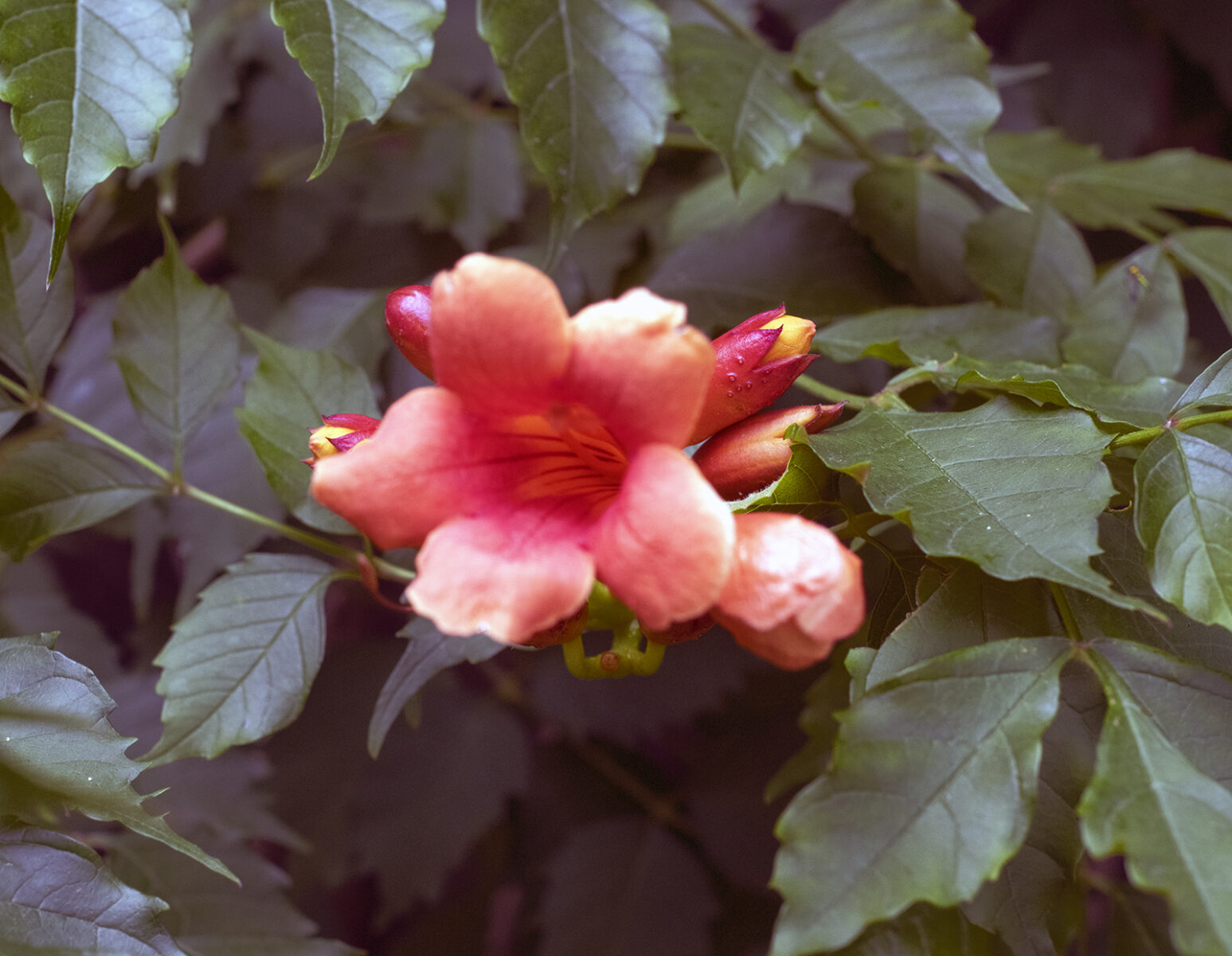
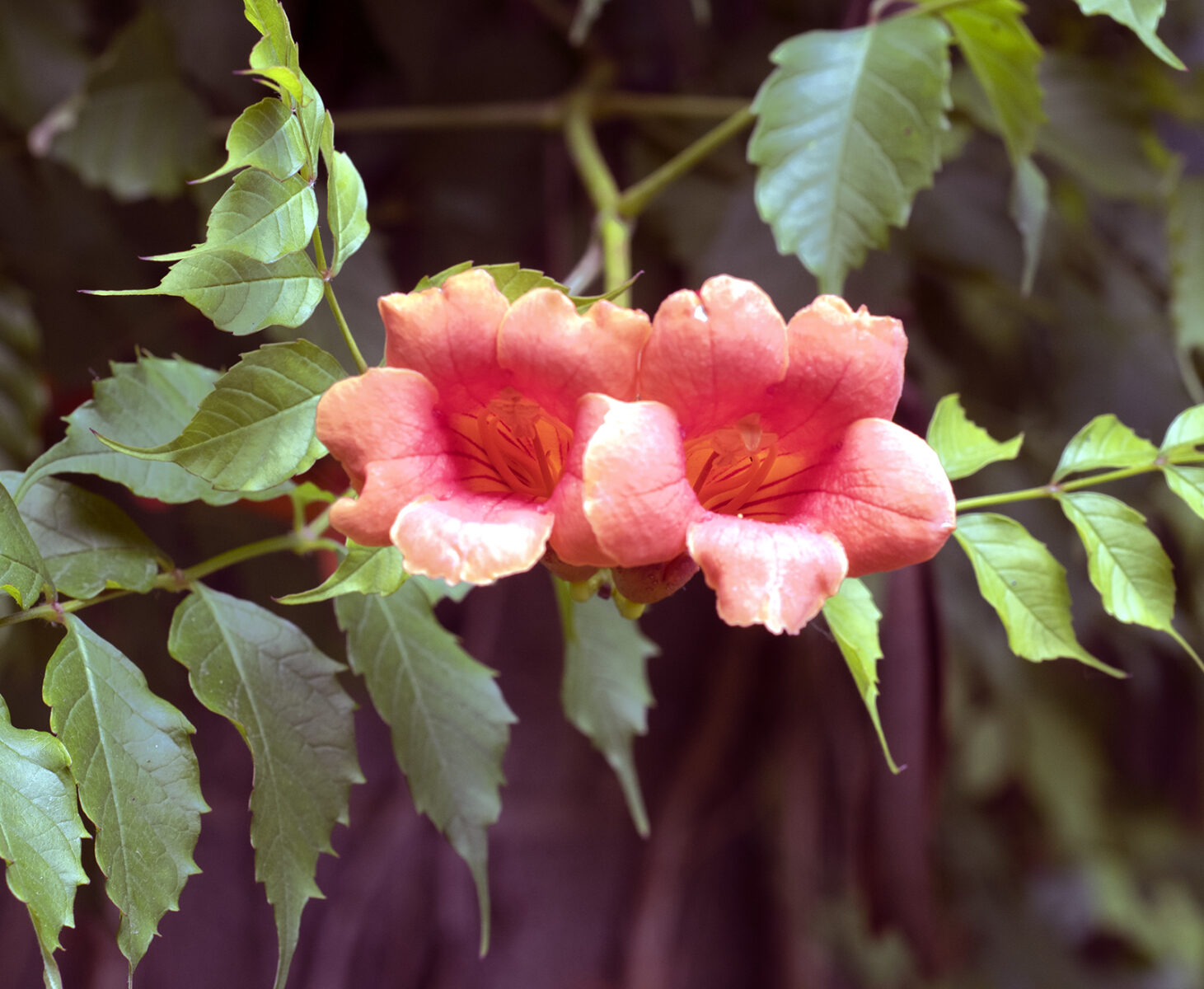
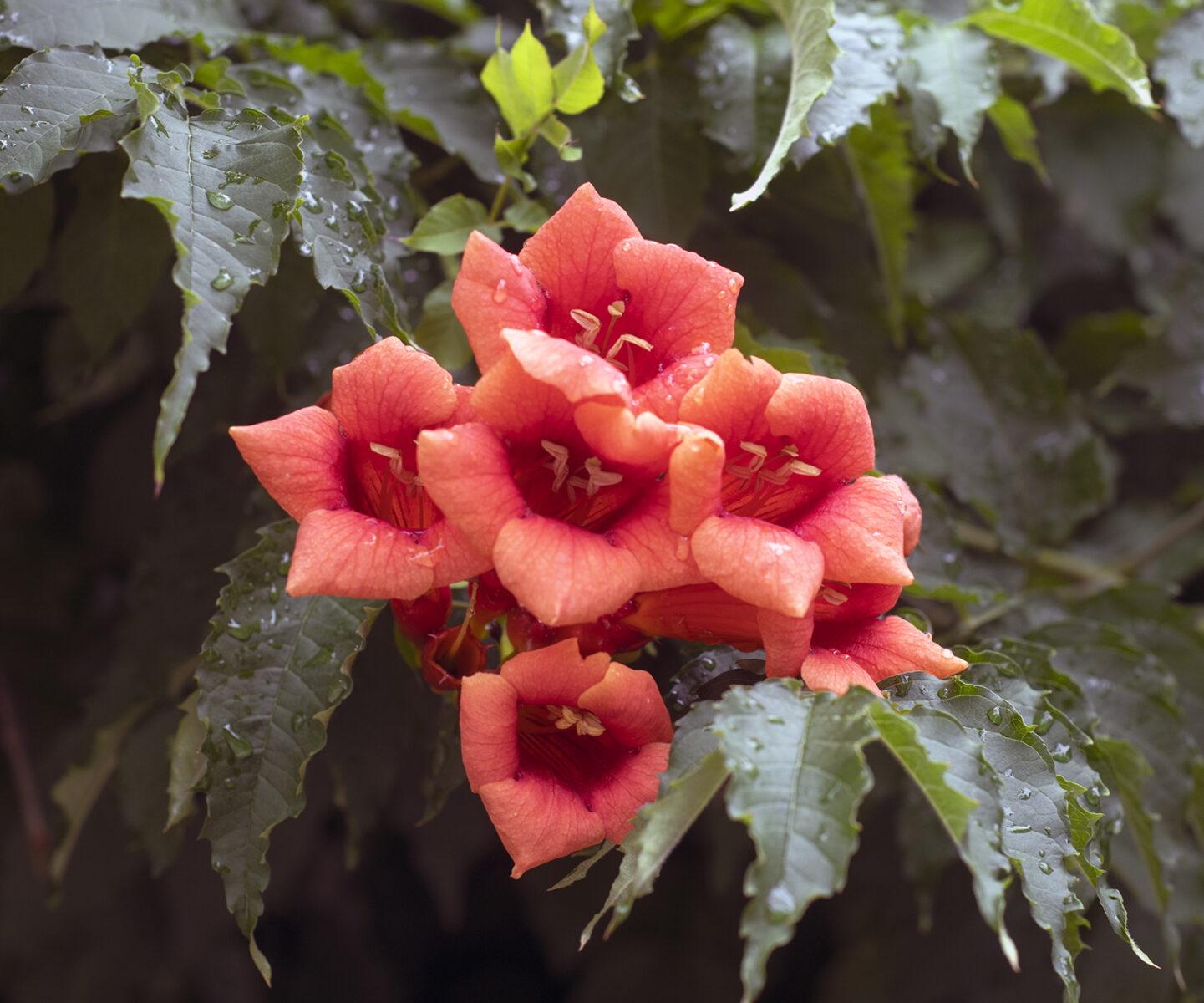
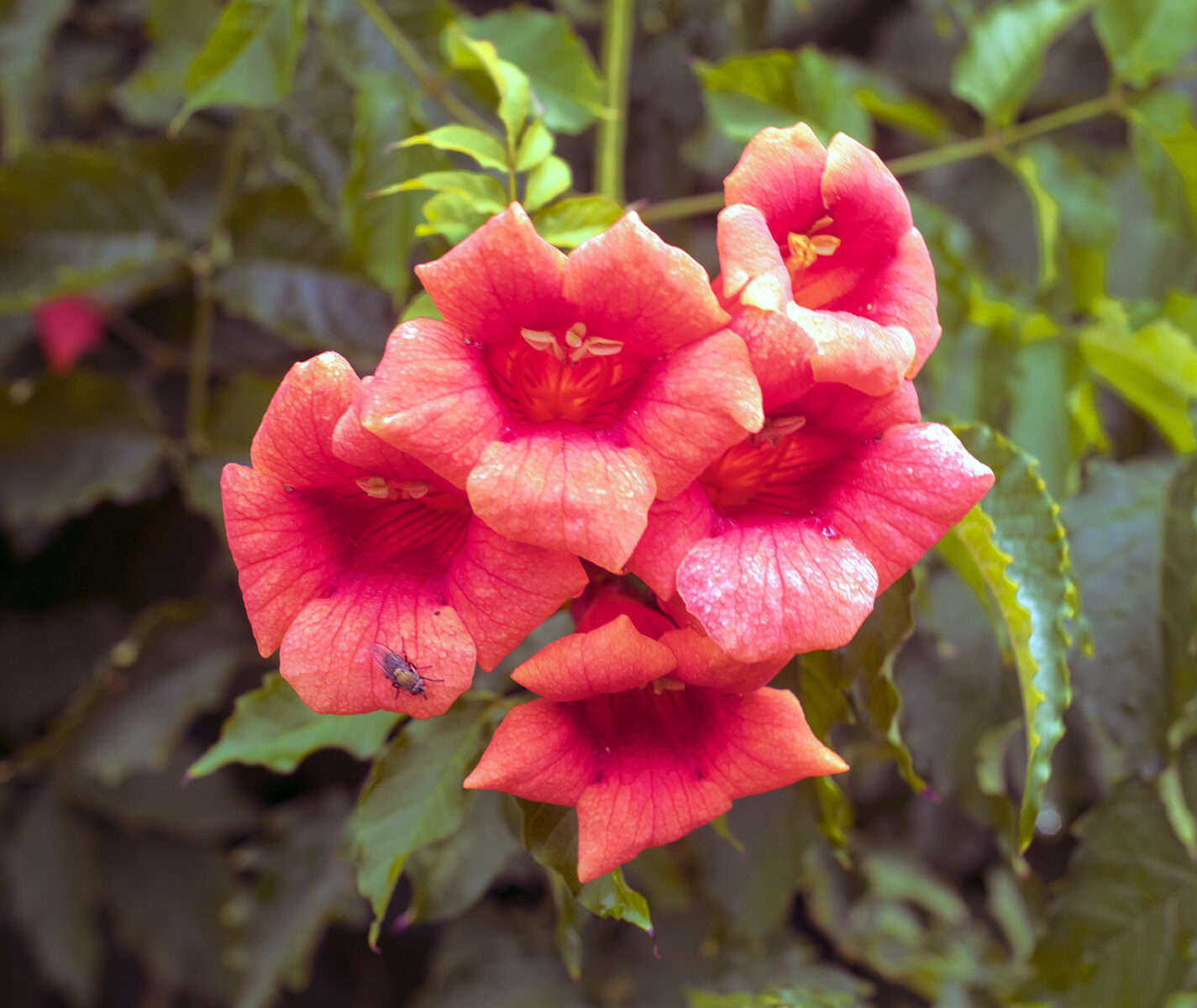
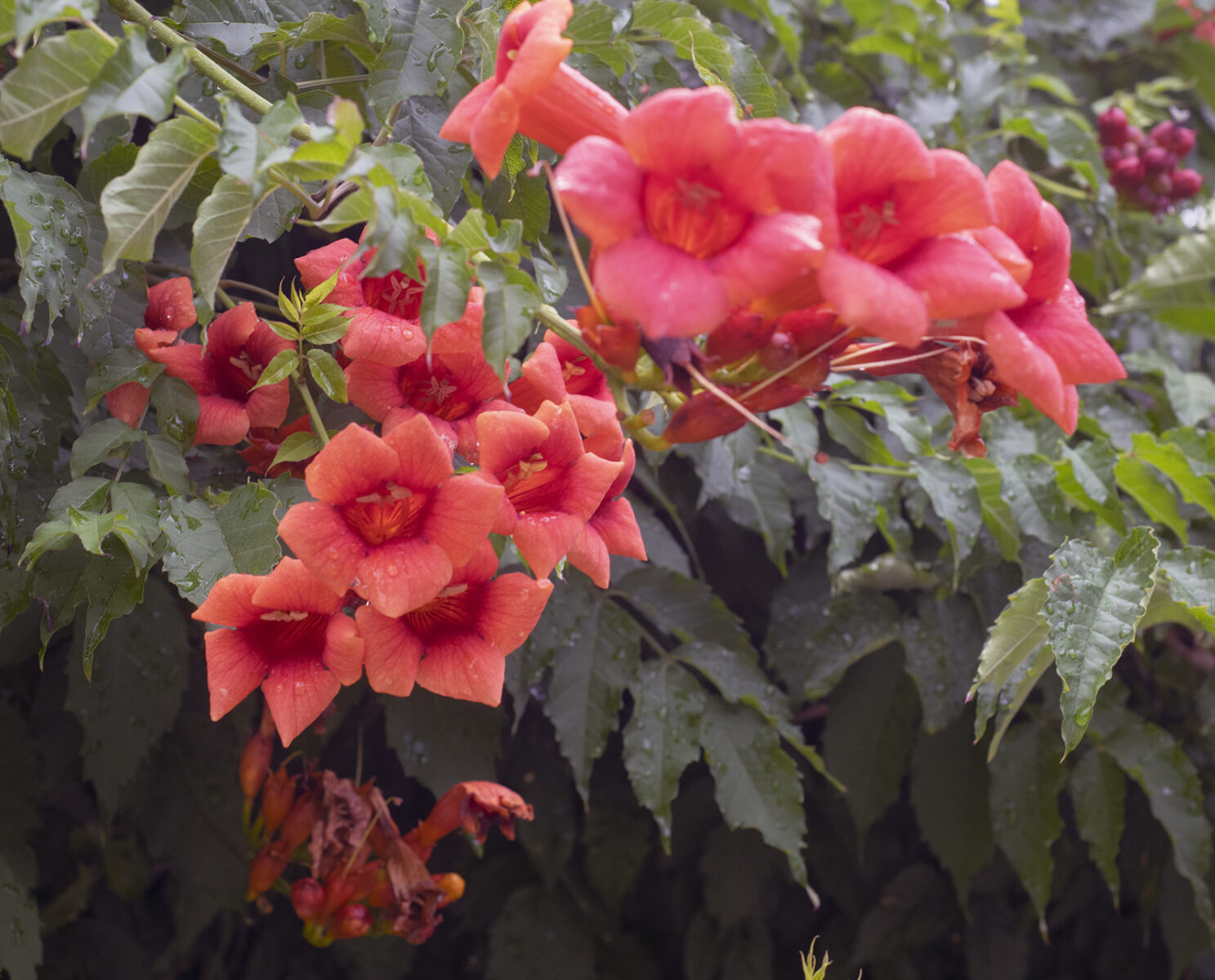
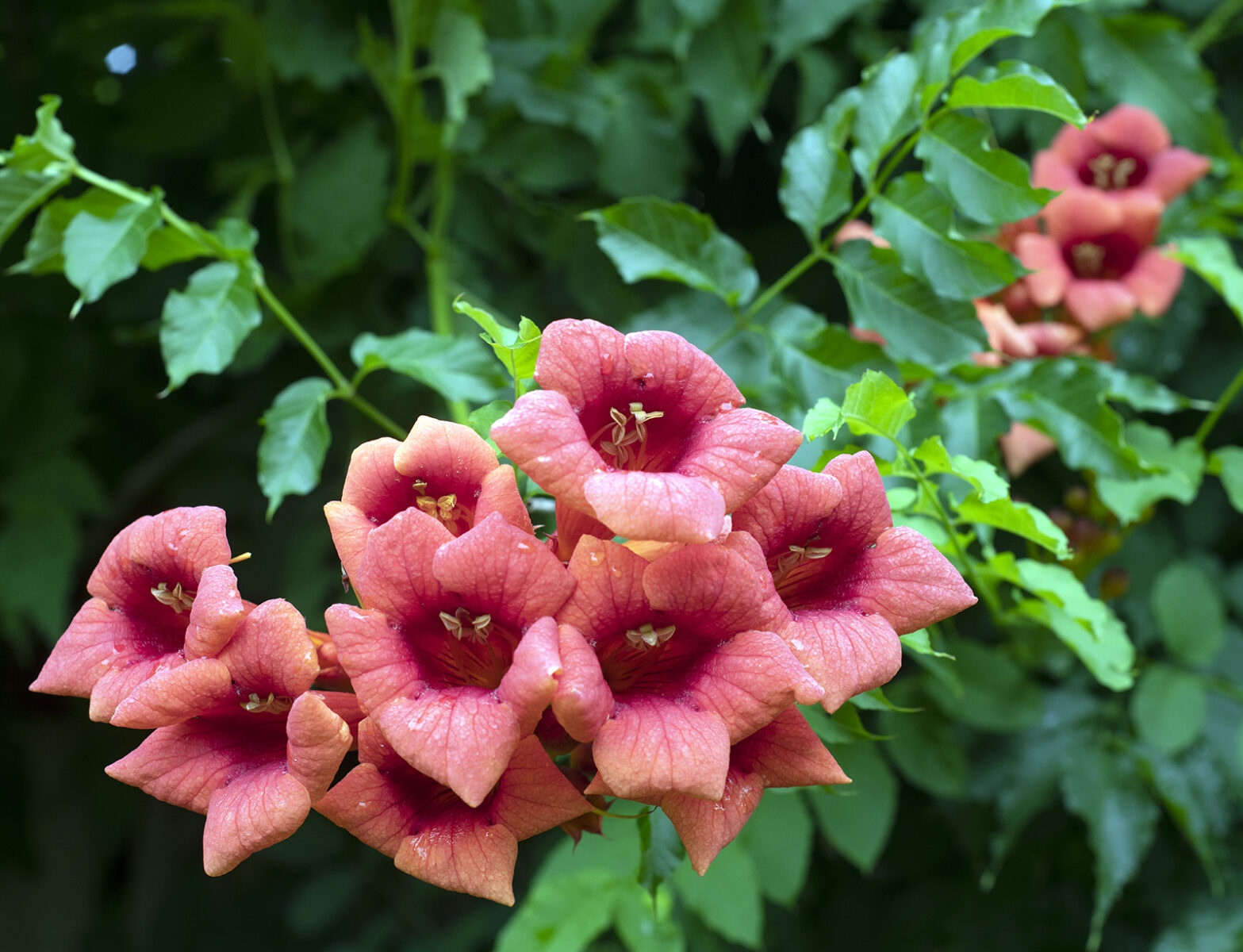
Against that stillness, the trumpet creeper goes to work. Scientifically known as Campsis radicans, it is a woody, aggressive perennial equipped with aerial rootlets that grip masonry and mortar with terrifying efficiency, hauling its heavy vines thirty or forty feet into the air. It is an absolute magnet for hummingbirds, pulling them in with those brilliant, tubular flashes of orange and scarlet that cut right through the gray haze. But behind those showy blossoms lies a relentless underground root system that sends up persistent sucker shoots, tearing through neglected soil and ignoring property lines entirely.
The creeper family, appropriately so, is right at home in this place. Trumpet creeper, Virginia creeper, catalpa — three different plants, all perfectly at home in the unruly margins of Cleveland. Trumpet creeper climbs with orange-red flowers; Virginia creeper takes possession of walls and fences; catalpa stands above them as a tree, throwing white flowers and long cigar pods. Trumpet creeper and catalpa are relatives, members of the same botanical family, which probably explains the confusion in their names.
In a forsaken city where all maintenance stopped and never really began, Boston Ivy in the fall and trumpet creeper in the summer remind us—with their red sirens—of the invader’s triumph over the ruined city, perfectly engineered for buildings that have not been taken care of ever.