
In the 1980s, on my block in Williamsburg, a trucker from Philadelphia was unloading his rig of “telephone poles” that were actually the piles for a new small apartment building one door down. It took a couple of hours in a steady rain. I looked out my window and noticed that he had three poles left. When I returned to my window and looked out, he was lying on the sidewalk covered in a white sheet because somehow the last piles fell off his rig and crushed him bad.
Goin to work and dying, leaving in the morning, never coming back home is something i’ve always been sympathetic to, and i did not need multiple work injuries over my lifetime to make it so. Folks who do basic physical labor, are a bit like soldiers, providing essential comforts and service, and paying with a physical price on their bodies, and, occasionally being injured.
Gimme Seltzer was a company i worked for in 1989. There is so much good information around about the New York seltzer scene, it’s best to simply check it for yourself. I’m not gonna spit that back out, but offer the originality of experience, how novel.
Although, at the age of 35, i still hadn’t completely escaped labor jobs to pay the bills and produce all this work, and, although freelancing as much as i could for years, there still were dry times. I suppose if i were a stock broker before beginning a career in arts and entertainment, then i would naturally fall back on trading to support myself, and, in my case, i already had close to twenty years of, only solid labor under my belt, not art. It was, naturally, what i knew and fell back on in tough times, and by 1994 i was clear of the often poisonous toxic and always painful work of basic labor, thank god, and i finally began to purely produce in a chosen field, and, as always, with no “success” except in perfect execution of my work. Chosen field, it means I made a professional decision to do something with my life, and, it’s proven by, I really don’t even like photography that much. But I do like contact, and, by empirical experience, with contact with this art world only gave me its ironic poison, and disease, where as, the constant contact with the world, where artists are afraid, is healthy and wise, never profitable, but, often poverty-impaired. I”ll take the struggle, poverty and injuries over the poison of looking for a Name, and putting up with the art world, and i’ll produce triple the work without that self-careering that artists are consumed by.
At least seltzer was not toxic, but, in fact, clean, and, more importantly, had this history that, in America, was particularly a presence in the city of New York. To be clear, i love seltzer, and the job was good pay for hard labor and no one was breathing down my neck, but, it wan’t like the Brooklyn Seltzer Boys at Gromberg’s in Brooklyn with life-long drivers good training, in an established large company. These Manhattan seltzer companies were resurrected from the death of the Manhattan seltzer business, and hired people like myself or Gandolfini, folks just trying to make ends meet while pursuing a career, but appreciative in the sense that we loved the business relative to other labor jobs we have done.
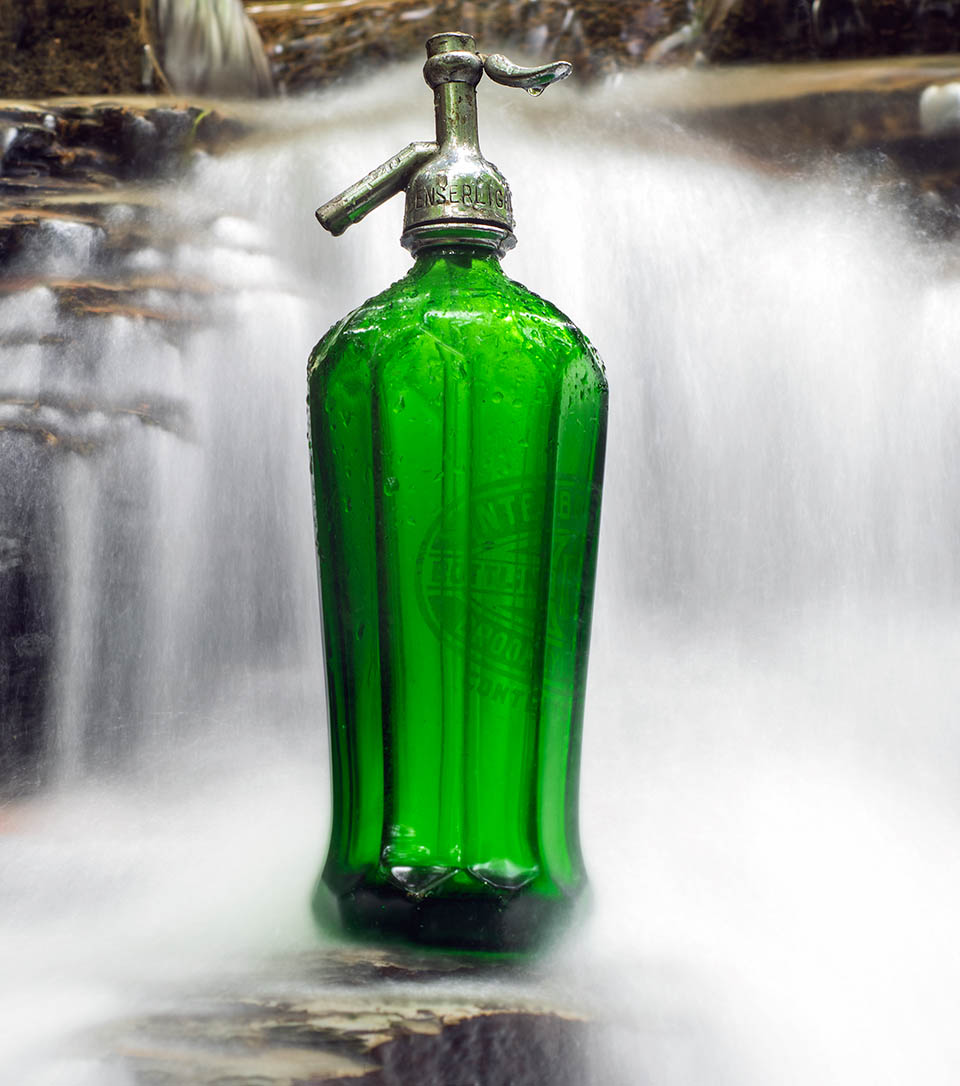
An interboro seltzer bottle, from the 1940s.
FACTUAL DIGRESSION
Like ice cream or, sometimes art, it’s a product that also makes the people who like it, happy and feel good, in a different kind of taste, than art and entertainment.
The Gimme Seltzer Egg Cream:
1/2 cup cold milk
Seltzer, as needed
Chocolate syrup, as needed
In a soda glass, pour the cold milk. Spritz seltzer into the milk until foam reaches rim of glass. Add two dollops of chocolate syrup and stir briskly. The result should be an egg cream with a foamy white head and a rich brown body.
Variations: For a richer egg cream, substitute half-and-half for milk. For a more traditional egg cream, beat in 1 whole egg white. For a sweeter egg cream, try topping off the drink with a scoop of vanilla or chocolate ice cream.
Taken straight in the local candy store, seltzer was known as 2‐cents plain. An extra penny fetched seltzer with a shot of syrup; and a total of four cents in the old days bought the legendary egg cream.
If interested, view the seltzer links.
SELTZER MAN

Order pad, pencil not pictured.
27 years after my seltzer delivery days, when i began to shoot the remaining seltzer men of the city, i noticed, compared, with their years of experience, that i definitely lacked any trained experience on how to keep safe on the job and keep the bottles maintained. This would have taken two minutes. The seltzer men I met in Brooklyn, sometimes, working alongside your father for your life, then inheriting the seltzer business, meant that they were the world’s leading experts at the correct manner to deliver, load and store antique bottles of seltzer.
We had thousands of bottles, all of which, need to be maintained. This i never saw. The machine that loaded the water and fizz under pressure was from London in 1888. The bottles were really antique, and every style, make and brand was represented. All part of the selling points of old-style seltzer in New York.
I guess, at Gimme Seltzer, in Long Island City, its driver turnover meant that, if care was not being taken, almost everyone would still leave the job healthy, and it was simply an odds game to make money, hurry up and quit, as soon as my next ship comes in, and put a stop to this often dangerous labor I had been doing since i was sixteen. Given all that, I wouldn’t know as to what was happening behind the scenes in this company I worked for. Were there lawsuits, or problems within the small company? Was the owner in his last years? With high turnover these were useless questions. Life itself, a chance, i was looking to ultimately lower my risks, and have steady employment in what i am really good at. That would be film, not carbonated water.
I’ve had other delivery jobs, including construction equipment and supplies, newspapers and people, but seltzer, that was something, i guess, because of its history in people’s lives.
Back in 1989 i purposely began to move away from film or photography as a way to pay the bills, so i could maintain my soul goal – to use those mediums for purely the capture of truth and fact but by an act of expressive accuracy, and, if that’s too highfalutin for you, i just wanted to finally make a living at something that i wanted to make a living at, and not polluting it by doing freelance film and photography jobs for dough on dumb shit. I willfully took labor jobs, going back to what i was escaping in the first place, and then could spend more time on writing, photography and film – above the line, but do so purely outside of the dominant realm of friends as business and completely transactional relationships and a kind of bologna that my works stands against. On the health and cleanliness level it was great. I’m talkin ethics, and putting money in mouth. No poisonous distractions, no loaded gossip, transactional benzene or contact with copy queens. The seltzer job worked well in keeping clean ethically by doing dirty work. At least, the dirt is real, unlike the exoplanet of arts and entertainment.
Talk about demeaning jobs, the worst “driving” job i had, by far, was “delivering” advertising in Manhattan. It was another driving job headquartered in Long Island City. It was the first truck advertisement company in America, brought here by a guy from Paris. The driving was grueling and monotonous – a set route in midtown Manhattan, of essentially, driving in circles, with no deliveries, a completely postmodern service job if there ever was one, pure 1986. It was embarrassing as hell and outrageous. Driving a truck and on the flat bed of the truck is a large advertising, for a bottle of Poison perfume displayed inside a plexiglass box and lit up, promoted by Elizabeth Taylor. I had to drive it through the streets of Manhattan, of course, at rush hour. Madison Avenue on Friday evening at 5:30 PM is a sea of cars, and, of course, anyone would roll down the window to give me shit about clogging up the streets with this goddamn truck, and i would yell out, “I’m right on your side, brother. I’d be saying the same shit. This sucks.”
It was similar to asking a socialist eco-warrior, who devoted his life to clean skies and waters, resorts to, in order to pay the bills, a job shoveling coal into a fossil fueled power plant.
Another driving job, in 1993, was supplying construction and rehab sites with chemicals for stripping, painting, shellacking and priming. Unfortunately i also had to load up and take back all the unsealed toxic leftover chemicals as well, guaranteeing illness from volatile organic compounds every single day. I had a truck that was open to the used chemicals. After already being exposed to these chemicals in my unfortunate record as a blue-collar laborer, you always hope it’s the last one, which this one turned out to be. The humiliation here, wasn’t clogging Manhattan streets with weird mobile advertising, but being exposed once more to sickening chemicals, that i had to put up with during my life, until it finally ended here, or, after the year it took to detoxify from repeated chemical exposure over a two year period.
Film, writing and pictures skills will allow escape, but there was a miscalculation to the depth and spread of the poisons existent in the not so simple, attempt to make a living at what i’m good at and know, while recognizing my own acute sensitivity to any contact with a world of falsehoods and narcissism that Donald Trump, who came to the White House, from the entertainment industries of casinos and reality tv, has come exemplify.
As trained artists and entertainers, evolved form copying and deconstruction into full-blown identity politics and seeing the world through those filters and not clearly, in its entirely, they were also yapping the camera came to be seen as being just another method of art, which it is, but without any “special” relation to reality, and, like all representation, a fiction, which, some of us have proven empirically with our work, to be another trending falsehood, and fiction of art theory and overeducation on one of the simplest things in the world – making art.
Back to seltzer, which was probably, if this is possible, my favorite of all the driving and delivery jobs, all of them in Manhattan, and, even one in Chicago. I lived in Williamsburg most of my life, and the company was close by in good old Long Island City Queens where i had already worked for other trucking companies. They took care of primarily Manhattan. Working for wages is a lot different than owning your bottles, your route and your truck, let alone being a second or third generation seltzer man, in which case, the universal inherent love for seltzer increases dramatically.
With its proximity to Manhattan, and the fact that it was a company job, there was turnover. It was an ideal job for the typical New York striver such as a writer, photographer, film director or actor, who has done labor jobs in their lives. And know it. James Gandolfino’s favorite pre-success job, amongst bricklayer and bouncer was delivering seltzer for the same company, and can completely understand his fondness for the business of old style seltzer, and, obviously knowing what blue-collar labor is about. Given who i am, and my interests, it was also a great fit as well as, nice money for myself. I could bust my ass three days a week and have the remainder to produce my work, my meager bills being paid. In that year i was paying 320 per month. In the year when i got illegally pushed out, 2013, i was paying 600 per month.
Work you can easily relate to, since you did it most of your life, while striving to get ahead, is demonstrated best with the Soprano’s actor because of his fame, and whatever “credibility” that brings. But that’s where it’s at, such credibility, unlike the kind i can bring, but there are no ears and eyes for it anymore, like the Lakota used to always say.
We were paid by the case delivered – two bucks a case plus required tips for anything above the ground floor. It was a stepping stone job which, the boss and i both knew was temporary by nature. Being completely outside of the duplicitous, transactional, boring, unreal, friends-as-business mix that is, the arts business, but having a genuine p.o.v., is good. It was a job that “killed” you, and the side benefit was ethical happiness, which is life-giving or as close to freedom as one gets. There’s always the price, and with these types of jobs, the price is physical.
My seltzer work would end in two ways. I was always going to quit the job anyways, but, like i said i didn’t want to freelance anymore, but be above the line. Unfortunately a year previous i had signed a contract on a film job because i didn’t think it stood a chance of funding. It was so bad. And, of course, it was funded and i was going to Montana, and i put in notice at the seltzer works.
But there was also the other way that my seltzer days would end. One that is too deeply involved with a moment in time, a fateful twist and the meaninglessness of randomness and chaos, all too well. From that, though, meaning is born. Everything happens for a reason? It’s all designed? No. Reality – randomness, chaos – “It don’t mean nuthin.” The end of my seltzer days would happen in an instant and in a random act on Friday, May 26, 1989, which was the beginning of the Memorial Day Weekend. While delivering a load of seltzer on Greenwich Street in downtown Manhattan, below Canal Street, while loading cases on my two-wheeler, with my arms fully extended, placing a case on the cart, it spontaneously blew and a large chunk of the thick heavy glass blew out and a large hole suddenly appeared on the underside of my right arm. The blood then shot out like a hose, arteries severed, tendons sliced through, especially thumb tendons. It was a big hole. Initially i could see the inside out.
I was looking down at my arm. I saw the hole in my arm. First thing i thought, thank god, it wasn’t my eyes…great. But the fountain of blood that followed signaled a greater gamble, one that could, in 20 minutes, become my greatest loss. Get to the hospital quick enough, and, then, ride the sway that this event would shape and define me, after recovery. Fuck the world of art nd entertainment.
I ended up with a ten day hospital stay, after “escaping” once to go home, only to return in major pain. I don’t think it lasted two days, and was a stupid idea. You remember Tinneman Square? It was during that time and that’s all there was on television at St. Vincent’s, like in Sarasota County Jail during the Watergate Hearings in the early seventies.
I was in a room with nothing but worker’s comp cases. The guy next to me was paralyzed in the legs from a work accident. It was years ago, but he had put a very hot iron on his leg and couldn’t feel it burning his flesh. After him, a guy that was on a scaffold that was only eight feet off the ground, must have fallen off in the worst position possible, and had serious debilitating injuries from head to foot. An eight foot fall, and he looked bad.
Some go to work and don’t return home for weeks, and some never get back home, and i always have been sensitive to that dilemma, perhaps by experience.

In my apartment, two weeks after the mishap.
I also met an old Italian guy from Hell’s Kitchen in the hospital, and we hit it off right away, talking about the west side, espresso machines and seltzer. He repaired old espresso machines, and had an old shop on West 46th Street. When i would stop there, he would make coffee and we would talk. I think he appreciated the fact that i was injured in the seltzer business. At this point in time, way before Starbucks, etc., these old time machines were rare like seltzer deliveries. I was doing a book on the end of the old Deuce and Times Square and would visit him until his shop shut.
As far as manual labor is concerned it was a good job, in other words, the pay was pretty good, at two bucks a case. Folks above any second floor were required to tip as well. My route was below 14th Street, and mostly walk-ups. The company did mostly Manhattan deliveries. I subbed on all the routes in Manhattan, and still found mine, the area below fourteenth Street, to be best.
And the best of the grueling walk-ups was the Christo/Jeanne-Claude loft on Mercer. Top floor, it was an incredibly steep, straight-up shot, a cascade of steps, and it was eight cases, which was eight trips, up that waterfall of steps, wide, steep and straight up to the top floor. One or both would greet me with huge smiles and they were both great people, and we always talked. Greeted with a smile, that’s seltzer, and great appreciation for my lifting/climbing skills, evident in their practice of generously tipping me for each case delivered. And then there was the Stooges-style, as in Three, restaurant. A club, blocks from Canal Street, a Stooges themed restaurant and they took 30 cases and that was a damn good day. And can you imagine, the place rented out for parties? Seltzer was sprayed, Stooges-style, as part of the draw.
Plus i could always park in front of the service entrance door and drop, at one stop, as many cases as i would deliver in two hours, climbing the lower Manhattan walk-ups. In SoHo, i had a few private elevators, one opened into the living room of a large home. The walls and living areas had a huge array of art work, all of which was penis-themed, which was quite the sight at 8:00 a.m., as was surprising filmmakers in Soho as they were successfully editing their projects, and a bit surprised to see a “fellow” filmmaker, one they knew, delivering their nostalgic beverage machines. I never leave the field.
Without the big tips, and “big” money stops that took muchos bottles, it was simple, but hard-core grunting labor, only energized by the motivation of piece work or tips, and a brighter future that would surely take place since i was one kick-ass filmmaking machine, one who could deliver pictures better, more pleasurable, than even, seltzer. The sooner you delivered, the sooner you went home, with the same amount of money, no matter what. The only other “benefit” was sometimes my truck would be fully loaded, and i could grab my route sheets with all the orders and get busy quick to do Manhattan.
Not similar to the expert seltzer men that get supply out in Brooklyn, who owned their truck, bottles and routes, and were classic small business professionals, particularly bred for this business in the multigenerational sense.
Gimme Seltzer, the bottling company i worked for, in Long Island City, that closed shortly after i stopped working there in 1989, covered Manhattan from head to foot, but very little in other boroughs. If ambitious New York workers need to make money while pursuing some dream work which means working in “New York” (Manhattan), then a Job like this, is perfect. It was interesting, if someone wanted success in arts and entertainment, and applied here, it said a lot – not too well-off, needs money, knows labor, and enough money and time to pursue a life’s vocation. That’s rare in the arts for the last thirty years. Doing hard dirty work, yeah, i’m used to that. Gandolfini is an example of what I’m talking about, since everyone knows of him. I’m a self-styled no-name, that got too real after an accident and then couldn’t put up with the beautiful liars and thieves that i had met too much of, along the way.
In a Vanity Fair article – “Leaving bouncing work behind, Gandolfini supports himself in a number of odd jobs: a bricklayer like his dad, a carpenter, a tree planter, a street bookseller. He also delivers seltzer for a business owned by a Hasidic Jew. The name of the company? “Gimme Seltzer,” he tells. And this, of all his labor jobs, was most liked.”
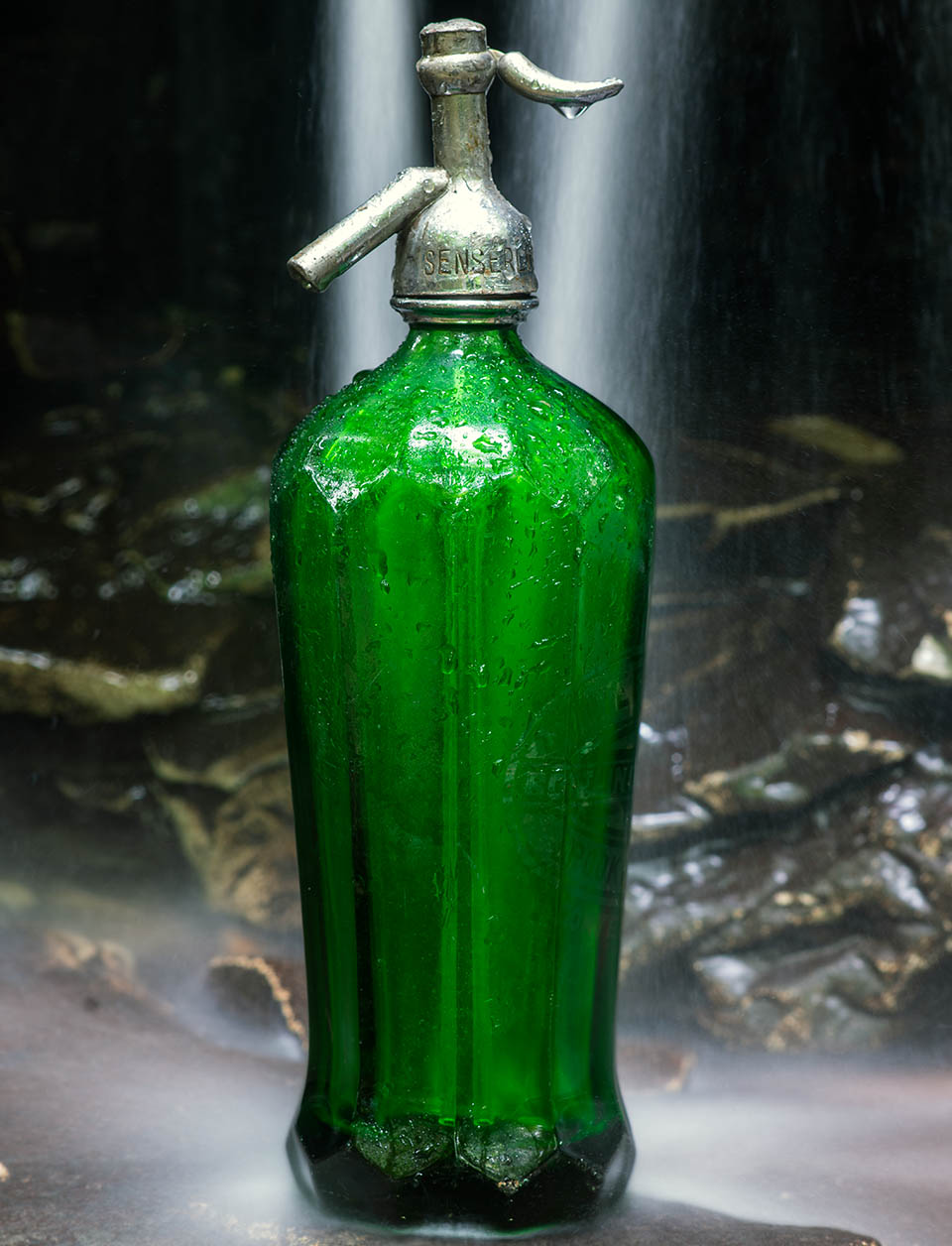
Today, and for generations, the last seltzer men that Gromberg supplies out in Brooklyn are professional life-long experts in the field, as opposed to employees and piece-workers, at a place with accepted turnover rates, on the shores of Manhattan. And i think that’s what got me. The actual average turnover for a real seltzer man, particularly a seltzer family, is easily seventy years. Dad dies and the son takes over for the next seventy years, while people who live in Brooklyn, on the waterfront, often work in Manhattan, where the money is, and, many of them, want to move up in the world. As a result there is less permanence and more of a stepping-stone attitude.
The Brooklyn seltzer men took good care of their bottles, not just in stacking. We stacked the cases straight up. And now, 31 years later i find out what probably were the two biggest contributing causes to grenade bottles – incorrect stacking and no bottle maintenance – for a seltzer bottle mishap, capable of severing the radial artery, ripping almost out, to the other side, slicing tendons along its path. This seltzer job, with no training and high turnover, meant it became a matter of odds.
I wasn’t banging cases on siphon tops either. I lifted one case out of the truck, set it on the two-wheeler, and then, as I was about to lay the next case down, both arms stretched by the weight, and i was looking directly at what i was doing, a bottle “spontaneously” exploded, and a large red hole, in a flash, appeared on the inside of my right arm. I put the case down and reacted. As i said, my first reaction was to check my vision, because i was looking straight at it when it happened, eyes were good, but blood pumped from arm like a hose.
With a stream of blood shooting out, i drew some attention. Greenwich Street below Canal Street in Lower Manhattan, was industrial in 1989, and a printing plant was across from my truck. Workers from there ran to help. I kept yelling for them to tie off my arm, but the first thing someone did was put a garbage bag over my entire arm, and tied that. Now blood was quickly collecting in this bag, but they finally tied off my arm with rags above this bag thing they made.
An ambulance from Beeckman, the closet hospital, was supposed to be on the way, and it looked like the blood would be gone before their arrival.
A truck driver, in the little crowd, said he would help and i said take me to St. Vincent’s, about twenty blocks north. I was going to a Catholic-themed hospital, instead of the public one, which turned out to be a good move. Beeckman, over by Wall Street, was on my route, and i knew how difficult traffic is over there. He drove very fast, busting lights up Seventh Avenue and dropped me at the emergency room door. His name is Joe Fatico and i never saw him again, although i did call him when i got home from the hospital, and I said, “If i ever hit the lotto…”
I walked into the reception area with that garbage bag wrapped around my arm, the person was asking me what the problem was, she tried to check the wound, and, as she did, all the accumulated blood, poured out over her desk. Immediately a trauma team began working to keep my blood inside of me, and not out, and i finally began to go into shock, getting so cold and shaking. At this point i had lost maybe 6 or 7 pints of blood, was wheeled into surgery where, i briefly met, what would turn out to be a, great reconstructive surgeon, who was playing his Willie Nelson tape as i conked out. He operated for 12 hours. I woke up at midnight in recovery, and, again went into shock After all, i simply left for work in the moring, Friday, it was now Saturday, and, i just didn’t remember what had happened in downtown Manhattan.
The company, after many years, closed a couple of months later, and, it wasn’t until September, 2013, when i was shooting seltzer men in Brooklyn and saw their work, that i realized i was never never told to stack cases on their sides. The bottle that got me wasn’t weighted down or was touched by me, only its case. I grabbed a case off one of the racks on the truck, turned, and i was about to place it on my two-wheeler, when it spontaneously explodes, my arms stretched by the sixty pounds that i was holding, exploded in blood.
Although i got wacked by a chunk of thick glass shrapnel, in a spontaneous self-witnessed explosion, why and how was that bottle weakened? Our trucks had steel racks where the cases fit and they never touched each other on the top or bottom. But the rattling and bounces that the vehicle took in 1980s Manhattan, couldn’t have helped, and, in fact, i thought about the bottle-bounce hypothesis quite a bit. What year was the bottle? They went back to 1900 easy, but many seemed around 1940s era, repeatedly filled under great pressure every week.
Nothing big is ever purely a position of choice, and, although i didn’t mind the job, and liked seltzer, i would rather be doing what i am doing here. We were never asked if we wanted our birth, once here, we choose our path only to end it often in something we have no control whatsoever. Bad deal. It takes dough to avoid injurious jobs, and, also get some comfort and sleep in the face of ravenous (1980s) post-mod scanners, sucking up, anything, to add to their “work” perhaps, smoking weed and drinking craft beer in your studio, while listening to your favorite music.
It can take a life time to pass, and often can end in an instant or unexpectedly. An incident sharpened me, and also stripped it all down, in a time of being stripped down already. Things became more elemental, episodic and aphoristic, there was an unfortunate strengthening of an already hard core that was significant. So a nice, hard, labor job, that was always gonna be temporary, turned out to be, impactful on all levels, simply by a bad injury.
Around midnight i began to wake, as some people were asking me to do so. I couldn’t remember what happened or where i was. I began to shake and become so cold. It was shock, and this time, i heard someone mention the shock blankets, and the next thing i know, preheated blankets are being wrapped around me. Wacked on pain meds, by the time i made it to a room i was feeling damn good, considering…then morning came, and the pain rained down, in that bed for days. Once again, in a work injury. At one point my friend, we lived in the same building, brought me clean clothes, my work clothes were covered in blood, caked and dry. He snuck me out, and it lasted two days. The pain was bad enough for me to go back to St. Vincent’s, where i stayed until i could go home for good.
The red writing was on the wall. Why hustle to make it, in order to simply have the money to fund my projects? I was doing just that all along, with the usual periodic serious injury – just five years before i had a finger severed at work. Worker’s comp has every body part priced out and pro-rated, a finger, not the index or thumb, is worth 5k, and a finger severed halfway was 2.5k. You can then pay bills and get back on your feet.
With the finger that got cut off in a driving job in Chicago, another ppd, while a reconstructed right arm, from a driving and seltzer delivery job in New York, added another ppd to the list at 35 years old, with plenty more to come, but never again would i bleed in pain for anyone else or anything, unless it was for my work, and that alone. This, of course, came true, with enough surgeries that i can’t really remember them all.

You will ask yourself, with what i got goin on, what the fuck am i watching my blood shoot out on the streets in Lower Manhattan or losing body parts, after years of trying to get away from work injuries, one of which, in 1975, when a cast iron wall collapsed inside an industrial incinerator i was dismantling, convinced me to move on into what i was good at all along, and i knew was my destiny? That’s a messed up thing to be writing about, and i do question it all, to this day.
It’s the same old inescapable story. That’s the way it works, and the way it is. To stay clean, be prepared to labor and get dirty. And if your boss was scamming on the insurance payments, be prepared, to tell yourself, that you will never let this happen again, under any circumstances. Look at Gandolfino who worked at Gimme Seltzer, calling it one of his favorite jobs, then went on to make millions playing the gangster. I got hit with bottle shrapnel, and still love the seltzer world.
After a series of blue-collar work injuries, if i’m gonna take risks, which i’m not afraid of, it’s gonna be for money large enough to buy all the freedom i need to make books, and finally have a relatively healthy existence, and, most importantly have control of my work, and nothing else.
It’s the same old inescapable story. So far, it seems, i’ll die with my boots on, working, like my own Father, who taught me, even, taught me how to die. To really do the synthesis of live, work, shoot and say no to participating in bull shit, the dream ends. That’s the way it works, and the way it is. Live a creed, debunking, truth against falsehood or death? Be prepared to labor, and be prepared to take care of all problems on your own, including paying for all the work with your own labor, apparently, now until the day i die.
Ironically (ughh), I had signed a contract on a film job months before, thinking, the film, that i had already worked on, was so bad, it would never be funded, and, of course, it was funded by an Arts Council. The film itself was now in Montana and needed an editor, and, was still the piece of shit, on the level of filmmaking, it would always be. Nevertheless, i signed a contract for editor, hoping that crap like this wouldn’t be funded, but art funding, and, in general, is about Names, the who-you-know and it got funded.
Here I am, working the last day as a seltzer, man, and, going out to Montana for the summer, and…
The film job, sucked, because the movie was so terrible, but, it gave me the opportunity to experience Montana, which, naturally, I did to the full extent culminating in a number of essays nd a book called, Butte. The world of our entertainment, drinking seltzer, almost got me dead, then i was forced to work on a piece of shit – for the money? It was art and documentary, i wasn’t paid, near rate at all, of course. For us, it’s gotta only be about flipping that negative into a positive and I discovered the glory of shooting and being in Montana, which, is exactly what I needed to heal. And, I didn’t heal by going to parks and hiking, looking at sunsets. I healed in the industrial landscape of Montana, which, is quite big and real, producing some good essays and a book, Butte, all of which i would publish here, 30 later after i shot it all.
When i shot the seltzer men in Brooklyn in 2013, and saw what a professional operation, the last seltzer-maker in NYC has built, i finally learned the actual art of seltzer delivery, but, don’t be fooled, it’s a dangerous job. One of the seltzer guys, at Gromberg, Ronnie, can, also, testify to this. Eli Miller, “The Last Seltzer Man” took over his route from his father who died in his sixties, on the job, delivering, and, Eli did the job until he was 80s, and passed at age, 86.
I never thought about that accident much if ever at all, never the details, until writing this. What would bother me, is the randomness and chance factors of a “spontaneous” explosion that, could only be the result of wear and tear on the bottles, old as they are, under gas pressure, but, most importantly how they were handled over those many years, by too many drivers. Here i am already with my notice of quitting in, since i had signed a contract on a film job that I never thought would be funded, and that I will have to work on, after i heal. Funded only under the who-you-know and its name-dropping mode so dominant in the arts, such worthless films get made.
I honor the contracts i sign, is the best thing I can muster about this film.
Butte, in 1989, was an unusual Montana city, for a long time, its largest, it had gone into typical Rust Belt saga since the mines had closed seven years before. Coincidentally, i shot America’s first Rust Belt book, Dirty Old Town, starting in 1977, and was already entrenched in what turned out to be fifty years of Rust Belt work, and i proudly added Butte to Brooklyn as a place i was at home, and shot it, off and on, until 1998.
The editing job, being in Montana for a couple of months, actually synthesized it all, and i turned a negative into something positive, by being in that place, not just nature, but the mix of its geology, geography and industrial sites, healed my arm real good, by forging ahead physically like nothing happened, and producing good work. It reminded me, the city guy, of the healing powers that nature, and industry, with its sublime beauty, can produce. And both nature and industry can be powerful, unpredictable and challenging.
All looked good again, one year after the accident, but i didn’t realize, that because of it, i couldn’t put up with anymore transactional bull shit. My writing got elemental and raw. I began to write books of philosophy – aphorisms, particularly. Truth and expressve fact was always something to live, and shoot by,but now more than ever. Never consciously thought about it, i just worked non-stop ever since, and, that’s how you sublimate watching all your blood stream out on the streets of lower Manhattan.

What is the price of seltzer, or, simply making a living in a physical way?