The Bronx, New York
The Bronx knows how to throw a party, particularly on the Fourth of July. I had lived most of my life in Brooklyn, where Independence Day was practically an insurrection. Every neighborhood had its own fireworks, and the streets went crazy until Mayor Giuliani came along in the 1990s and began cracking down on the illegal displays. But in the northwest Bronx, around Fordham Hill, the tradition was alive and well.
Fordham Hill, around Sedgwick Avenue, Loring Place, Andrews Avenue and Fordham Road, is a working-class piece of the northwest Bronx with a long history. Dutch farms gave way to estates, churches and institutions, and eventually to the apartment houses that filled the hillsides. The Irish were thick along Sedgwick, Andrews, Loring Place and University Avenue, while Jewish families populated much of the surrounding northwest Bronx. On the neighboring hill at University Heights, New York University established its Bronx campus in 1894, which became Bronx Community College in 1973. This was the Bronx that produced Stanley Kubrick, Penny Marshall, Rob Reiner and a remarkable collection of writers, filmmakers and assorted characters who grew up in the great apartment houses of the Grand Concourse.
I had been illegally forced out of my longtime home in North Brooklyn, a place where I had expected to spend the rest of my life, and landed in a densely populated, high-poverty, high-crime immigrant neighborhood that was overwhelmingly Dominican, with a smaller Puerto Rican population. It was not a move I had chosen, but the neighborhood had a character all its own. And if you know Dominicans, you know something about noise. Music, conversation, arguments, laughter, everybody talking at once and nobody particularly interested in lowering the volume. I’ve put the question directly to Dominican friends. Their answer was straightforward: We’re loud, and we’re goddamn proud of it. Given that exuberant culture of music, noise and street celebration, the American Fourth of July was an occasion the neighborhood embraced with extraordinary enthusiasm.
Every Fourth of July, the Bronx came out of its apartments and took possession of the streets. On Anderson Avenue, I might encounter two hundred people partying outside one of those enormous Bronx apartment buildings, children running around, music blasting, people drinking, laughing, shouting and setting off fireworks. It was a neighborhood affair, with everybody participating and nobody asking permission. You couldn’t have designed a better Fourth of July street party than the Bronx invented for itself.
For twelve years I photographed these celebrations. The evening generally began with the official Manhattan fireworks, which I photographed from whatever location offered the best view, sometimes from a friend’s rooftop on Devoe Terrace. Afterward I headed back to Fordham Hill and walked the streets, photographing and recording the neighborhood celebrations. Around ten o’clock I returned to my apartment, twelve floors above the street, where the real show was getting underway.
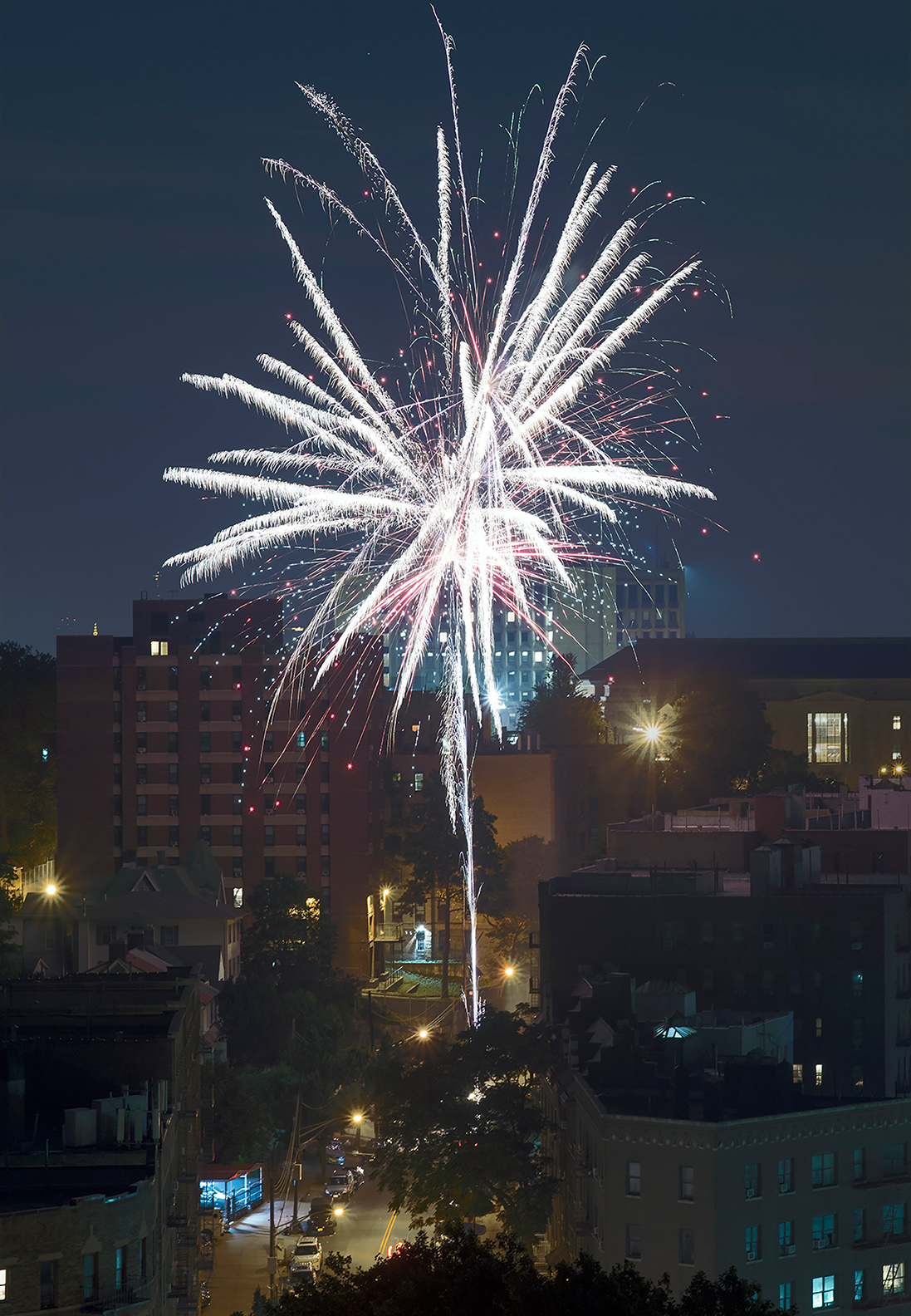
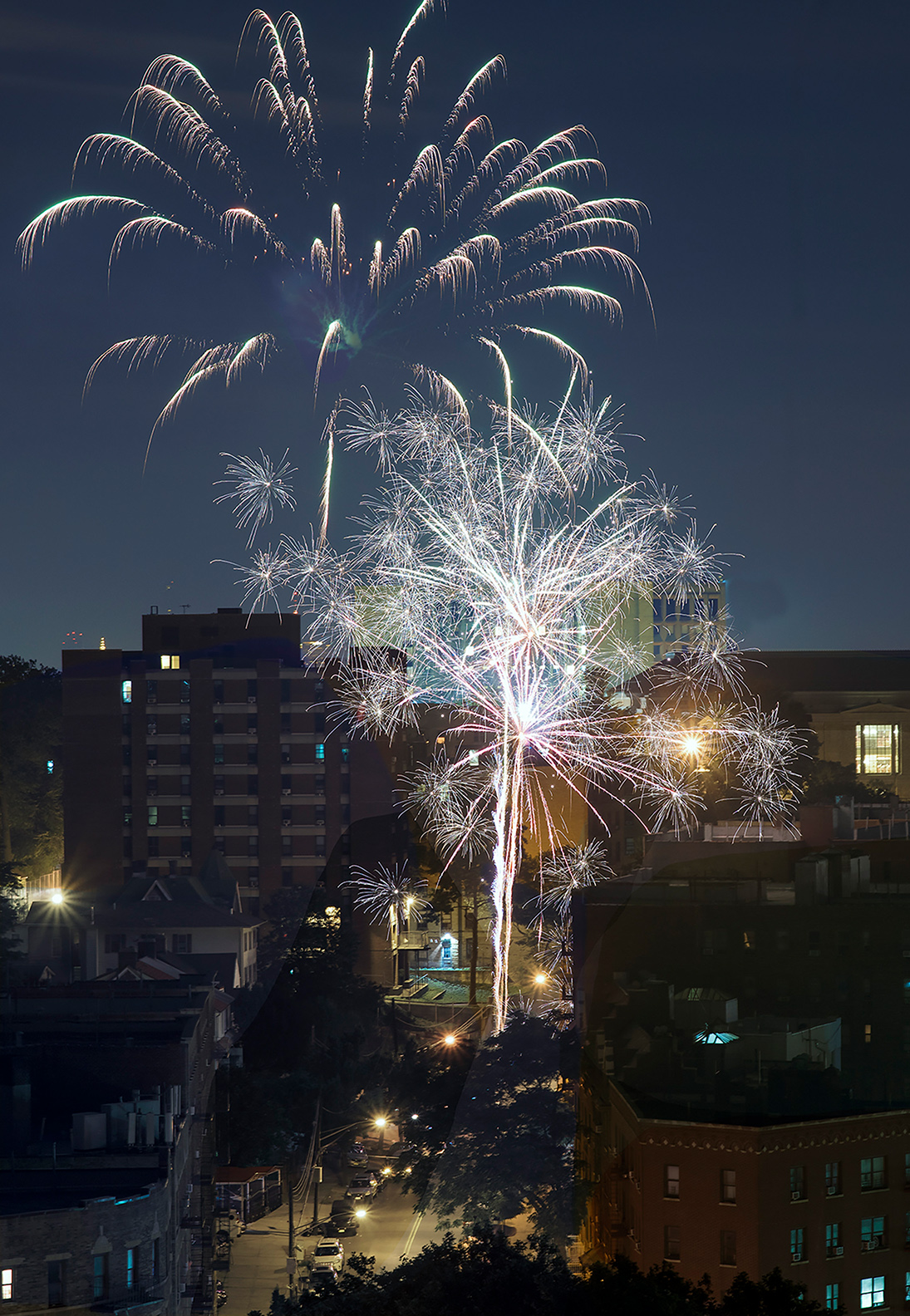
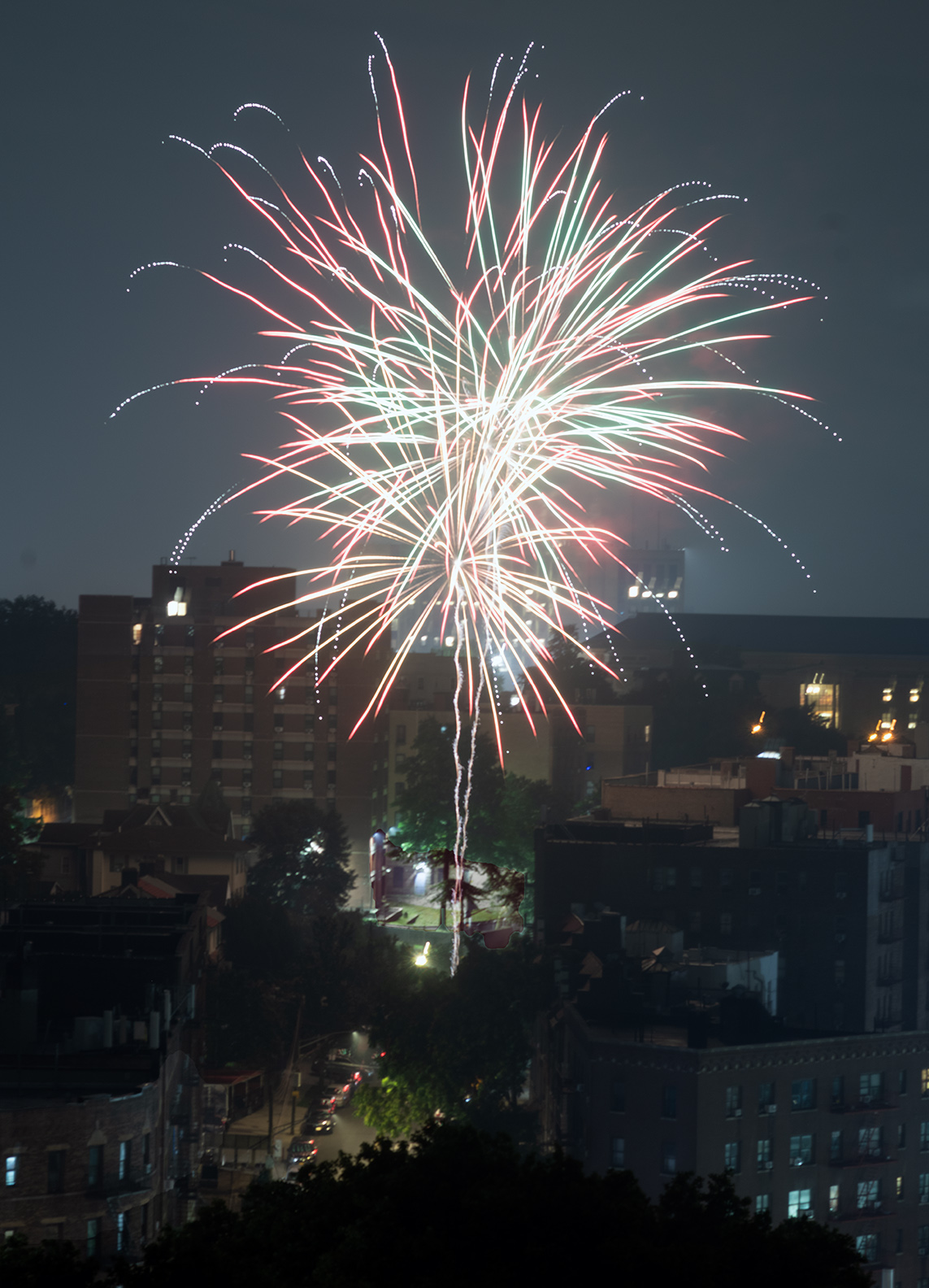
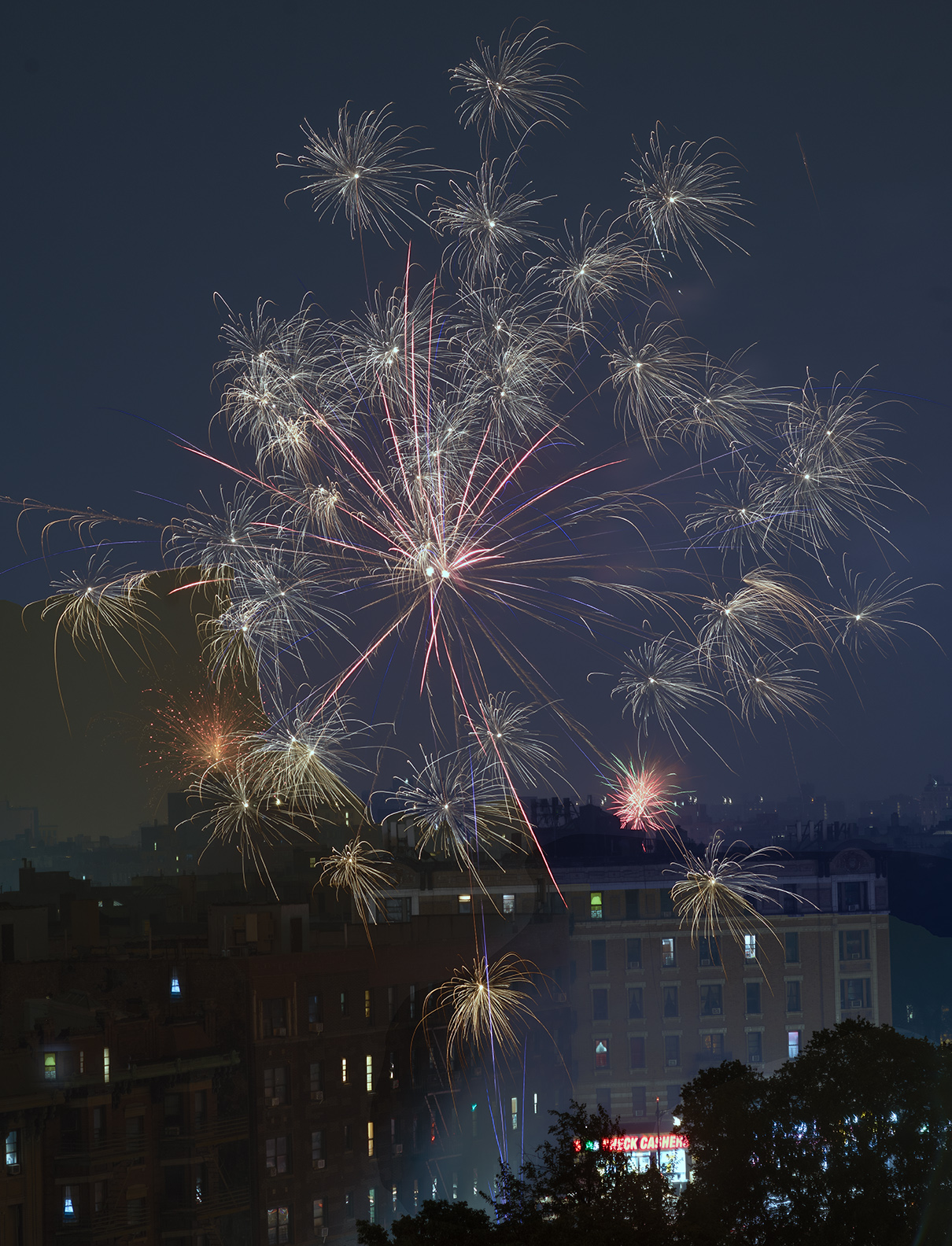
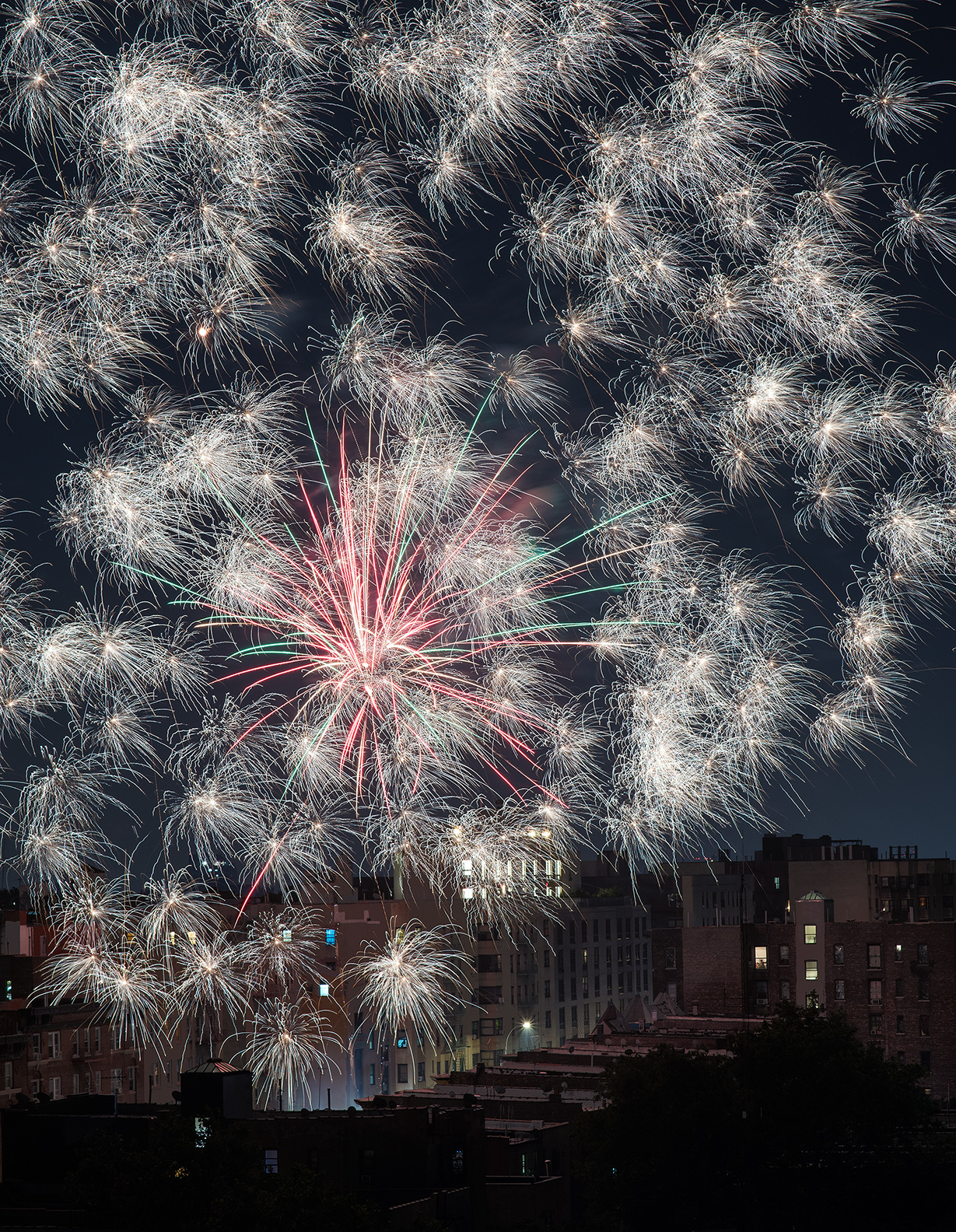
My bedroom window overlooked a remarkably small section of the Bronx, roughly two blocks around Fordham Road, Loring Place and Sedgwick Avenue. Yet those two blocks produced an astonishing display of fireworks, often reaching its greatest intensity between midnight and four in the morning. Explosions erupted above the canyons of five- and six-story apartment houses, sometimes bursting so close to the buildings that they seemed to be going off right outside the fifth-floor windows. Tremendous bursts of color, smoke and light filled the narrow spaces between the buildings.
But the aerial fireworks were only half the show. Below, throughout the park and surrounding streets, children, teenagers and adults were setting off thousands upon thousands of fireworks of every description. The ground was exploding while the sky was exploding. And mixed into all of it was the music. Dominican music, salsa, Mexican music, sometimes six or eight different groups playing different things at once, enormous commercial speakers blasting from the park and the streets. Everybody had his own music, and everybody apparently intended to play it louder than everybody else’s. The explosions competed with the speakers, the speakers competed with one another, and the whole neighborhood became a tremendous wall of sound. This wasn’t background music for a fireworks display. It was the Bronx, making as much noise as humanly possible.
And contrary to what an outsider might think, there was plenty of organization behind the apparent chaos. The men running the fireworks on Sedgwick Avenue and Loring Place were neighborhood shot callers who put on the displays year after year, and they paid for the privilege. Preparations went on throughout the year, including trips to Pennsylvania and back with as much as $20,000 worth of fireworks. This wasn’t a handful of kids setting off firecrackers on a street corner. These were serious neighborhood productions, organized and paid for by people who took considerable pride in what they were doing.
Of course, fireworks weren’t the only explosions heard around Fordham Hill. In 2012, there was gunfire in the park below my building, reportedly from an AK-47. On another occasion, a cocaine dealer was robbed in an apartment lobby at 183rd Street and Loring Place. According to the account I knew, two men fled down Loring Place carrying a couple of kilos of cocaine, with police in pursuit. Around 7:30 on a Saturday evening, the chase erupted into a gun battle in the street, leaving bystanders wounded. The suspects were eventually arrested around the corner on Fordham Road. These were the same streets where families gathered for the Fourth of July. The difference between the crack of a firework and the report of a rifle wasn’t always immediately apparent. In Fordham Hill, you learned to listen.
Photographing fireworks is difficult, particularly when you’re working from a twelfth-floor bedroom window on a hot July night, maneuvering cameras and tripods into an uncomfortable position and waiting for something you cannot predict. You have to anticipate the explosion, judge the exposure and hope that the light, smoke, movement and composition come together at precisely the right moment. Sometimes nothing happens for several minutes. Then three or four explosions occur almost simultaneously, and the whole business is over before you can react. Unlike an ordinary landscape, you cannot return the next morning and photograph it again.
I don’t photograph fireworks to make pretty, colorful postcards, although I have considerable admiration for postcards. I’m after something else. The violence, beauty, chaos and extraordinary forms that exist for only a few seconds before disappearing into darkness. The fireworks themselves become expressive, transformed by time, exposure, movement and chance into something beyond the literal explosion. Expression, truth and fact. That’s what I’m after in my photography, whether it’s a demolished steel mill, a deserted Bronx street or a burst of illegal fireworks over Fordham Hill. The subject changes. The pursuit doesn’t.
Beginning in 2023, the police began cracking down in earnest. By ten at night, when darkness brought the first fireworks, twenty or thirty cops would descend on Loring Place, shutting down the displays almost as soon as they began. They remained until three or four in the morning, effectively ending the great neighborhood productions. The man on Sedgwick Avenue still occasionally makes an appearance, sometimes around three in the morning, sets off a few fireworks and disappears. Nothing like the old days. Perhaps things had simply gotten out of hand. Whatever the reason, the extraordinary Fourth of July celebrations I photographed for twelve years have largely vanished.
For twelve Fourths of July, those same two blocks provided the spectacle. The buildings remained, the people changed, and the explosions continued until the early morning hours. It was noisy, dangerous, beautiful and occasionally completely out of control.
It was the Bronx celebrating America, its own way. Show up, show off and be loud.
The new paragraph gives the overhead photographs their missing ground-level context. The sky was exploding, the streets were exploding, and everybody was trying to drown everybody else out. That’s the Fordham Hill you photographed.
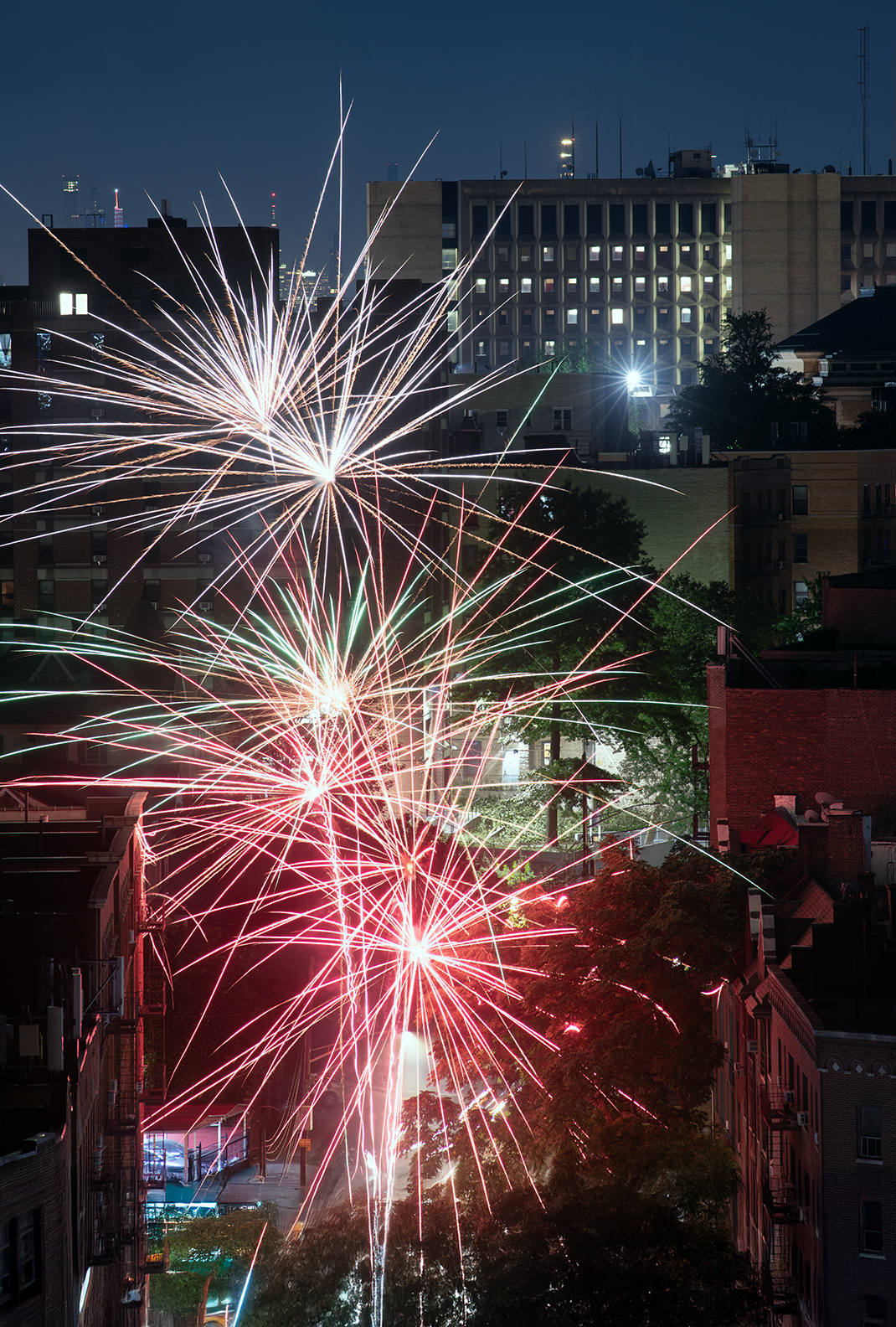
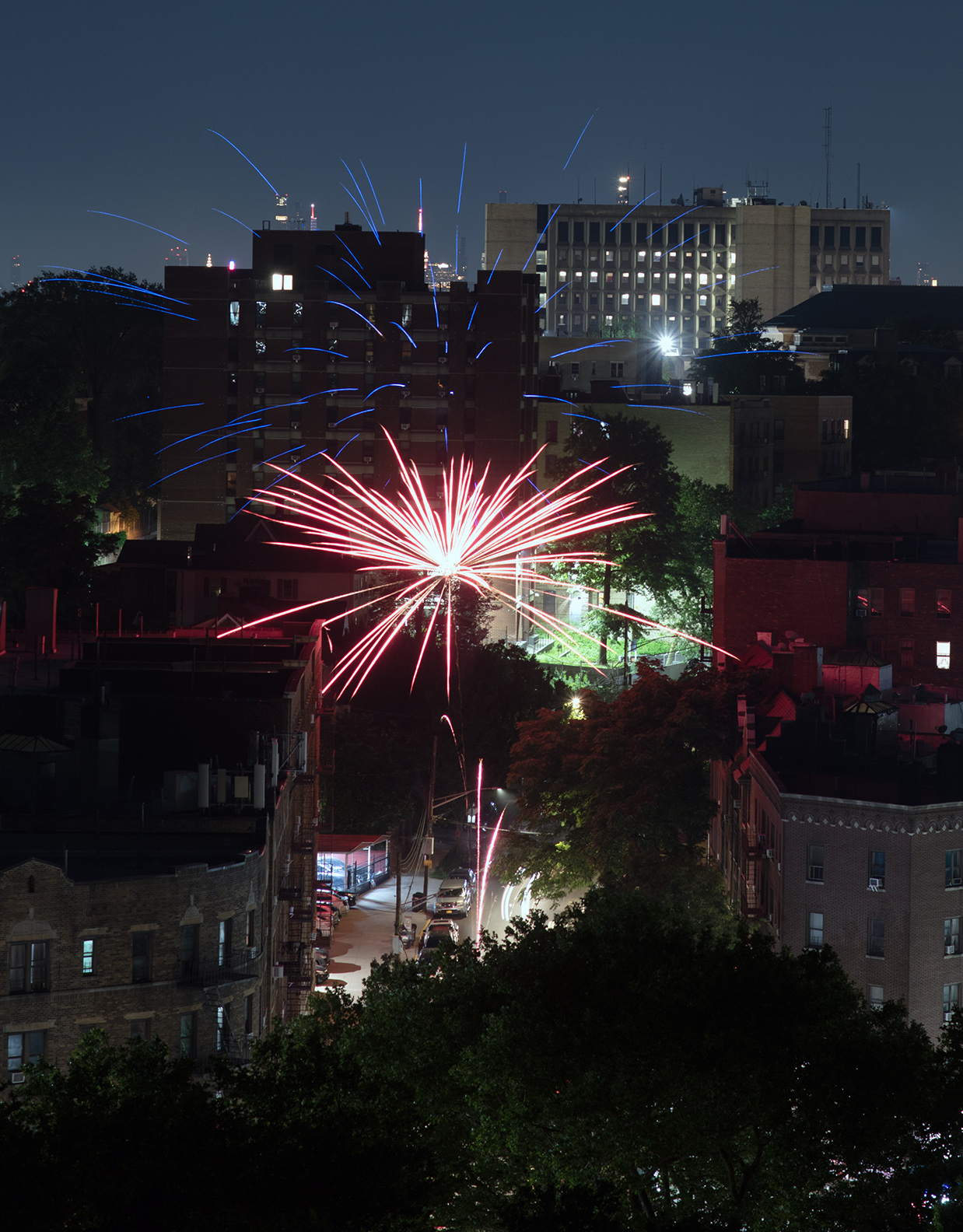
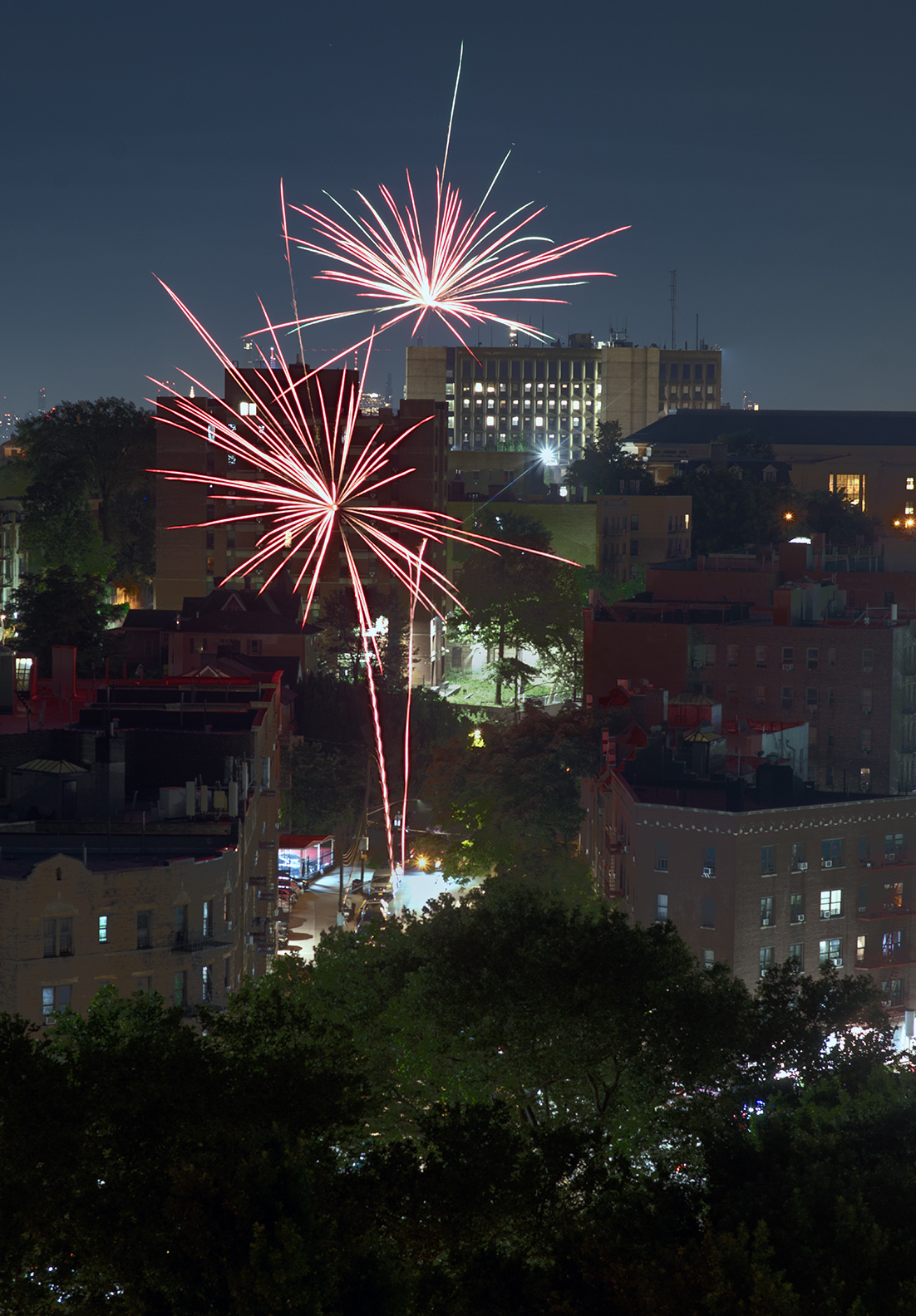
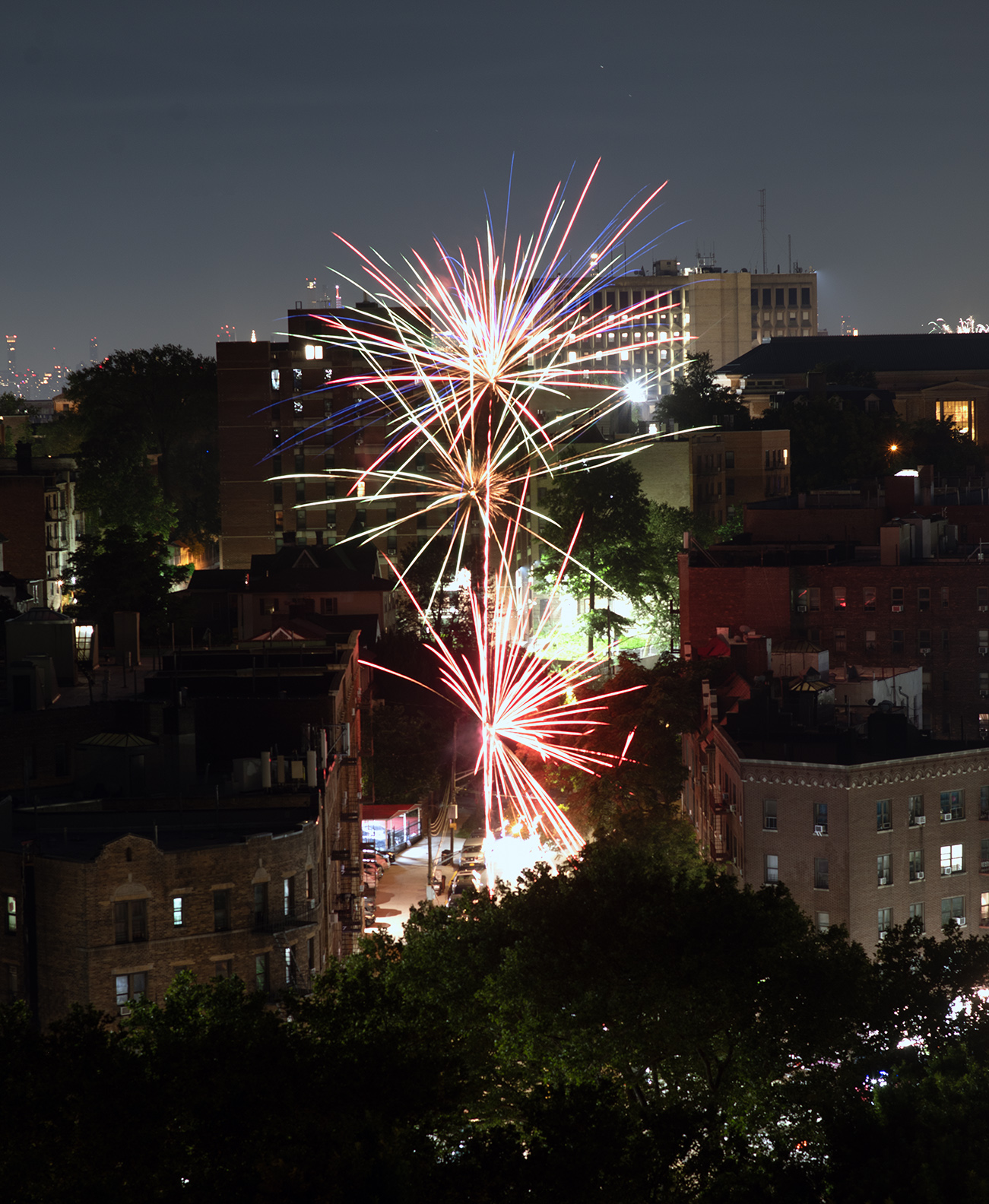
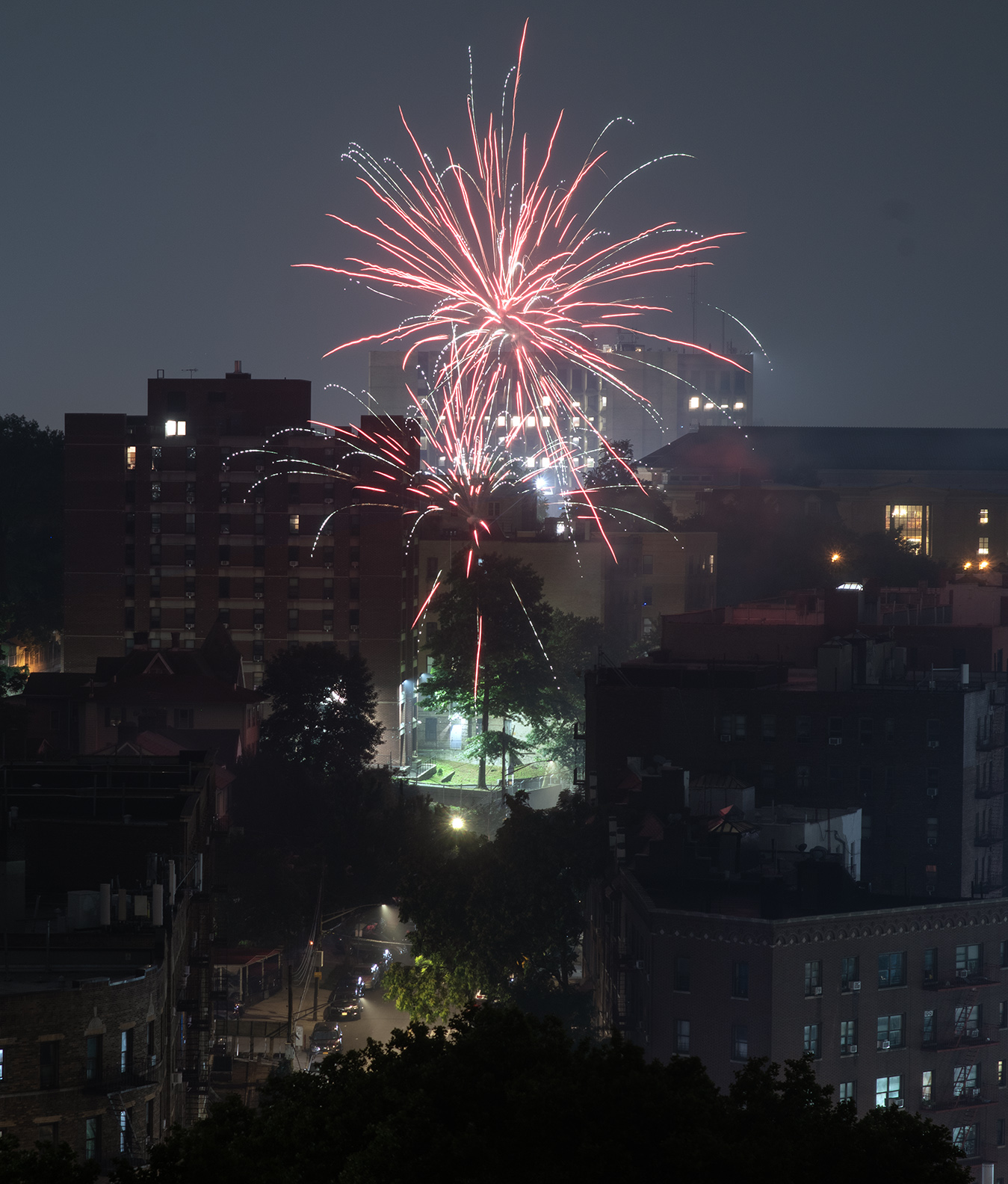
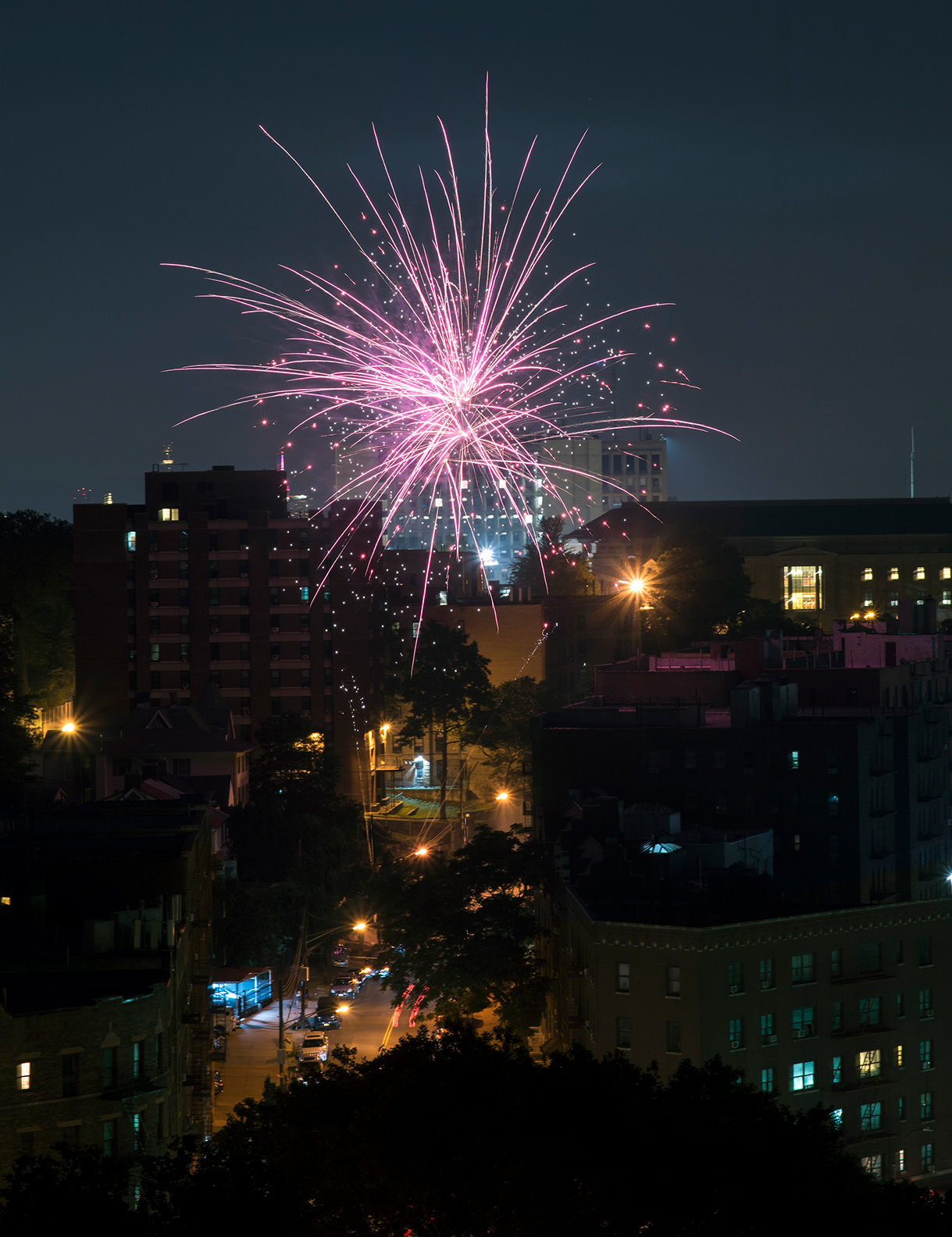
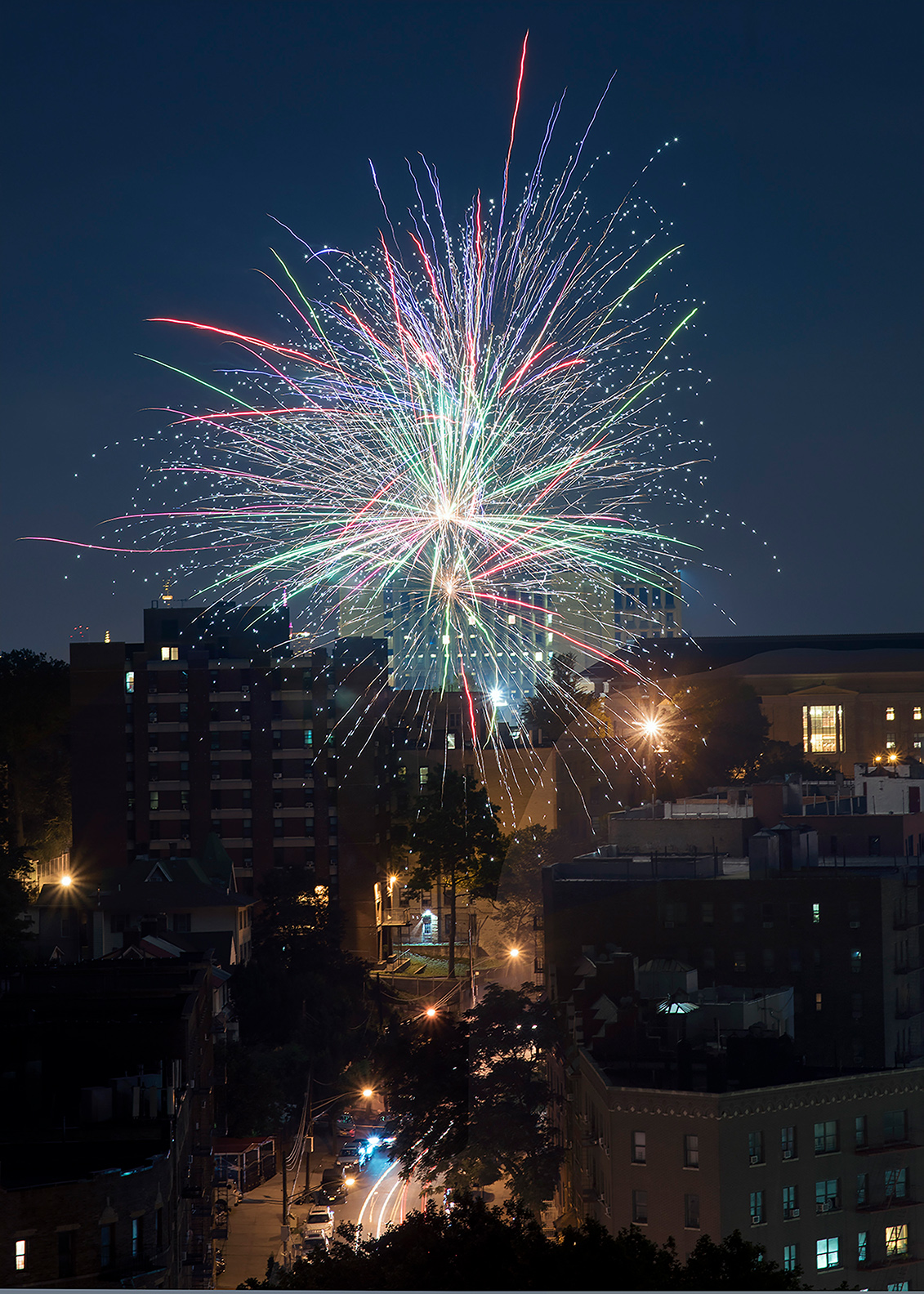
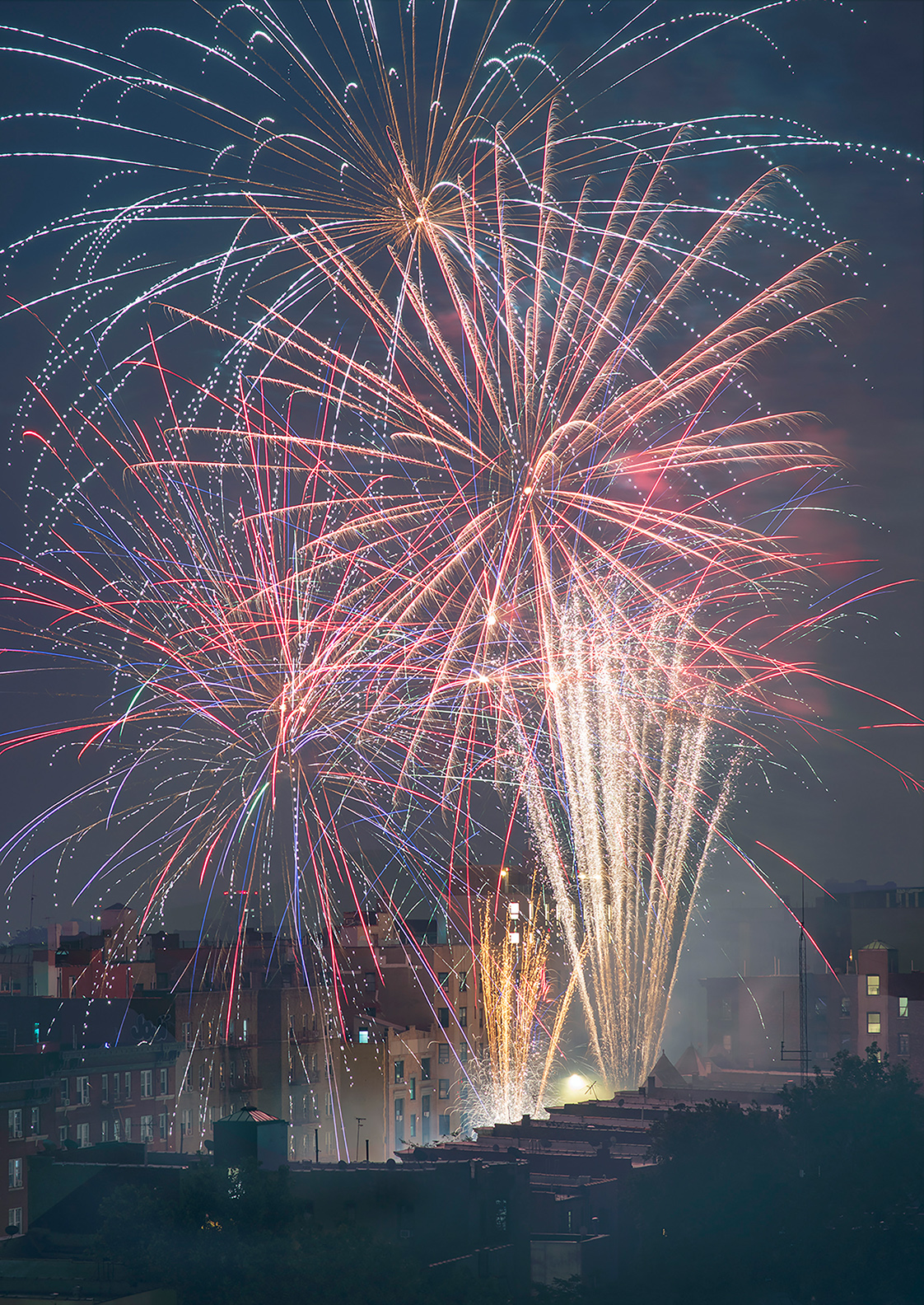
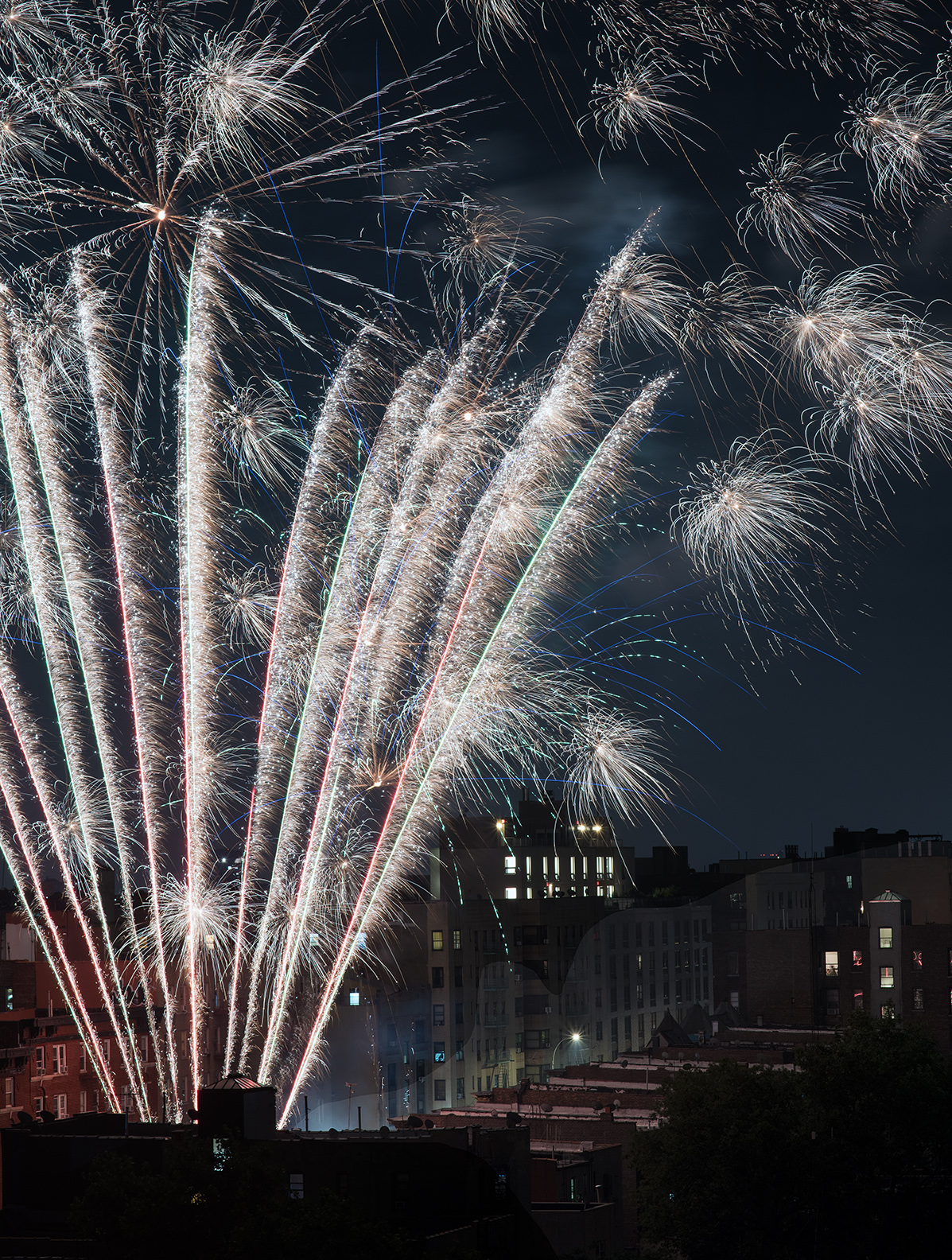
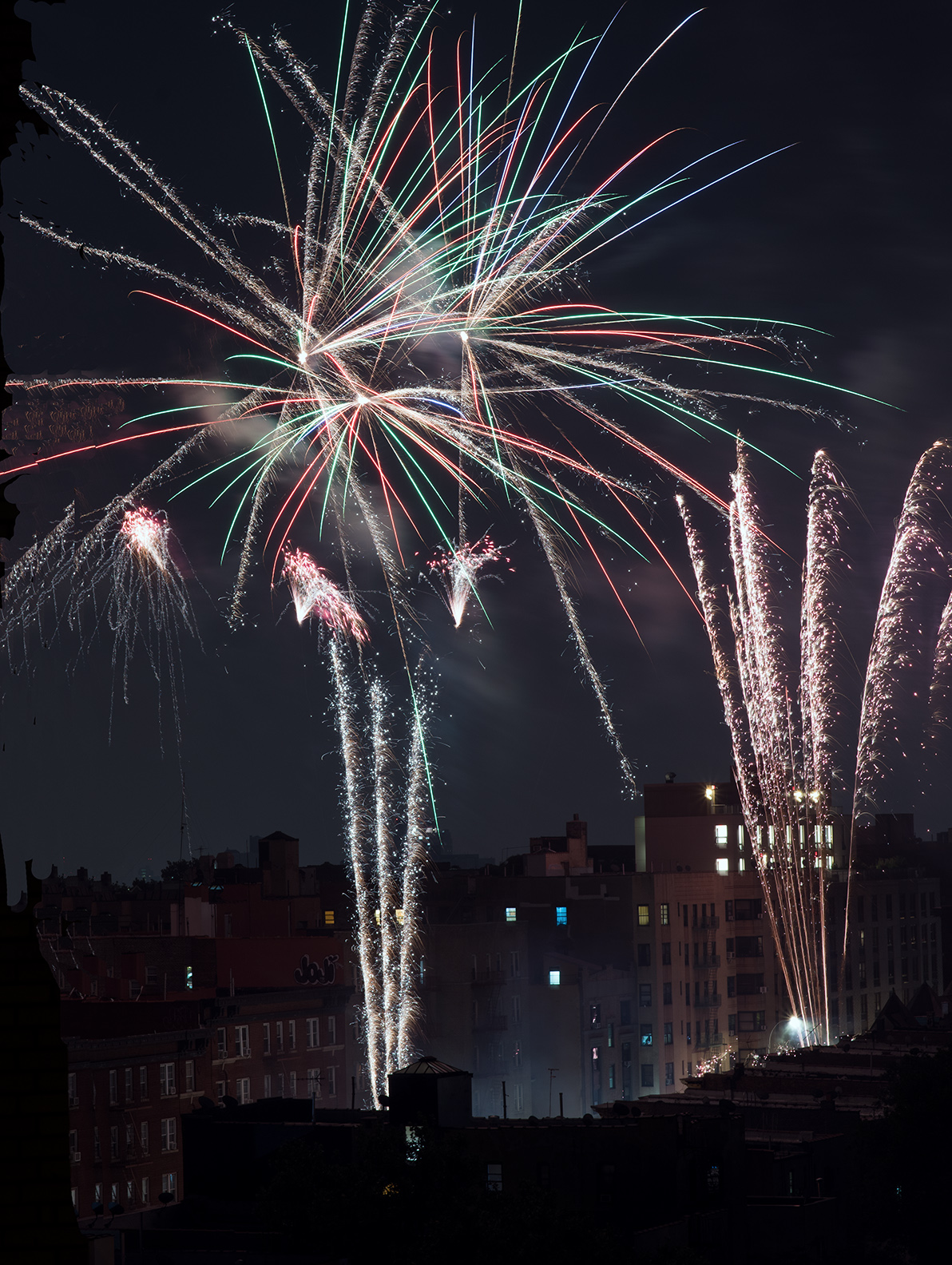
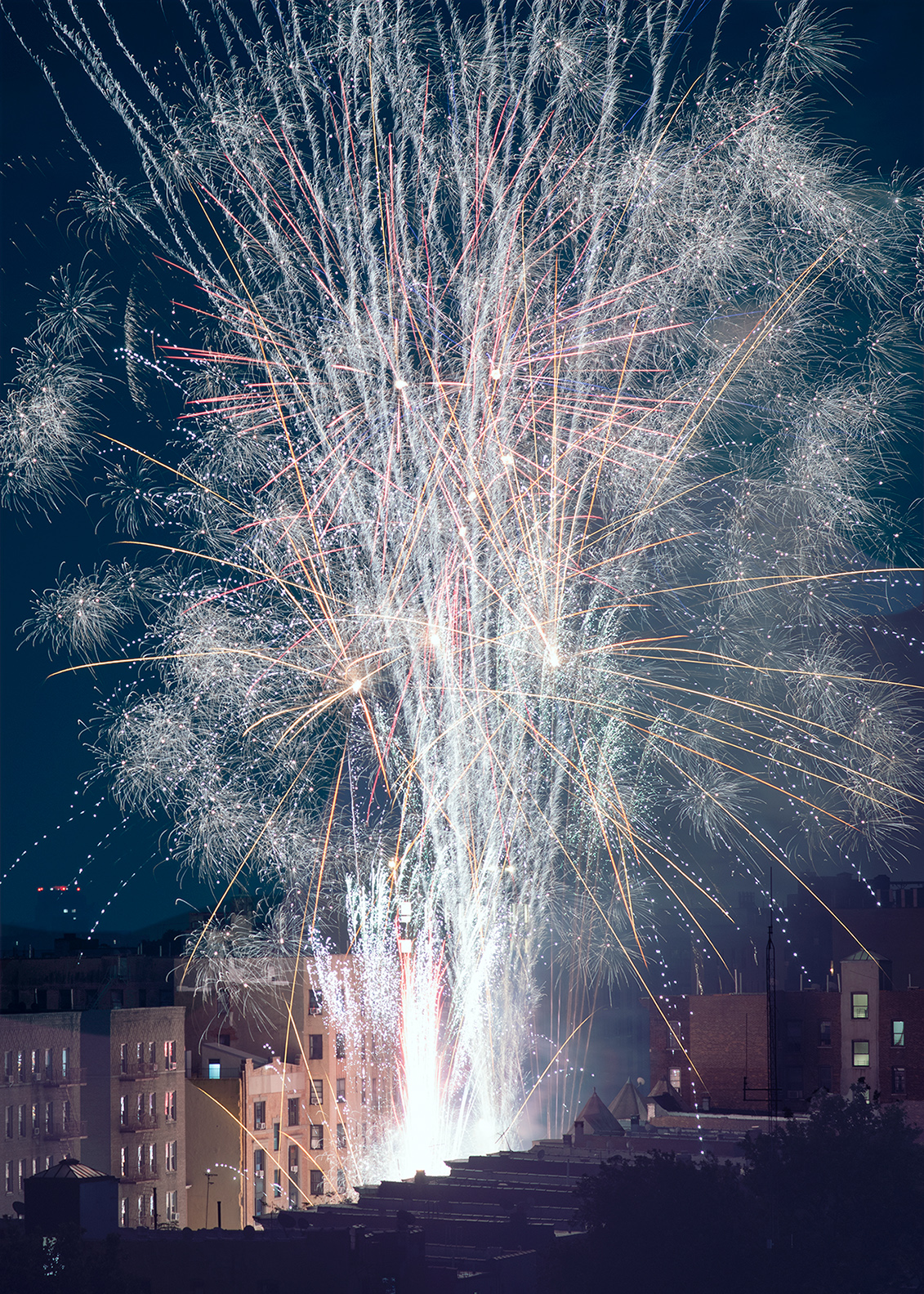
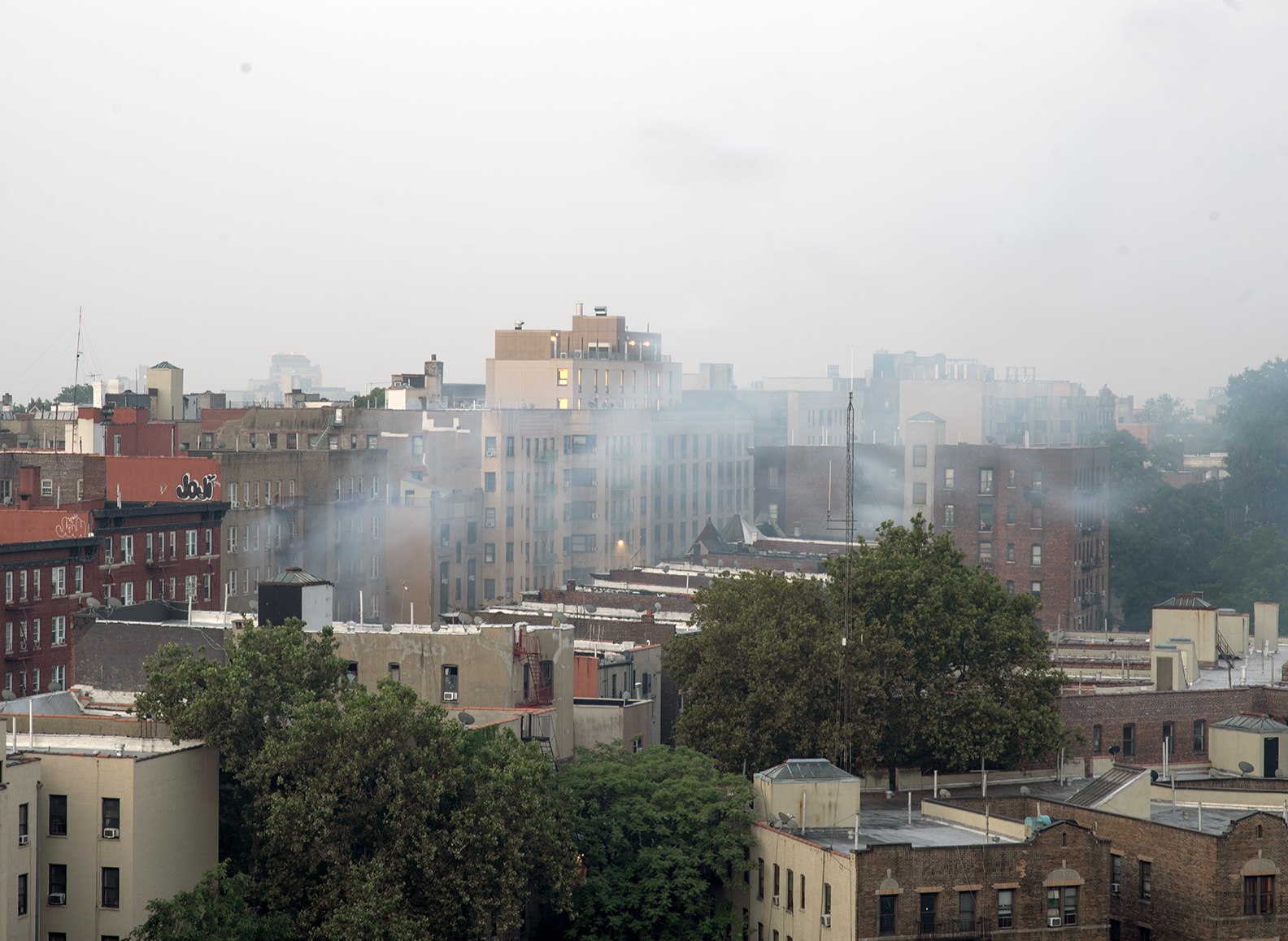
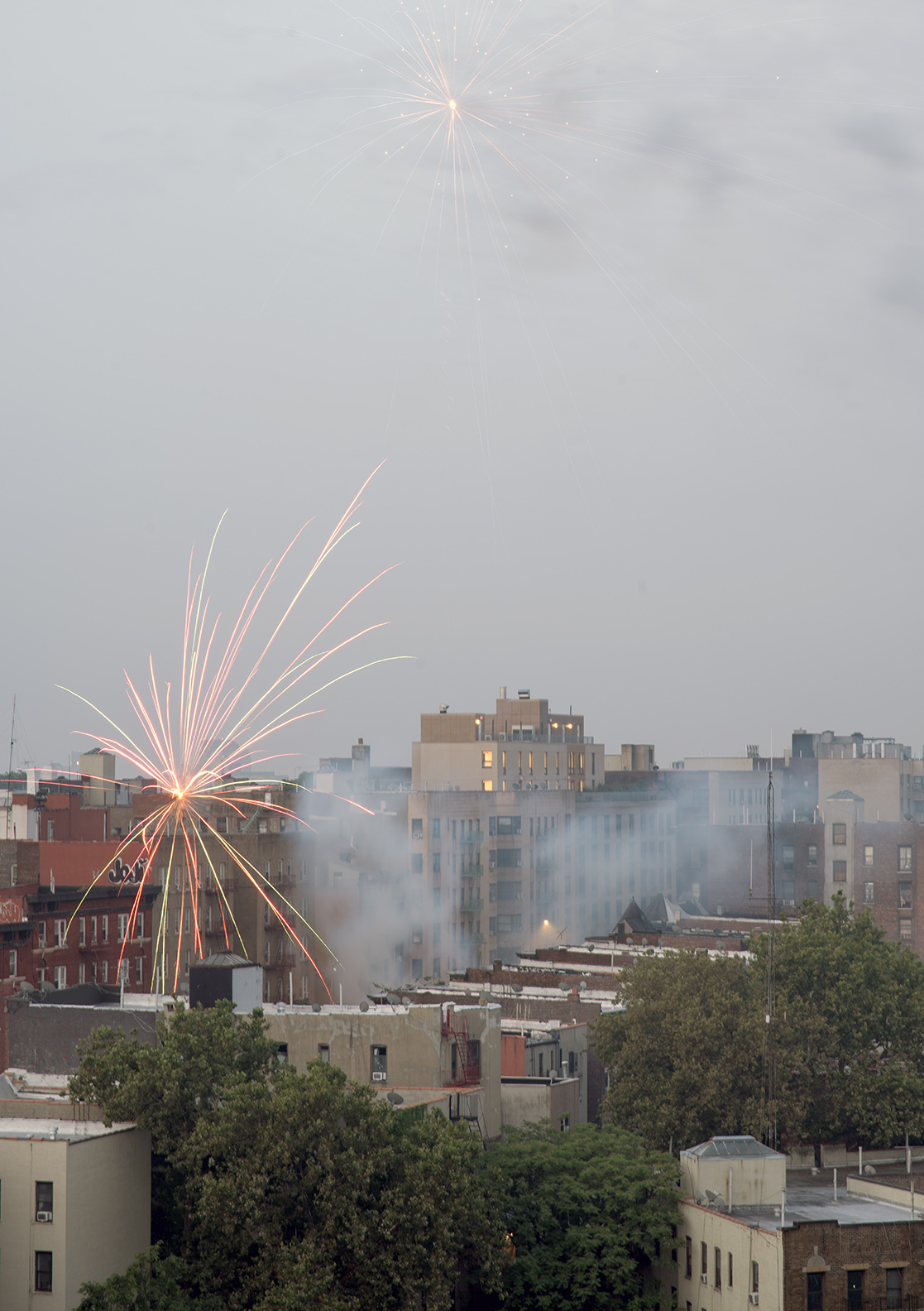
At sunrise on July 5th on Loring Place, they’re still blowing off fireworks in this die-hard neighborhood.