
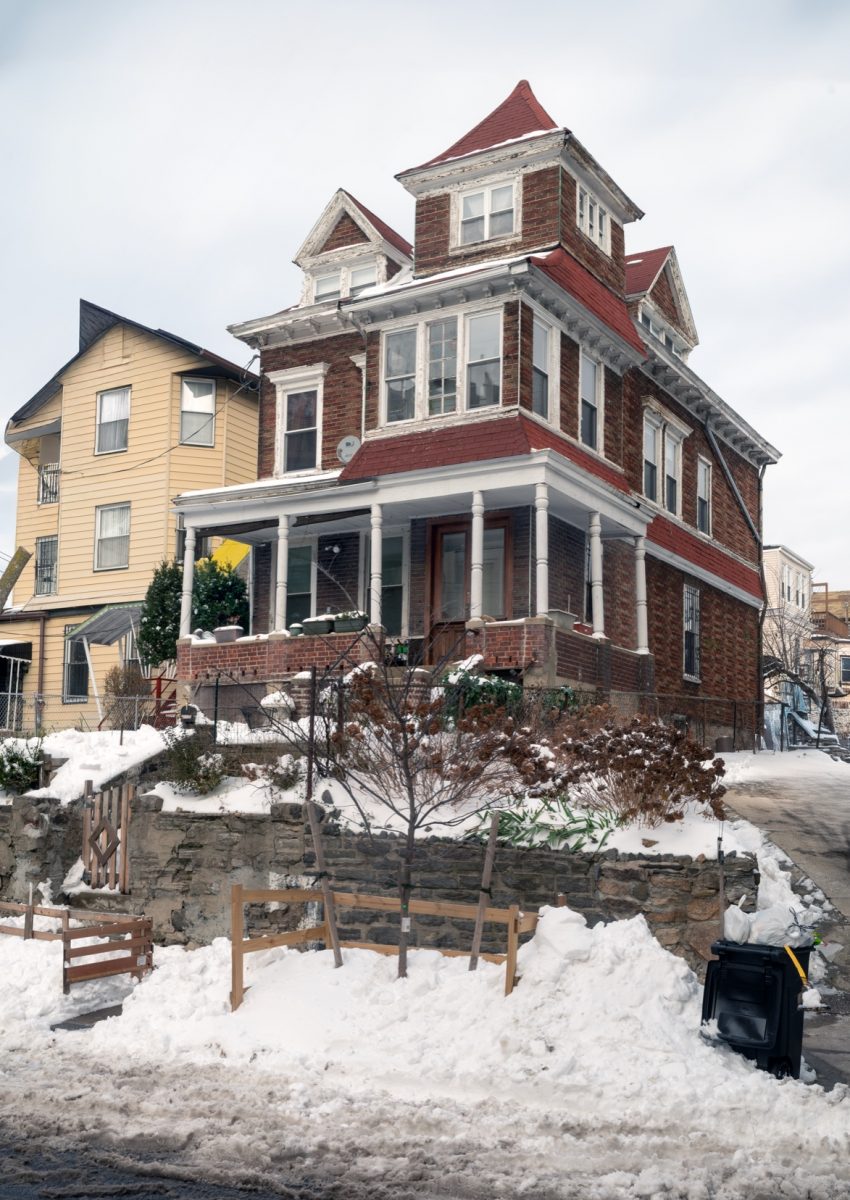
THREE STREETS, TWO HOUSES, ONE MYSTERY
Marble Hill, Manhattan
Up on a hill in a forgotten corner of Manhattan, three streets come together with names that sound like they ought to belong to a couple of Dutchmen arguing over a bar tab. Van Corlear Place, Jacobus Place, and Fort Charles Place. Nobody seems to have told them about Manhattan’s street grid, and judging by the way they twist around one another, nobody intends to.
At the top stand two old houses, one covered in siding, the other an imposing brick affair with elaborate cornices, projecting bays, a broad porch, and a tower wearing a pointed roof like a gentleman’s hat. Whoever built that house had something in mind beyond keeping the rain off his head. From up there, the Harlem River and the surrounding countryside must have been quite a sight. The house still looks as though it expects visitors to announce themselves.
The geography is just as peculiar. Marble Hill was once attached to Manhattan Island until somebody decided to dig the Harlem River Ship Canal through it in 1895. Later they filled in the old river channel, attaching the neighborhood to the Bronx. This left Marble Hill in the unusual position of being legally in Manhattan while sitting physically in the Bronx. New York has been living with the arrangement ever since, apparently without losing much sleep over it.
Then, in May 1926, along came Lois Long of The New Yorker, who found something even stranger. At 1 Van Corlear Place, tucked away on this confusing little hill, was the Godey Print Inn. It sold decorative objects featuring nineteenth-century fashion illustrations and, if you called Marble 3704 ahead of time, somebody would cook you dinner. Chicken and waffles, hot biscuits, and the sort of service that apparently made the trip worthwhile. Long and her companion had the dining room to themselves. Finding the place was probably half the adventure.
The inn later moved downtown, where customers presumably could find it.