Duck Island was not an island, and it had nothing to do with ducks, which is a good way to begin understanding Cleveland.
There was no water around it. There were hills, railroad cuts, bridges, factories, dead-end streets and the Cuyahoga Valley falling away beneath it. For much of its life, that was close enough.
The old neighborhood story says the name came out of Prohibition, when bootleggers and other people with reasons not to meet the police could duck into the little streets or disappear down the hills toward the Flats. Whether that is precisely how it happened hardly matters anymore. It sounds like the place.
Before there were bootleggers, there were workers — of every stripe and color. Eastern Europe was heavily represented, especially Hungarians and Slovaks, but name almost any country in Europe and somebody from there probably found his way to Cleveland and a job around the mills.
They lived in small frame houses and brick cottages crowded onto the bluff and went down every morning into the Flats to work in the mills, factories, lumber yards, railroad operations and docks. The houses were not architecture. They were places to eat, sleep, raise children and get up tomorrow morning and do it again.
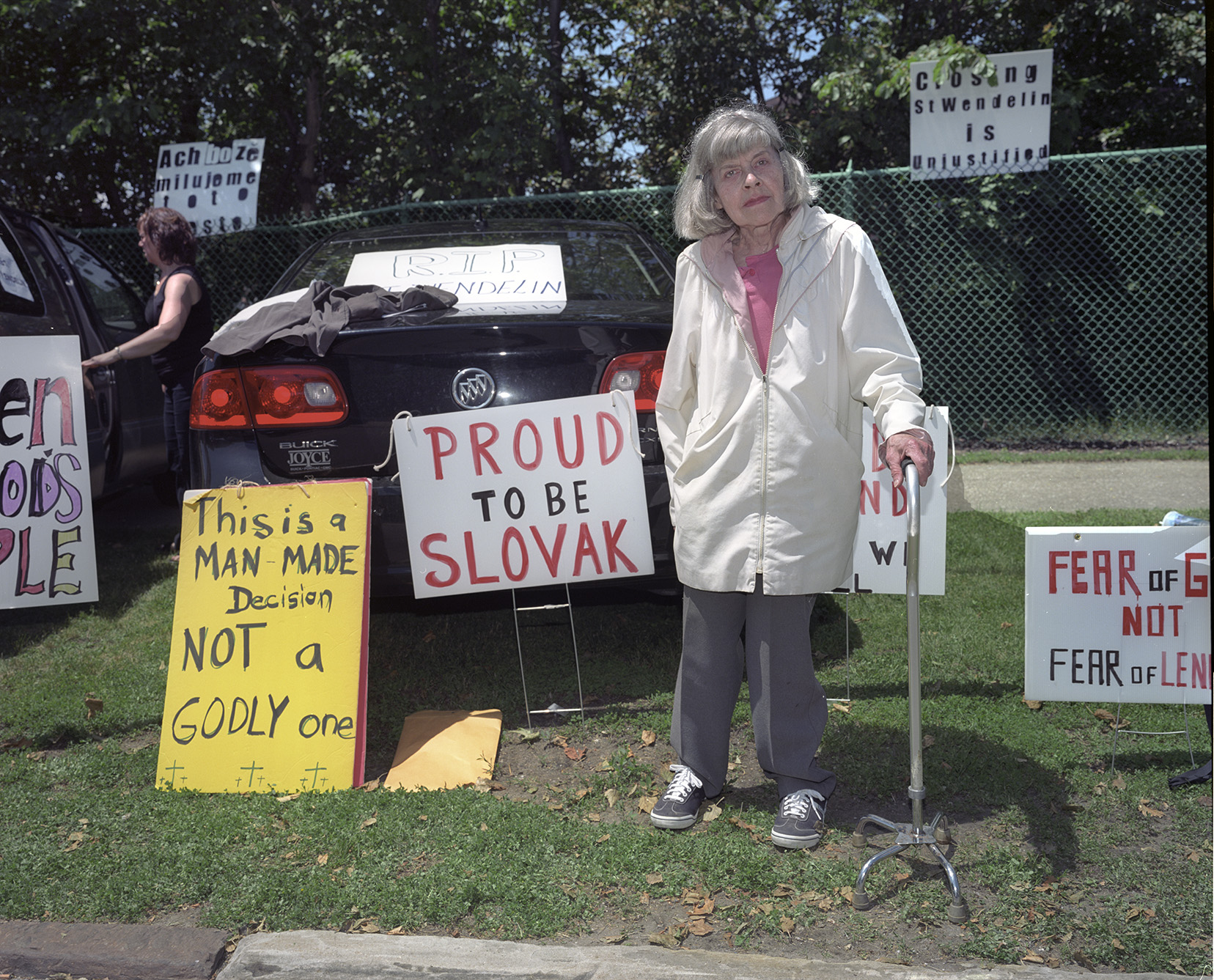
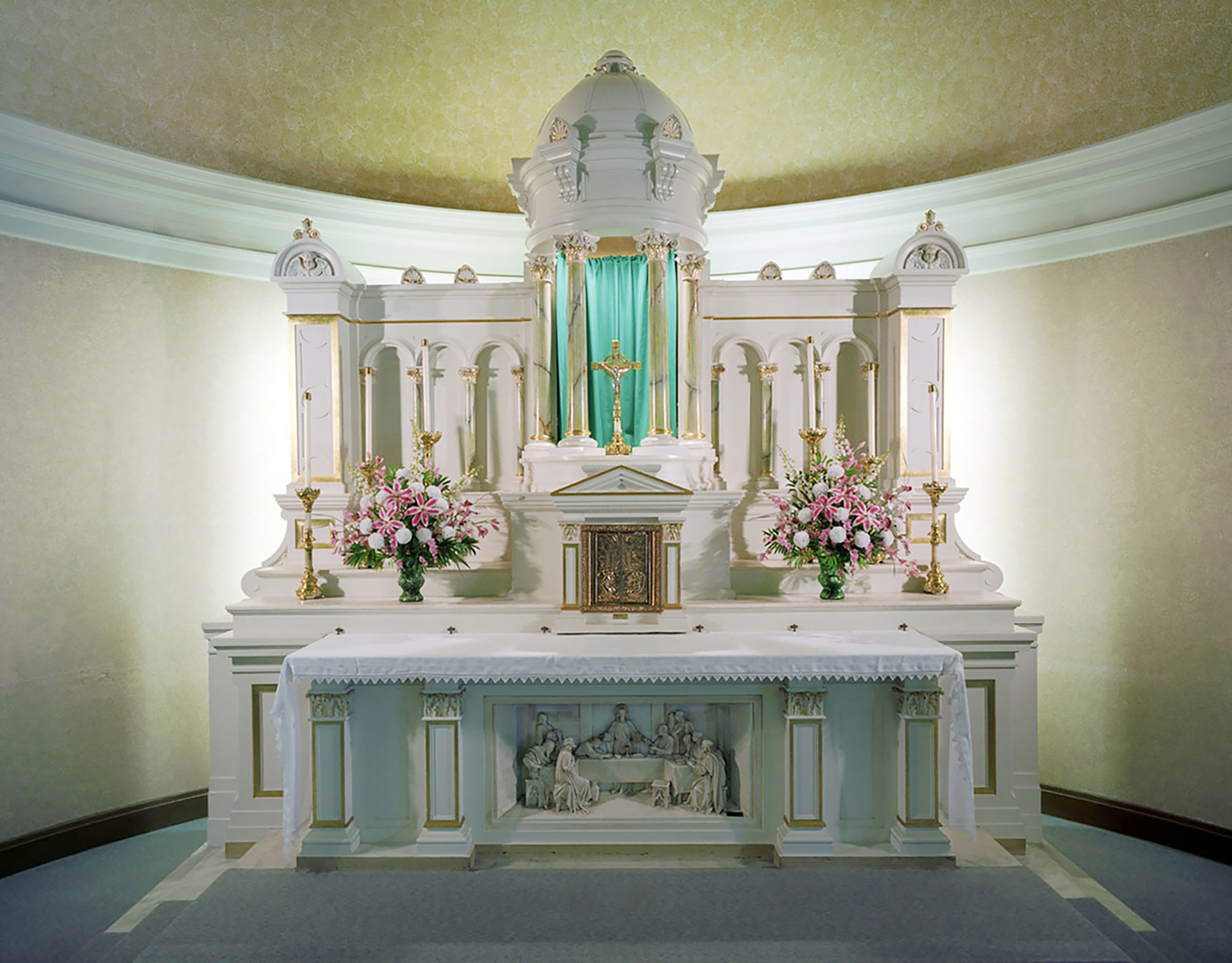
One piece of that immigrant neighborhood is still there. St. Wendelin was founded by Slovaks in 1903. It was caught in the Catholic church closings announced in 2009 and shut in 2010, but the parishioners appealed and won. The church reopened in 2012 and remains alive, still carrying its Slovak identity into a Duck Island where that kind of ethnic continuity has become rare.
Then Cleveland started building around everybody.
The original Abbey Avenue viaduct crossed Walworth Run in the nineteenth century. A new concrete deck went on in 1930, and for generations the bridge provided one of Duck Island’s essential connections to Tremont, a much larger working-class neighborhood surrounded by steel mills then much as it still is today — except Tremont, too, has been completely gentrified.
At the same time, the great railroad cut of the 1920s carved along Duck Island’s western edge for trains serving Union Terminal.
By the early 1980s the Abbey bridge had deteriorated so badly that it was closed and dismantled. For years the connection was gone. A replacement finally returned in the early 1990s, bringing traffic back into Duck Island just as the neighborhood was beginning another transformation.
Duck Island never needed water to make it an island. Infrastructure did the job. For decades it sat there in between things — not quite Tremont, not quite Ohio City, close to downtown but somehow hidden from it. When Cleveland industry began shrinking, Duck Island went down with it. People left, houses disappeared, vacant lots opened up and roofs sagged. Some cottages survived down little interior drives where you could pass twenty times without knowing anybody had ever lived there.
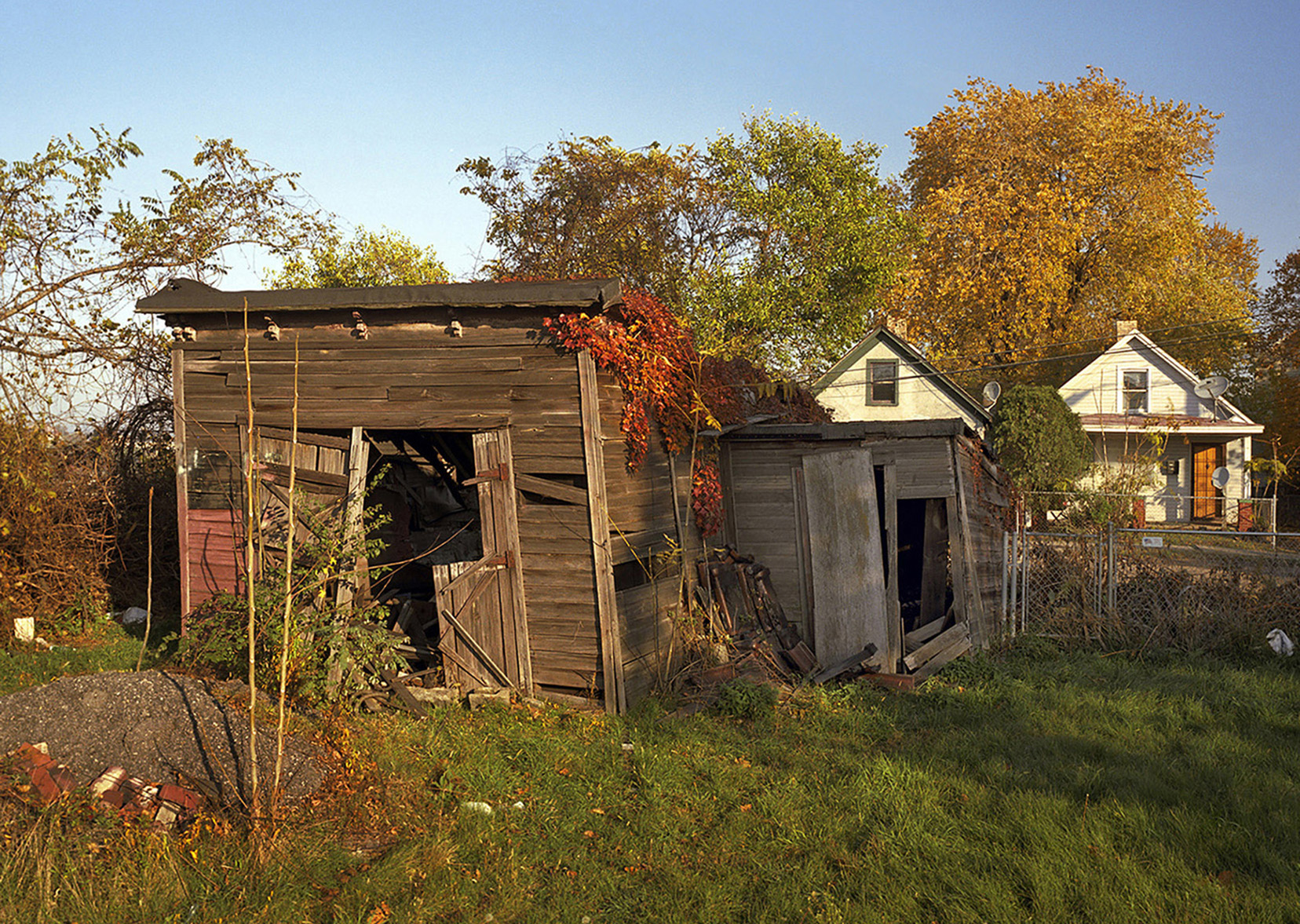
In 2006, there were still little worker cottages on Eureka Street at West 19th and the remains of an alley that had once been lined with garages. The wood had gone gray. The street was quiet. From certain angles you could have been standing in a forgotten mill town fifty miles from Cleveland instead of several minutes from downtown.
That was the Duck Island worth walking.
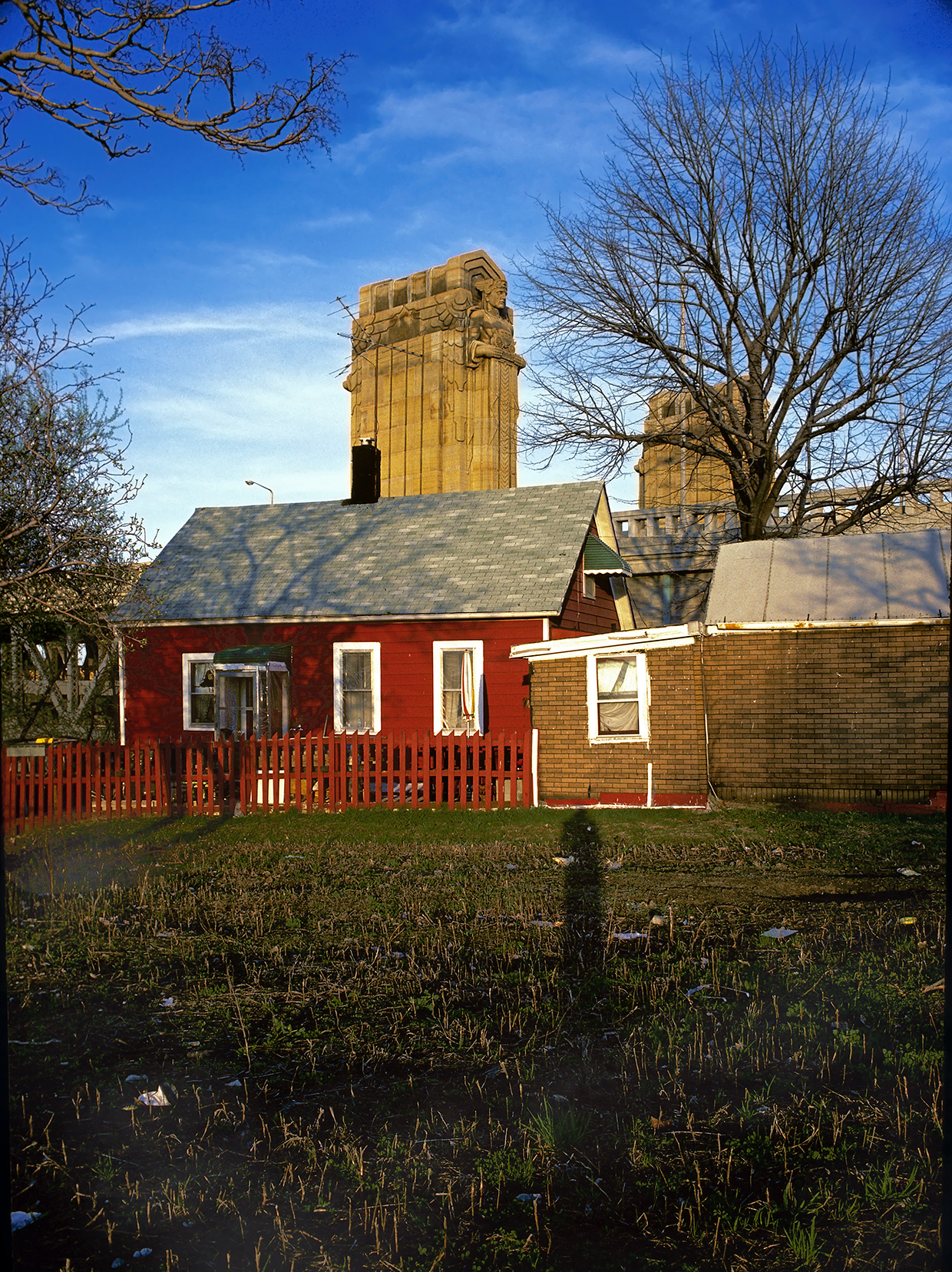
You could turn a corner and find a worker’s cottage, the remains of an old alley, the Hope Memorial Bridge hanging above you and the whole industrial valley suddenly opening beneath your feet.
Then follow the valley around.
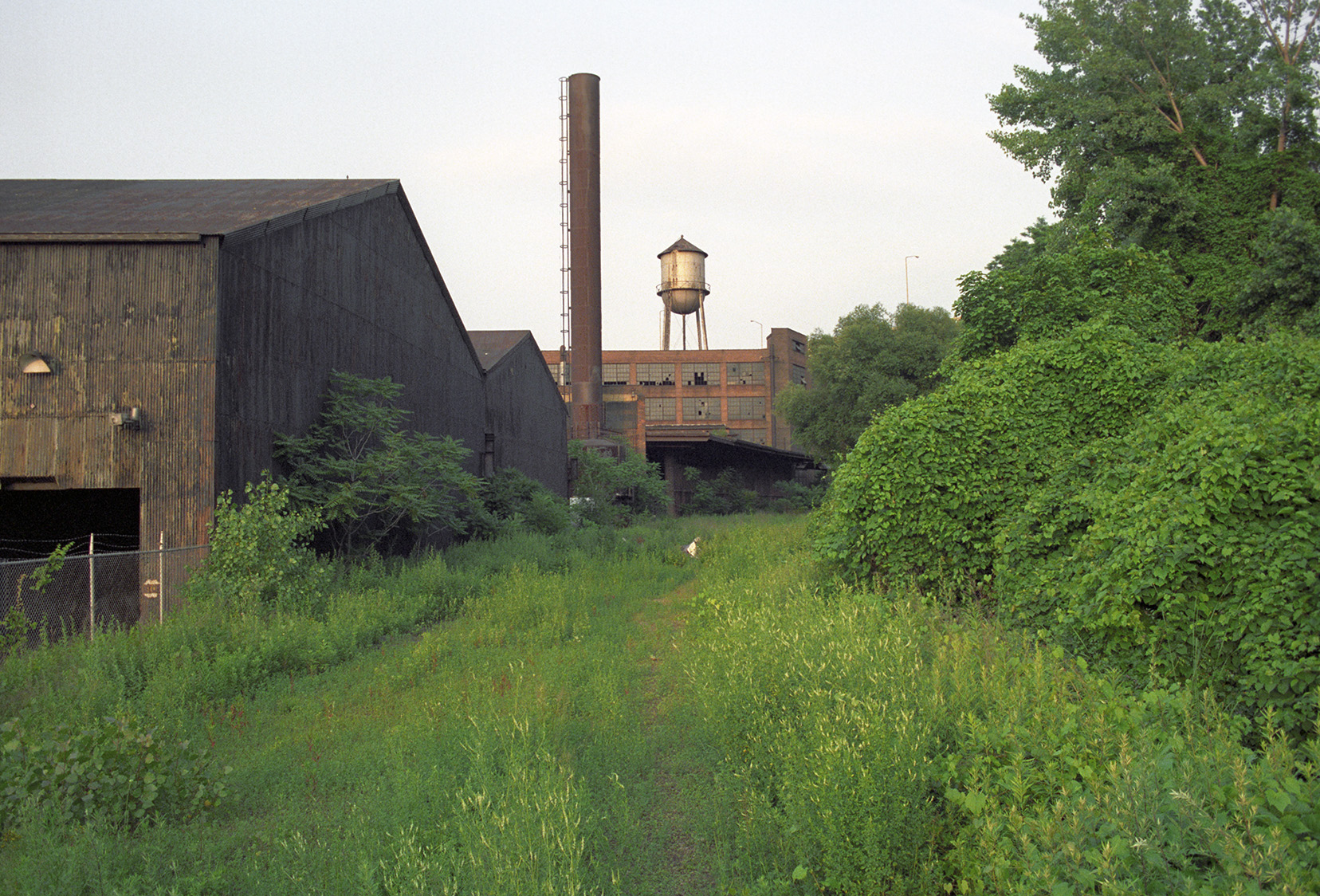
Below the bluff stood one of Cleveland’s great fastener works. Upson Nut became Republic Steel’s Bolt & Nut Division in 1930. Republic sold the operation to Federal Steel and Wire in 1973. Much of the sprawling complex was eventually abandoned, and after a 1990 fire the remains were torn down.
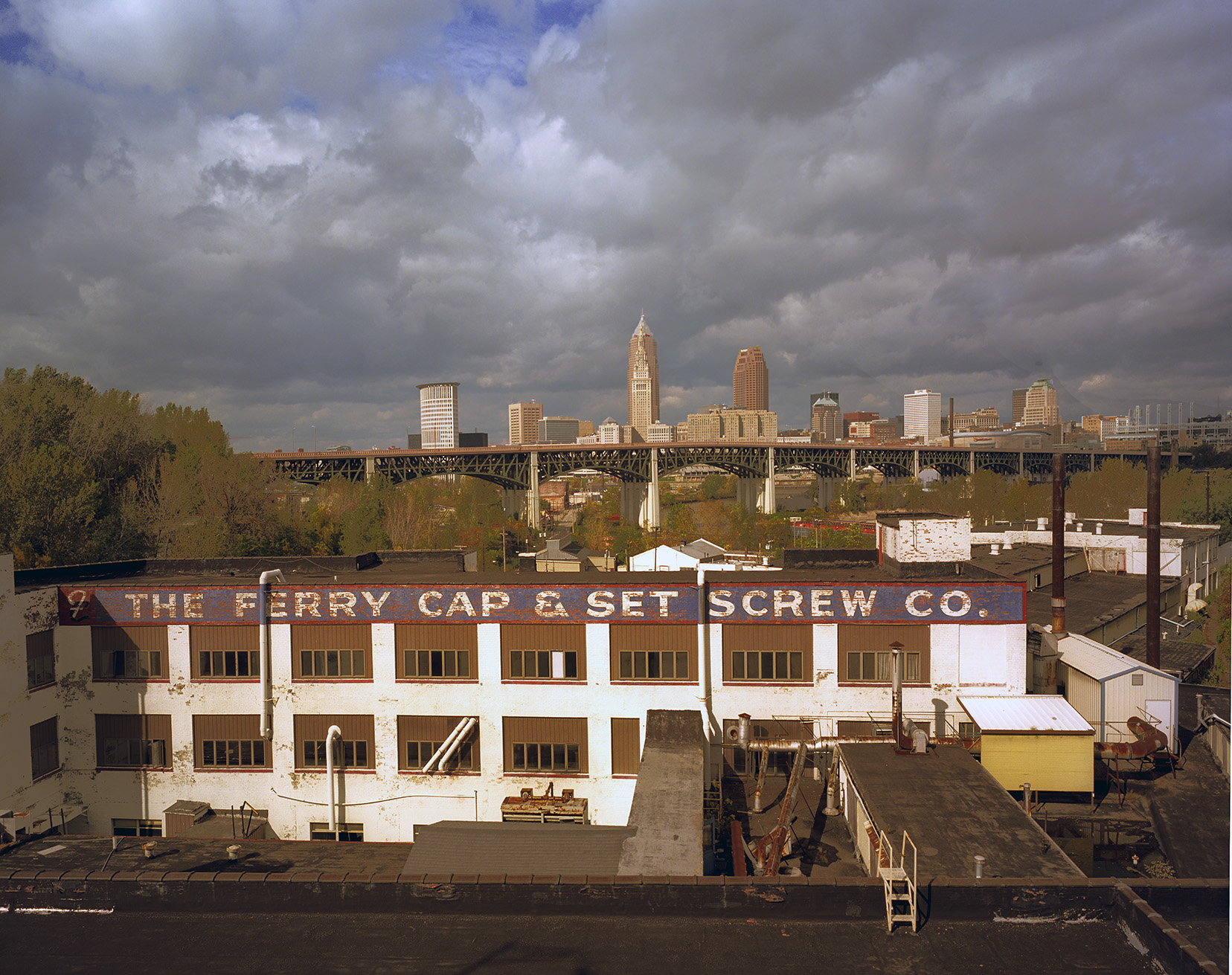
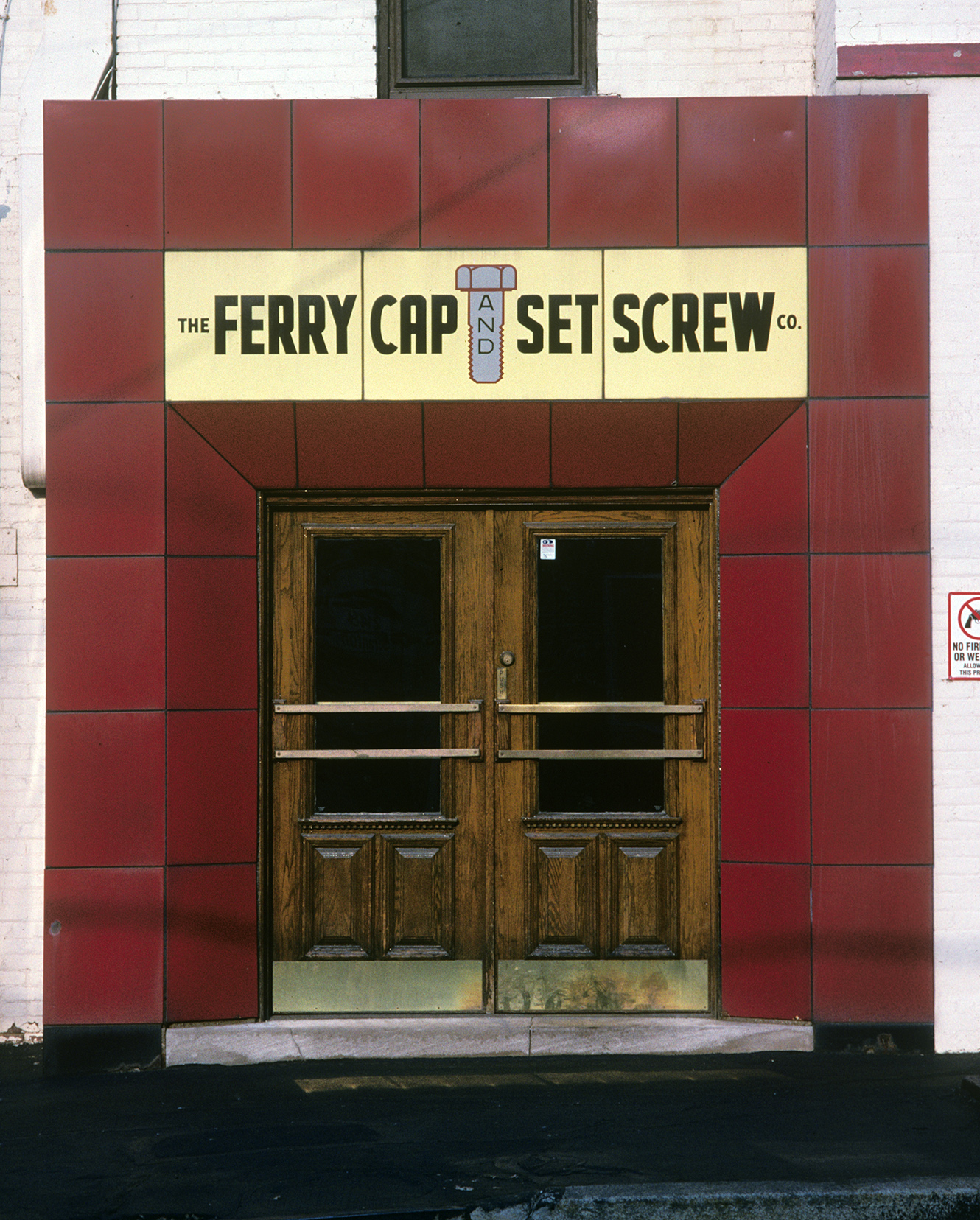
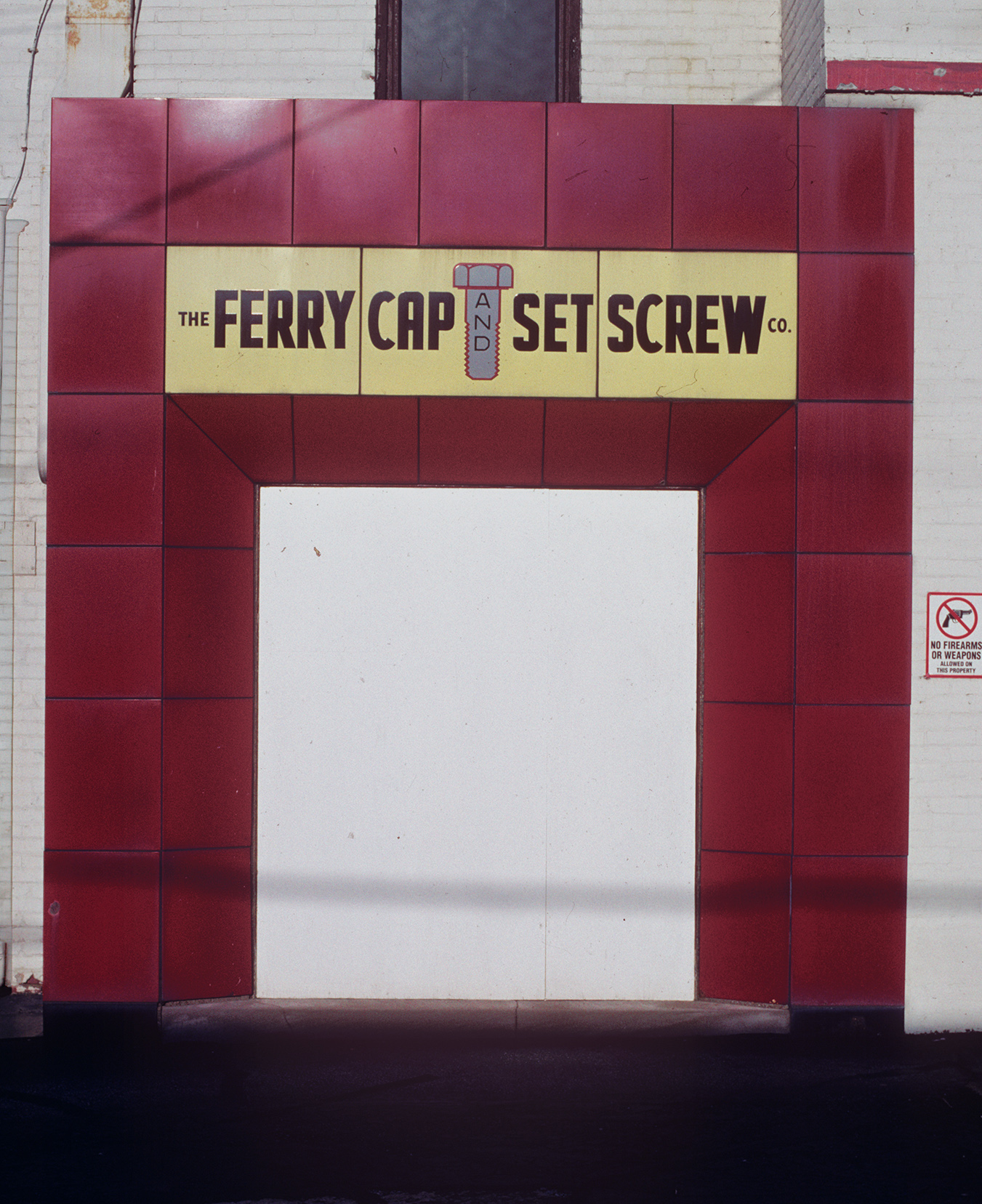
A little farther around stood Ferry Cap & Set Screw. The company began making fasteners there in 1907 and stayed for a century. Operations moved out in 2007–08. The old factory hung around considerably longer than the jobs and was finally demolished in 2024.
Keep circling and another piece of Cleveland is still alive.
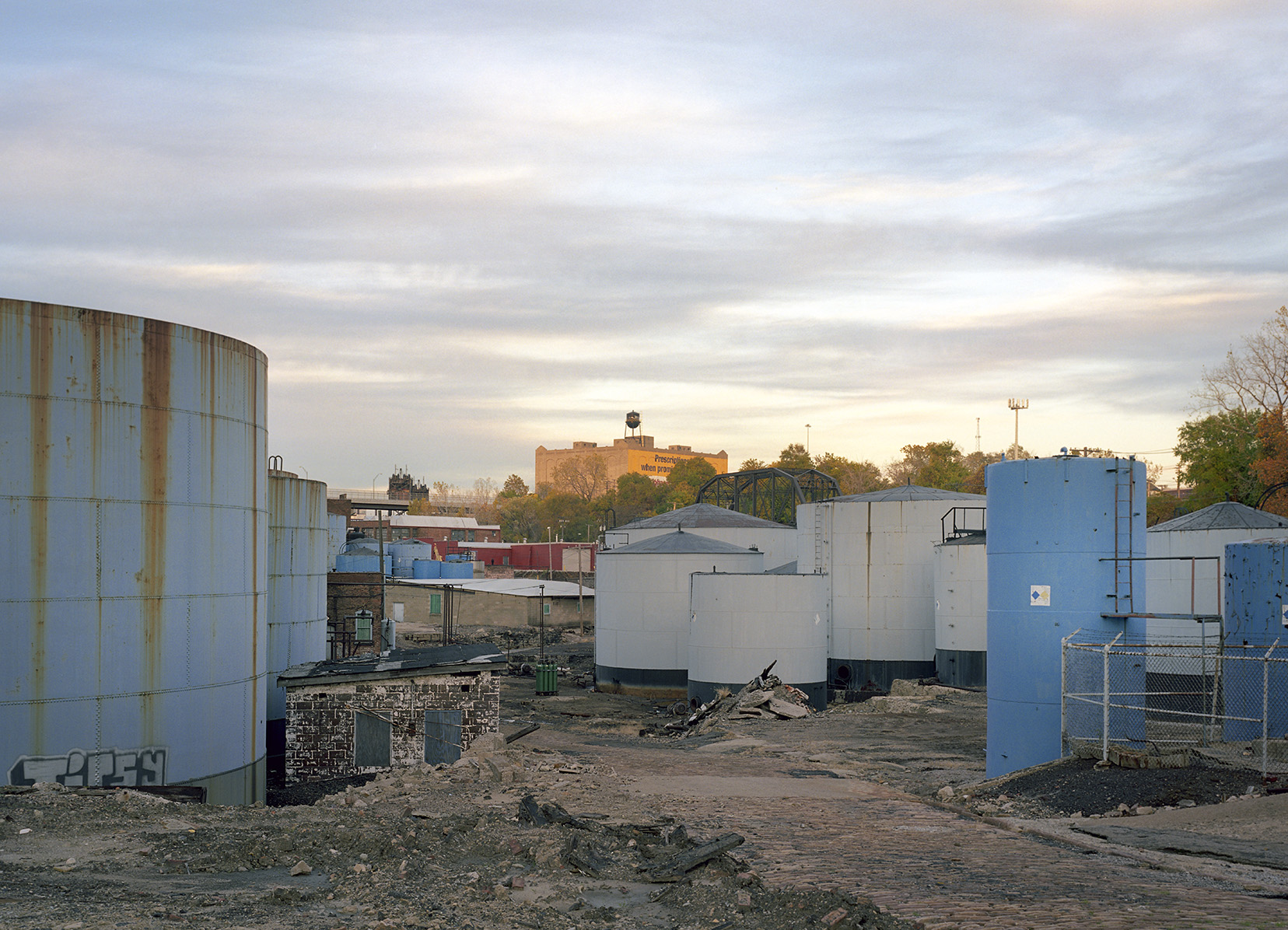
At 1730 Train Avenue sits Werner G. Smith, a small specialty-oils plant surrounded by tanks, pipes and old industrial buildings. It has operated there since about 1950, processing vegetable and fish oils into lubricants, waxes, esters and other industrial products.
It is not an old petroleum refinery in the usual sense anymore, but it occupies remarkable ground.
Train Avenue follows roughly the course of Walworth Run, the creek valley that became one of Cleveland’s first great oil districts. During the nineteenth century, Walworth Run and nearby Kingsbury Run held scores of refineries and oil works. Rockefeller and Standard Oil gradually swallowed much of that business, consolidated it and shut much of it down.
Very near the present Werner G. Smith plant, Standard Oil operated paraffin and wax works. Farther along Train Avenue stood James Corrigan’s Excelsior Oil Works, later sold to Standard Oil.
The creek itself eventually disappeared. Beginning in the late nineteenth century, Cleveland put Walworth Run into a sewer, filled portions of the valley and built over it. The water went underground. The industry stayed. And there is one marvelous final echo down there: storage tanks at the Werner G. Smith property once reportedly held some of the last legally imported whale oil in the United States.
So from Duck Island you can stand on the bluff and look down at oil tanks on ground where Rockefeller’s refineries once lined a creek that Cleveland buried.
Then turn around. The city behind you has changed again. It ain’t soot-covered anymore. In fact, it’s downright gentrified, and the Terminal Tower now has many contemporary acquaintances all around it.
Duck Island did not become desirable because it was isolated. It became desirable because it wasn’t anymore. Downtown was minutes away. So was the West Side Market, itself being “rediscovered.” But the real sign was simpler: Duck Island had made the real-estate map and the real-estate news.
That meant it had arrived for slaughter — I mean, redevelopment.
The mills, bridges, tracks and smokestacks that generations of workers had looked at because they happened to live there were repackaged as the view.
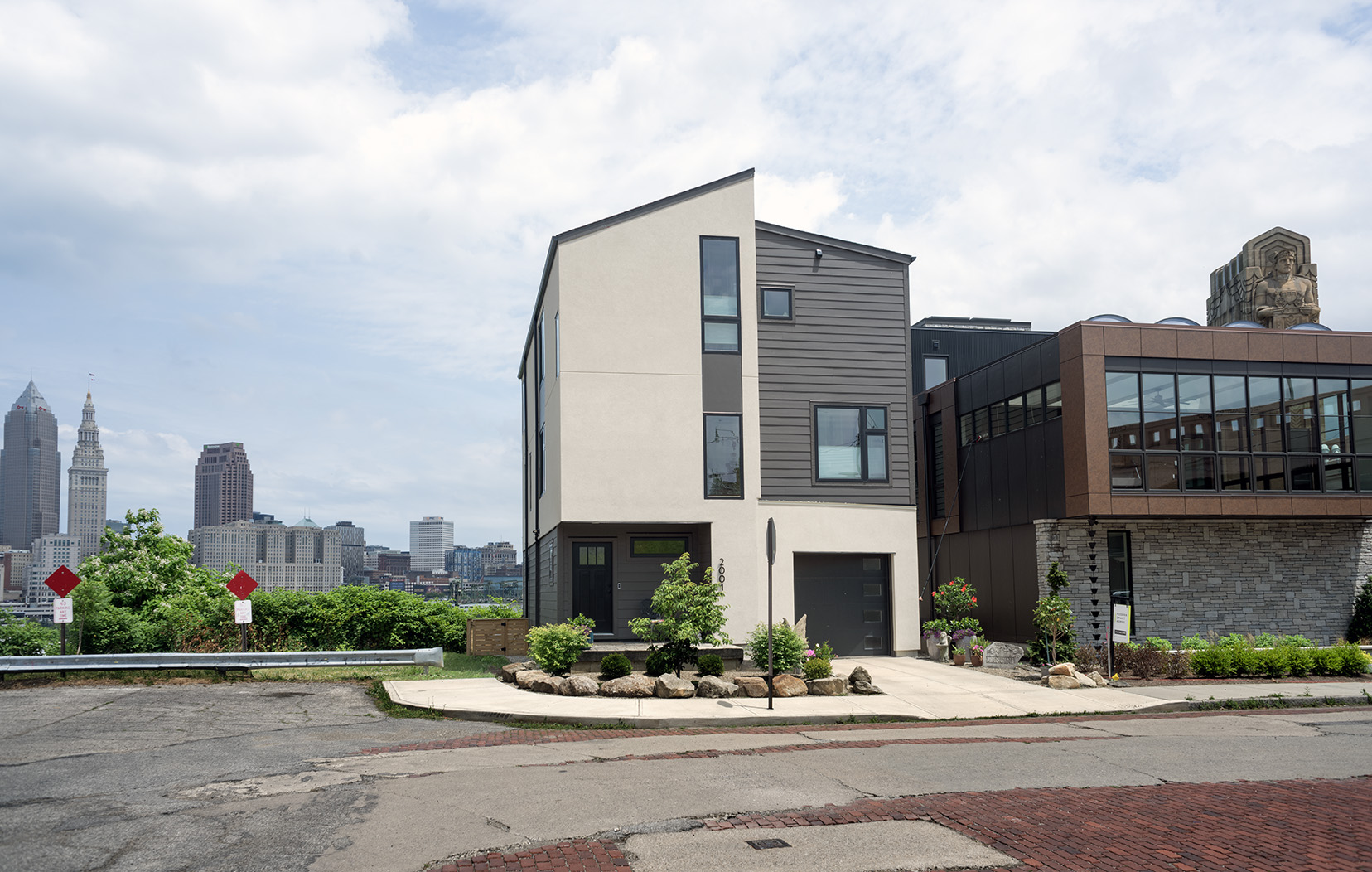
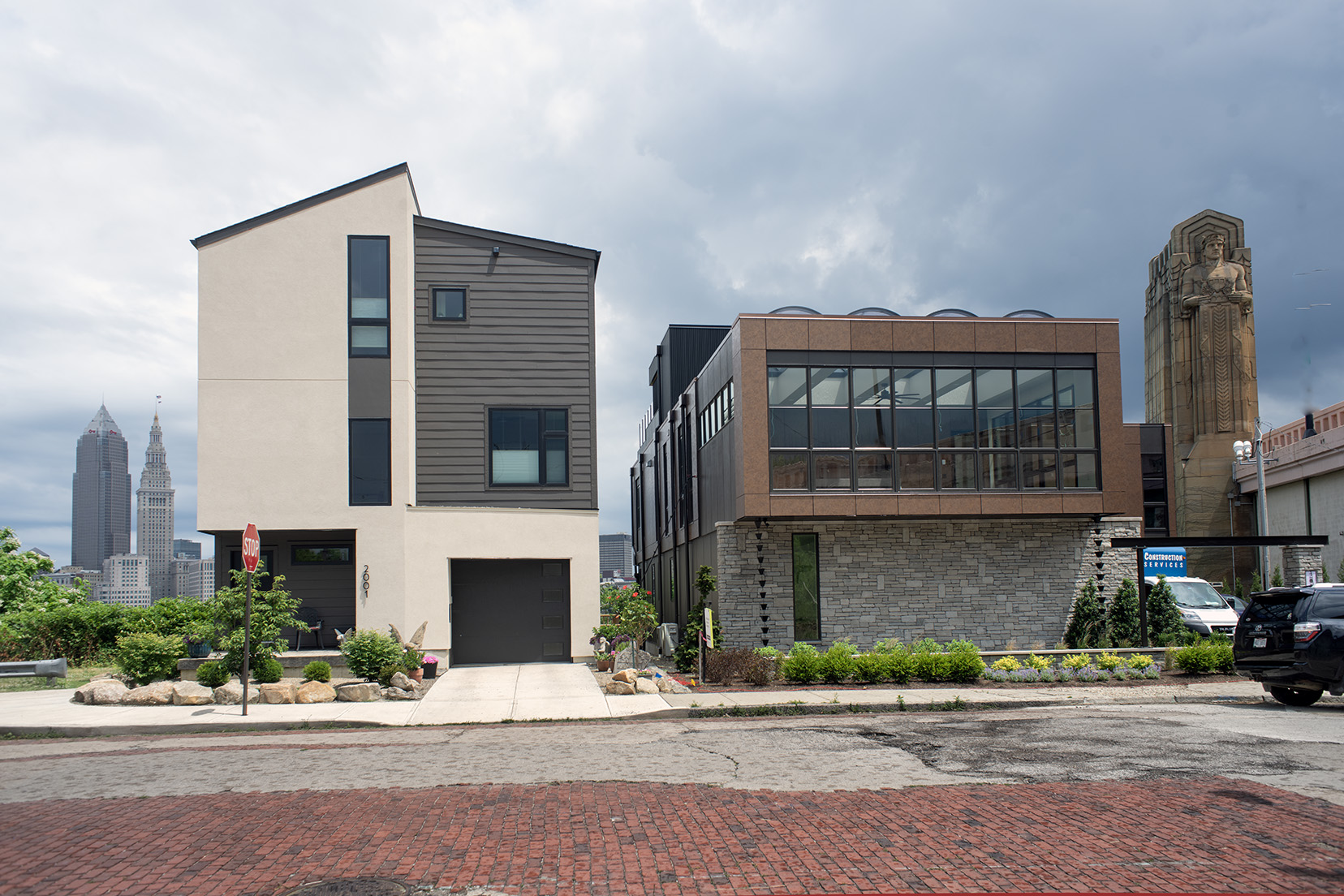
Steel and glass houses began appearing beside the surviving cottages.
One of them on West 17th Street came with a swimming pool and lounge on the roof, secure parking underneath and a view toward the Guardians of Transportation. It sold for around $1.38 million.
There may be no cleaner history of Duck Island than that.
A century ago, a man climbed out of the valley after ten hours at a mill, railroad yard or dock and went home worrying about whether the roof leaked.
Today somebody can swim on one.
The people who had been there all along never thought of the view as an asset. What mattered was that they could walk to work, church, the stores and the bars. A few are still there.
Although most of the old-growth trees are gone — further proof that, for generations, nobody gave a shit about the view — what remains of it is now blocked by extremely modern homes and one very large condo, there since the 1990s, that took away most of it.
Speaking of roofs, one of the many things that came with gentrification was the property-tax bill. People who had grown up there, sometimes for generations, suddenly watched theirs go through the roof.
And that produced the biggest change in the neighborhood since it came into being: those who could, and those who could not, afford the place, let alone the view.
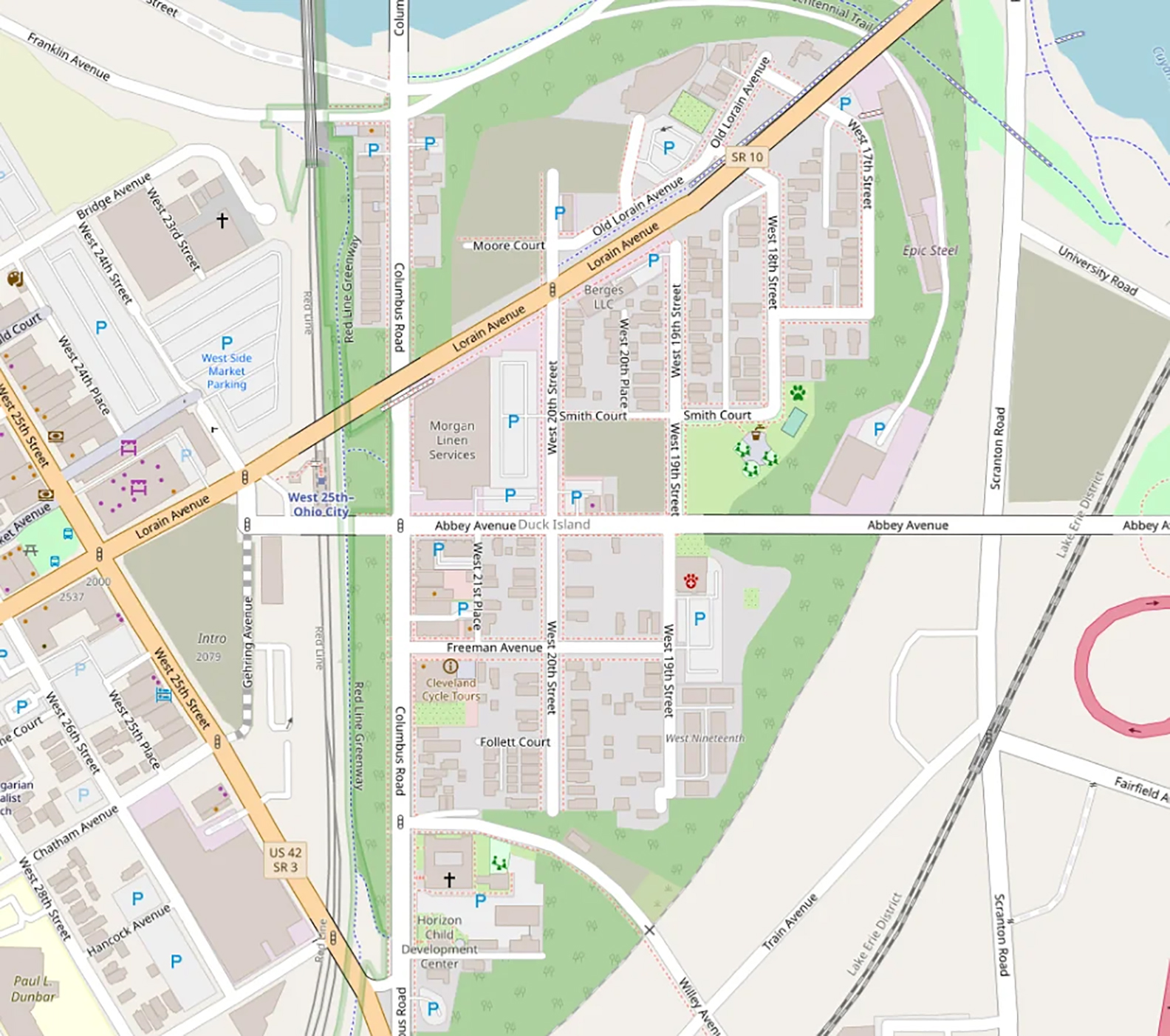
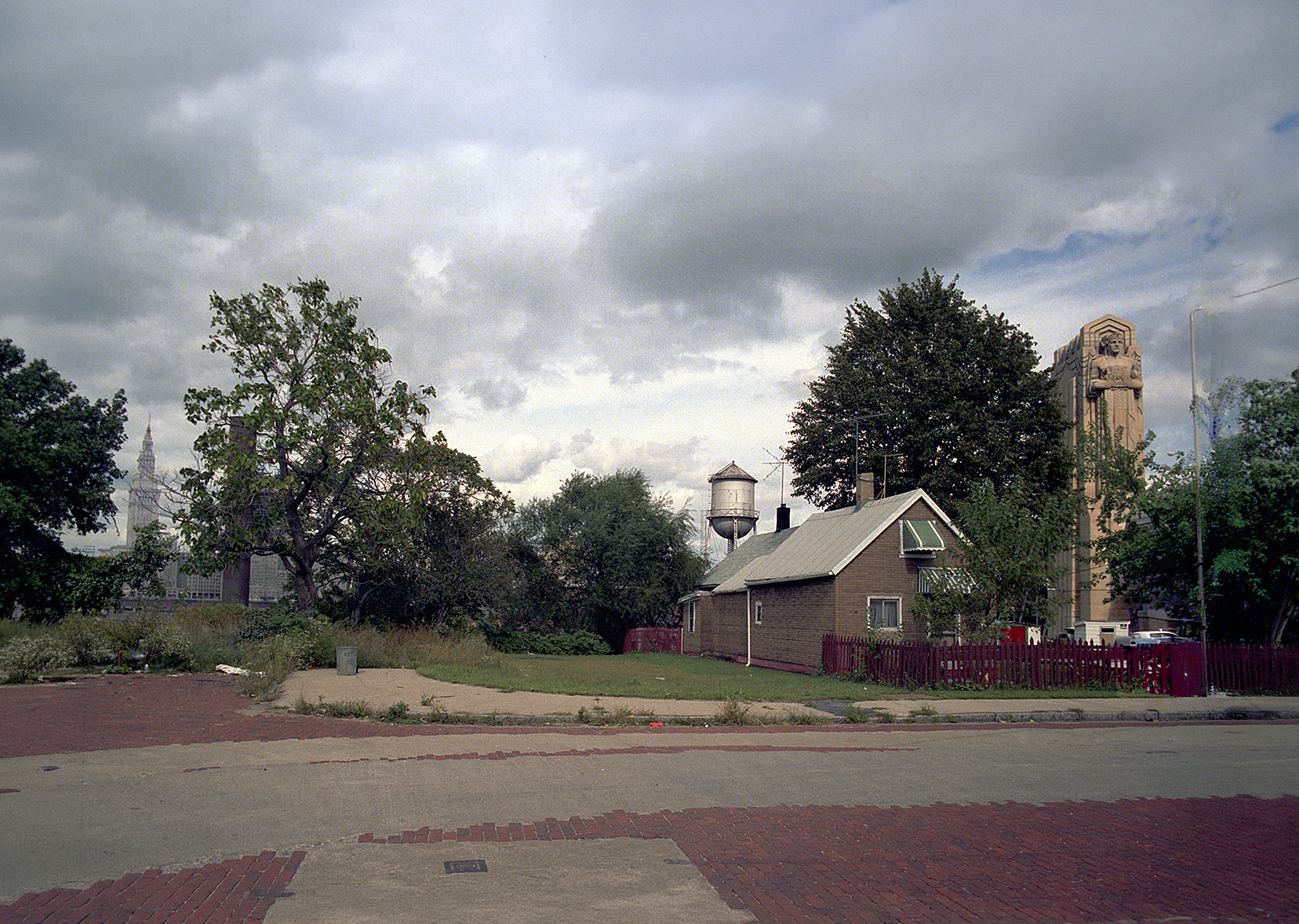
Duck Island Map TodayThey sub Neighbourhood of Duck IIland has been utterly transformed by gentrification. This map shows all the streets, and the green area are the surrounding Bluffs, which overlook the flats which has been historically a massive industrial area.West 17th Street, 1982This is the western end of Duck Island W. 17th St. crosses underneath the Lorain Carnegie Bridge Hope Memorial) , which features these guardians of transportation, which are eight huge statues memorializing the art of transportation.
I don't like using the new name for the bridge, which is named not for Hope as in desire, but for Bob Hope, whose father was one of the stone cutters. This renaming occurred during extreme low point in a city that had a tremendous inferiority complex and reflects that more than anything else.
If you want a celebrity connection for the bridge, I would approve of the Ghoulardi Bridge.
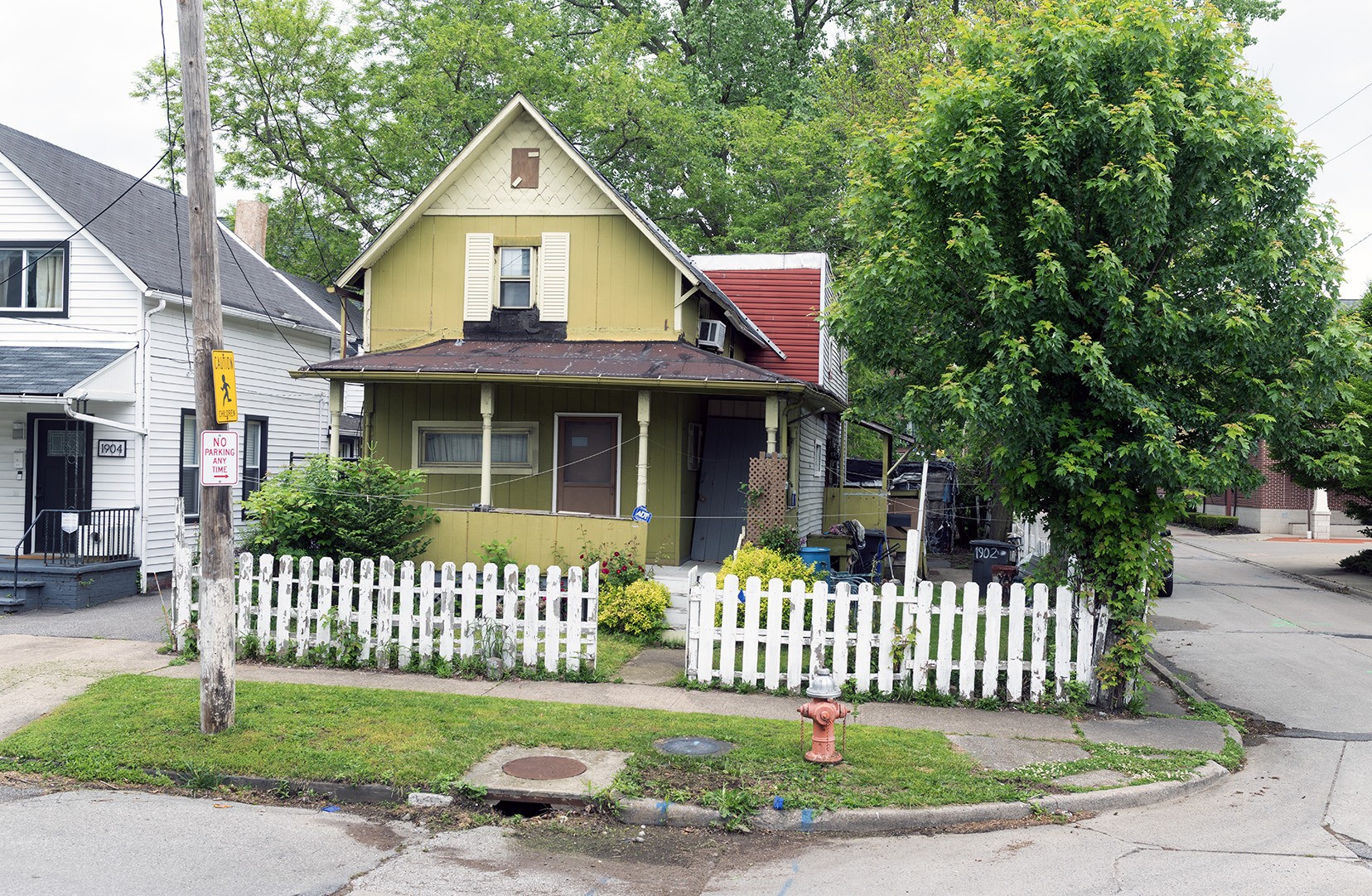
All of Duck Island, as far as homes are concerned, basically looked like this. The dominant architectural style was worker cottage.
Below the Bluffs at this time was an enormous abandoned, steel mill called Federal Steel, and Wire. Originally Upson Nut & Bolt, it was bought by Republic Steel in the 1930s and then in it's final reiteration it became Federal Steel & Wire at the worst possible time in steel history in America. Black Friday and Youngstown was right around the corner which symbolize the beginning of the end which is still ongoing, for the steel industry.
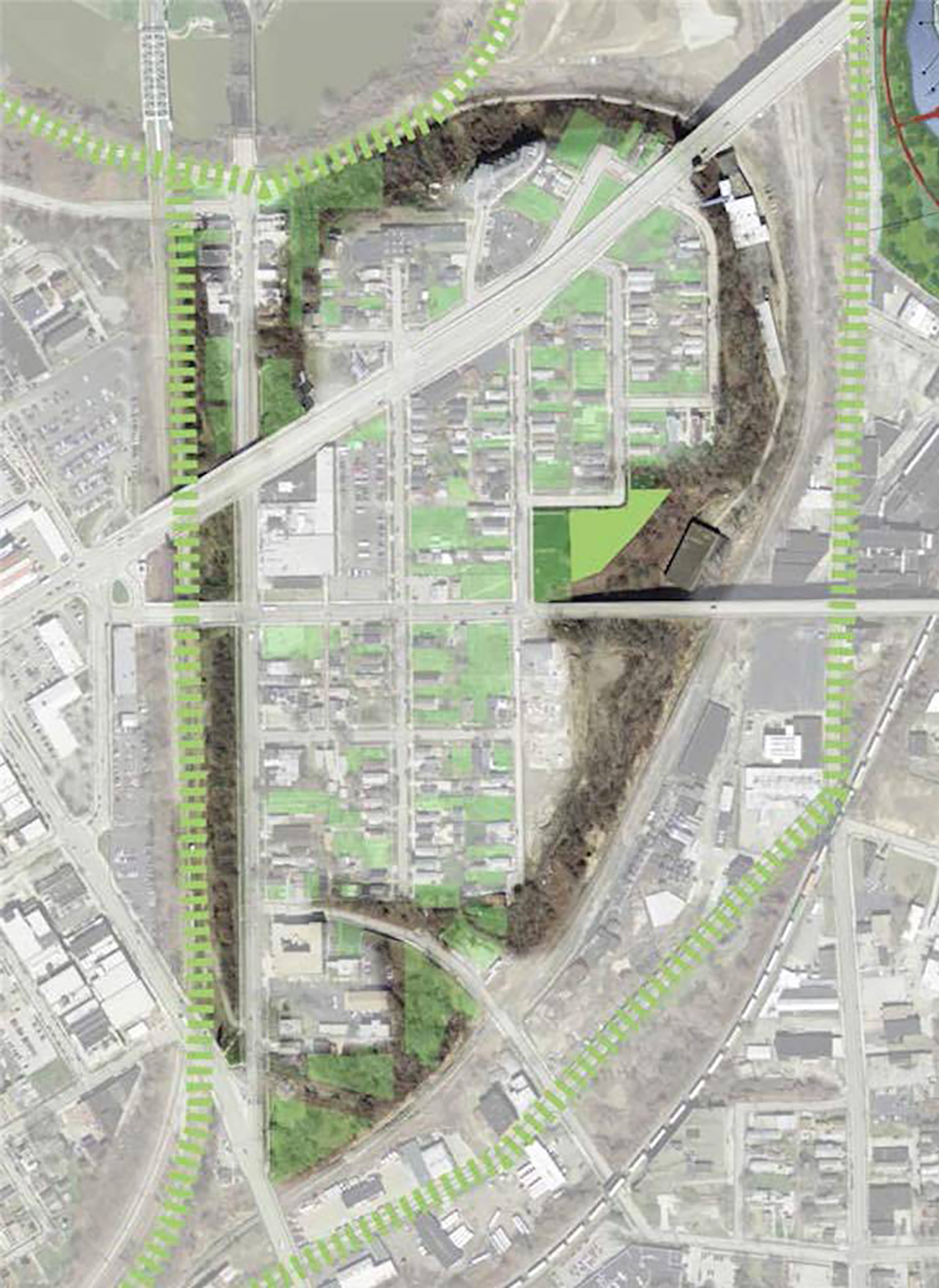
And, of course, in the background is the skyline of the city, which nobody cared about much until gentrification.Duck Island Map, Including IndustryWith this map, you get a better idea of how Duck IIland was basically surrounded by industry, which is highlighted by the brown area in the Bluffs. But the industry didn't stop there, in fact all the streets out to the south and east fell down into an enormous industrial area called the Flats. Sections of the Flats close to downtown were at the base of the Bluffs of Duck Island to theast. The way it sits on is called Scranton Peninsula. There was once a steel mill there. The property was sold and parceled out to developers, and presently it's getting filled up with modern townhouses and apartment buildings.
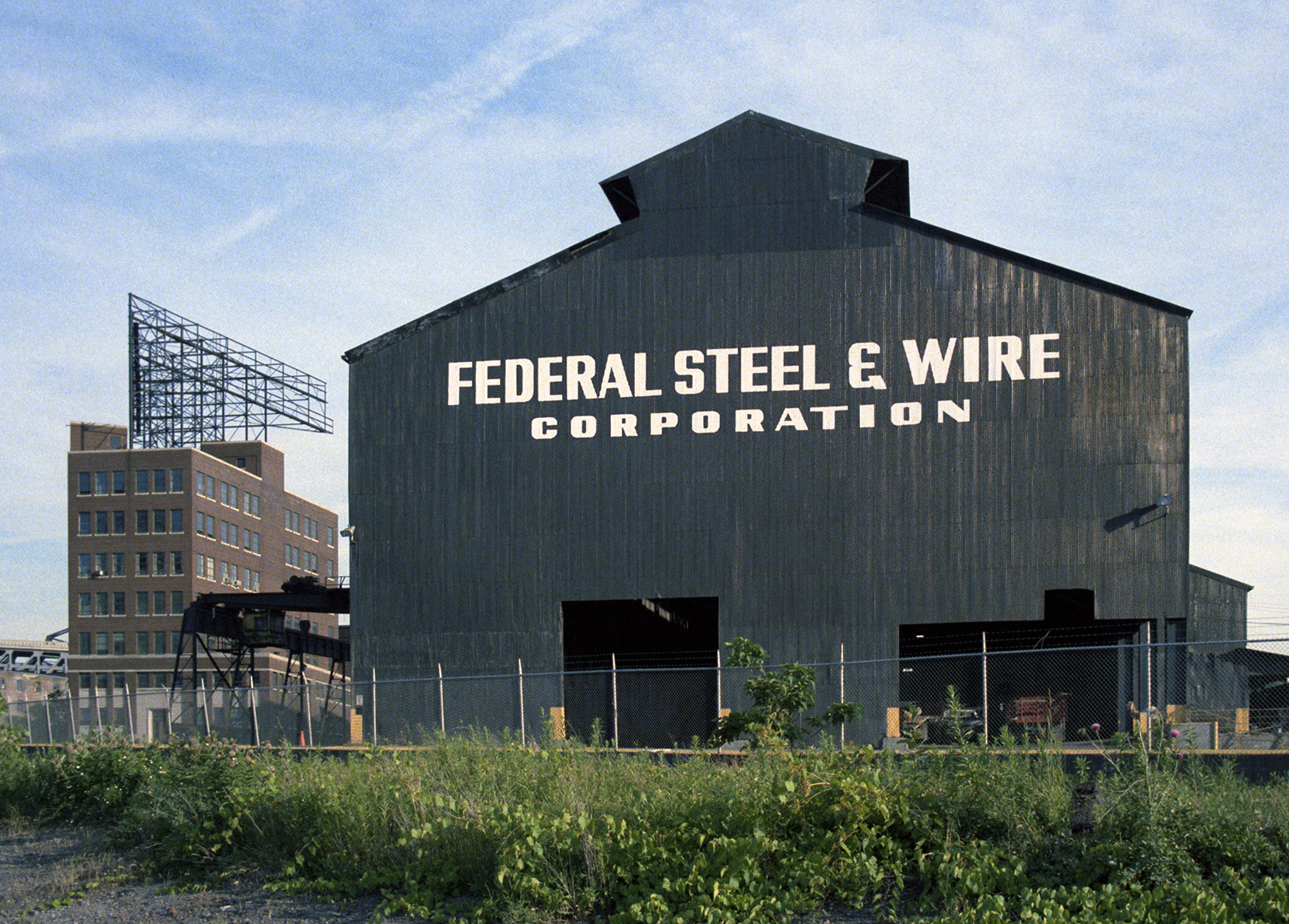
There is no other residential gentrification. I'm in the flats at the moment, however, the land Island sitting on the Bluffs is entirely gentrified. Perhaps there are 10 homes left on the entire grid that are occupied by original residence or their family members.Federal Steel & Wire, 1979Federal Steel & Wire bought the mill from Republic Steel in 1973, but did not do a lot with it. It eventually shut down in 1977.
The mill was demolished in 1990. The mill, took up almost the entire Scranton Peninsula, the geographic feature below Duck Island.
Redeveloped recentlyi nto hundreds of apartments and townhouses. Duck Island is 99% gentrified. Downtown has its own residential redevelopment as a result of its ongoing gentrification, and then Scranton Peninsula was the last open place left to quench more demand for folks to live downtown and, now, even along the Cuyahoga River.
The bolt-and-nut complex alone occupied roughly a quarter of the entire 80 acre Scranton Peninsula and nearly all of what later became the 25-acre Thunderbird redevelopment tract.Abandoned Rail Tracks, Federal Steel & WreAt the base of the bluffs below Duck Island and directly below West 17th Street, was ta B & O main rail line. It began on Whiskey Island at the Erie Railroad Iron Ore Port.. The iron ore did not go to the steel Mills of Cleveland, the Pennsylvania railroad handled that from its lakefront docks. But the Erie Railroad passing right through here brought most of the iron ore south and southeast to the Ohio River steel mill towns as well as Youngstown.
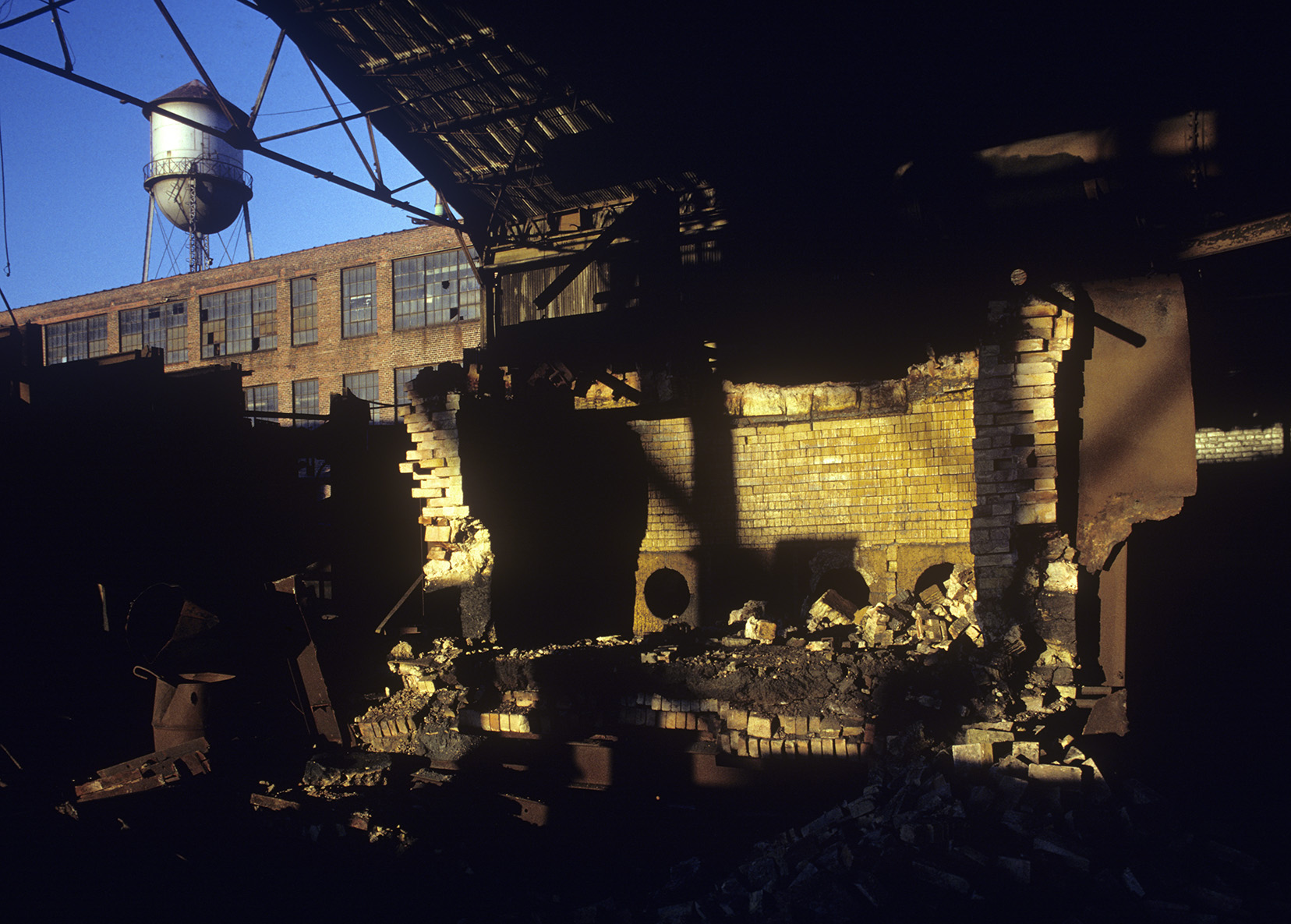
Cleveland was the largest iron or part in America, so the activity was continuous and living on top of the Bluffs over the railroad tracks and the nut and bolt factory with the accompanying iron or boats, there must've been play a collection of sounds. Not to mention the glow of melted iron it's steam and smoke up scaring the skyline of downtown just 1 mile away.Federal Steel & WireThe furnaces are in full demolition in 1989.
The furnaces were in full demolition by 1989. The plant began as Upson Nut & Bolt. Republic Steel bought it in 1930, closed the blast furnace, ore docks and open-hearth furnaces, and supplied steel from its other mills to keep the bolt-and-nut operation going. In 1973 Republic sold the property to Federal Steel & Wire. Federal apparently never really operated the mill; it sold off the manufacturing equipment and the great plant slowly emptied out.
Can you imagine buying this place in 1973 with black flag Friday looming in Youngstown just five years later? Since steel is so important both to the country and to the people who work there come it's normal for these males to hang on until the bitter end. Upson Nut & Bolt's evolution to empty field was just the normal process for heavy industry.
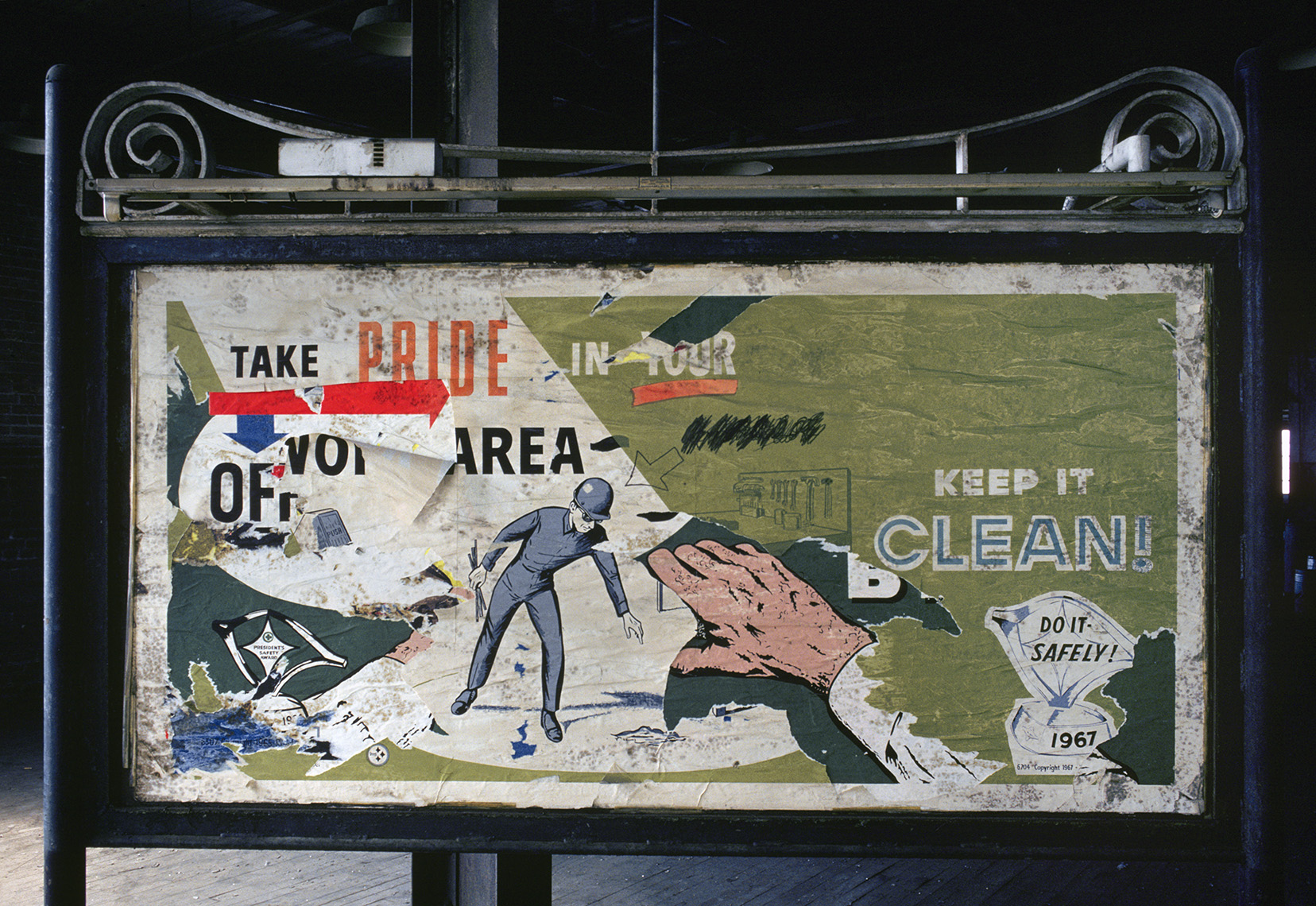
But what changed is the transition from commerce to living. The River that used to supply iron war to this mill and all the others is viewed more as a great place for homes. And in the case of Scranton Peninsula, where the steel used to sit, it's in fact with hundreds of townhouses and large apartment buildings complete and more are being built right now.Federal Steel & WireA safety sign on the top floor of a finishing mill.
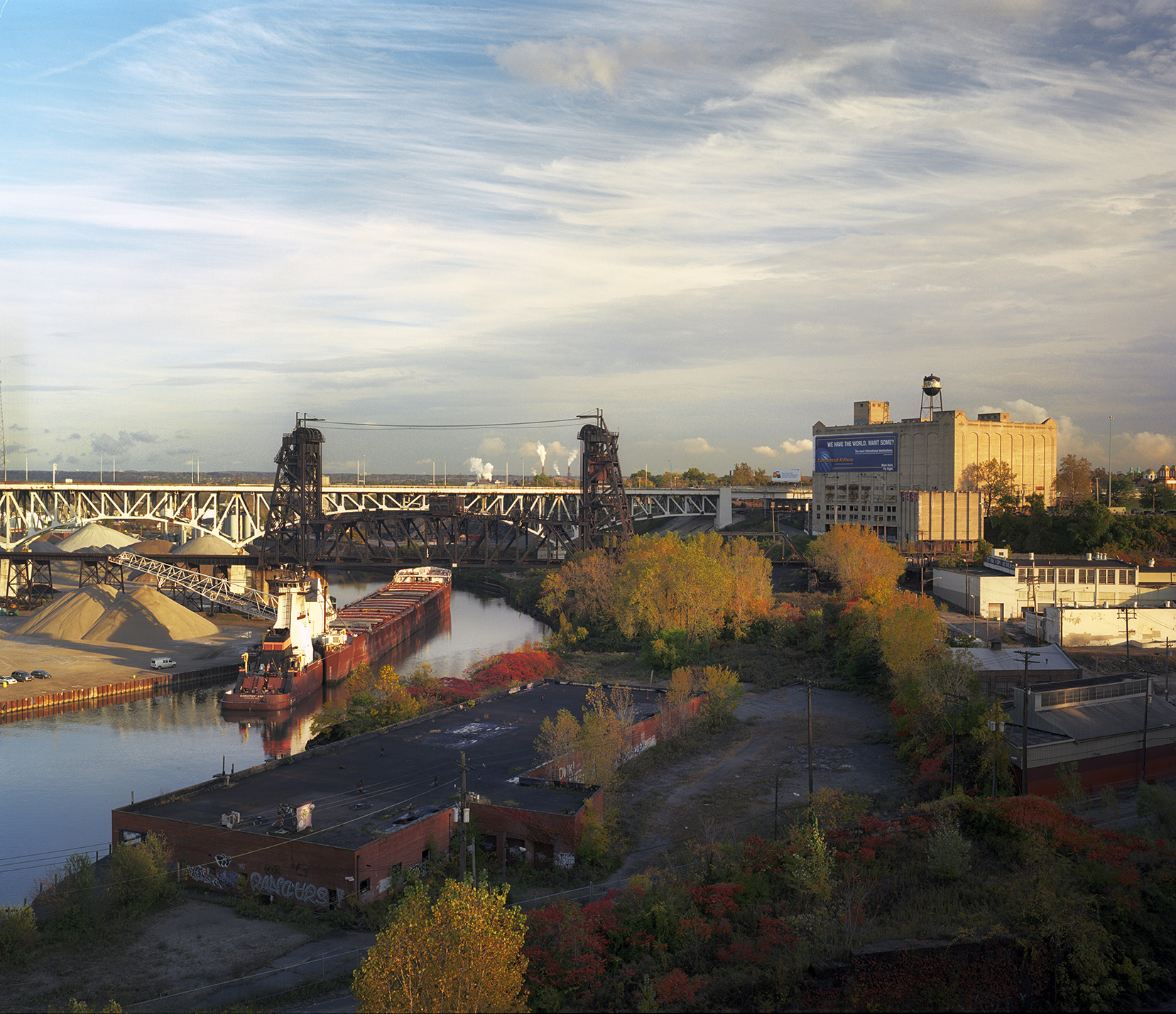
Upson Nut & Bolt employed 2000 by 1911 and Republic Steel employed around 1700.Pictures of the Lost Source.As you circle around Duck Island the next thing you see is the Norfolk and Southern railroad lift bridge. and one of the familiar Great Lakes freighters, the Pioneer, unloads stone at one of the docks.
The ship is hybrid barge/freighter. A large tug attaches to the stern and provides power.
We've barely circled a quarter of duck Island and the industry concentration is still fairly deep. Can you imagine living on the Bluffs of duck Island and the sounds and smells that you would've experienced? Foghorns and signal horns from iron or carriers, massive train loads of iron ore coming off Lake Erie, and passing under the blluffs, to the south, the Norfolk and Southern Lift Bridge brings its daily string of trains, etc.
On the bluffs to the right is the enormous Cleveland Cold Storage facility.It was demolished in 2012. Below that the white buildings was Century Machine.Ferry Cap & Screw, Lorain-Carnegie Bridge & DowntownCircling around Duck Island, going to the south there were a number of machine shops, one of which was Ferry Cap & Screw.
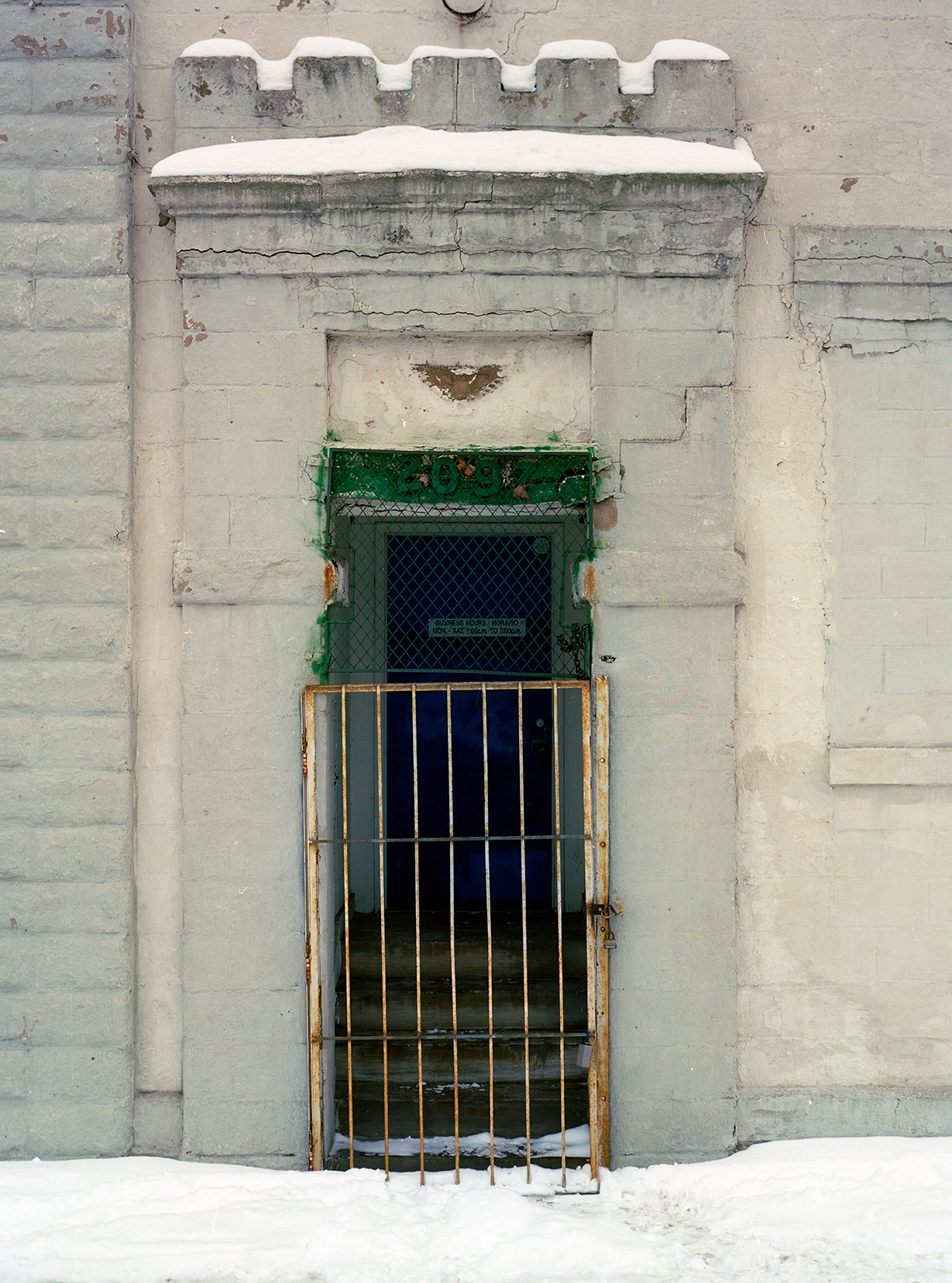
Truly a survivor it closed 100 years after it began. It's significant because the city was a major player in the tool and die industry, as well as fasteners, screws, nuts, and bolts.Entrance, Ferry Cap & Screw, 2006Ferry Cap & Screw started here in 1906.Entrance, Ferry Cap & Screw, 2014Ferry Cap & Screw closed in 2009. It was torn down in 2023.
Since the beginning of the rust belt in the late 1970s up until 2012 or so, it was long economic decline that resulted in the disappearance of industry and neighborhoods. Today, old neighborhoods disappear because that same economic decline has made redevelopment in a much better economy possible aby being profitable, if not productive.Oil Storage Tanks, Walton RunCircling more going south and then cutting Northwest we circled the old Ashland refinery. This section known as Walton Run had 30 refineries back when this city was the oil capital of the world. Eventually, John D. Rockefeller consolidated and bought the refineries and closed most of Walton run. This is a remnant still somewhat operational called the Garrick Oil Company.
In the shot taken in 2005, some of the tanks have been taken out others are just not being used and some that are being used to store cooking oil.
In the background on the horizon is the Cleveland called storage company which was demolished in 2012.Protestors in 2009 demonstrate against the closing of their church in Duck Island, St. WendelinIn a completely unexpected outcome, in a city that has lost so much, Saint Wendelin was reopened in 2010 under orders from the Pope.
Shooting the city since 1977 scenarios like this never happened.
In Duck Island, 99% gentrified, this is extremely rre.St. Wendelin AltarOne of the many ethnic groups of Duck Island were the Slovak and this was their church. It was built in 1906. In 2009 the diocese decided to close 25 ethnic churches, and this was one of them. Through years of suffering and protest, and finally a successful appeal to the pope himself, the church was reopened and is doing good.
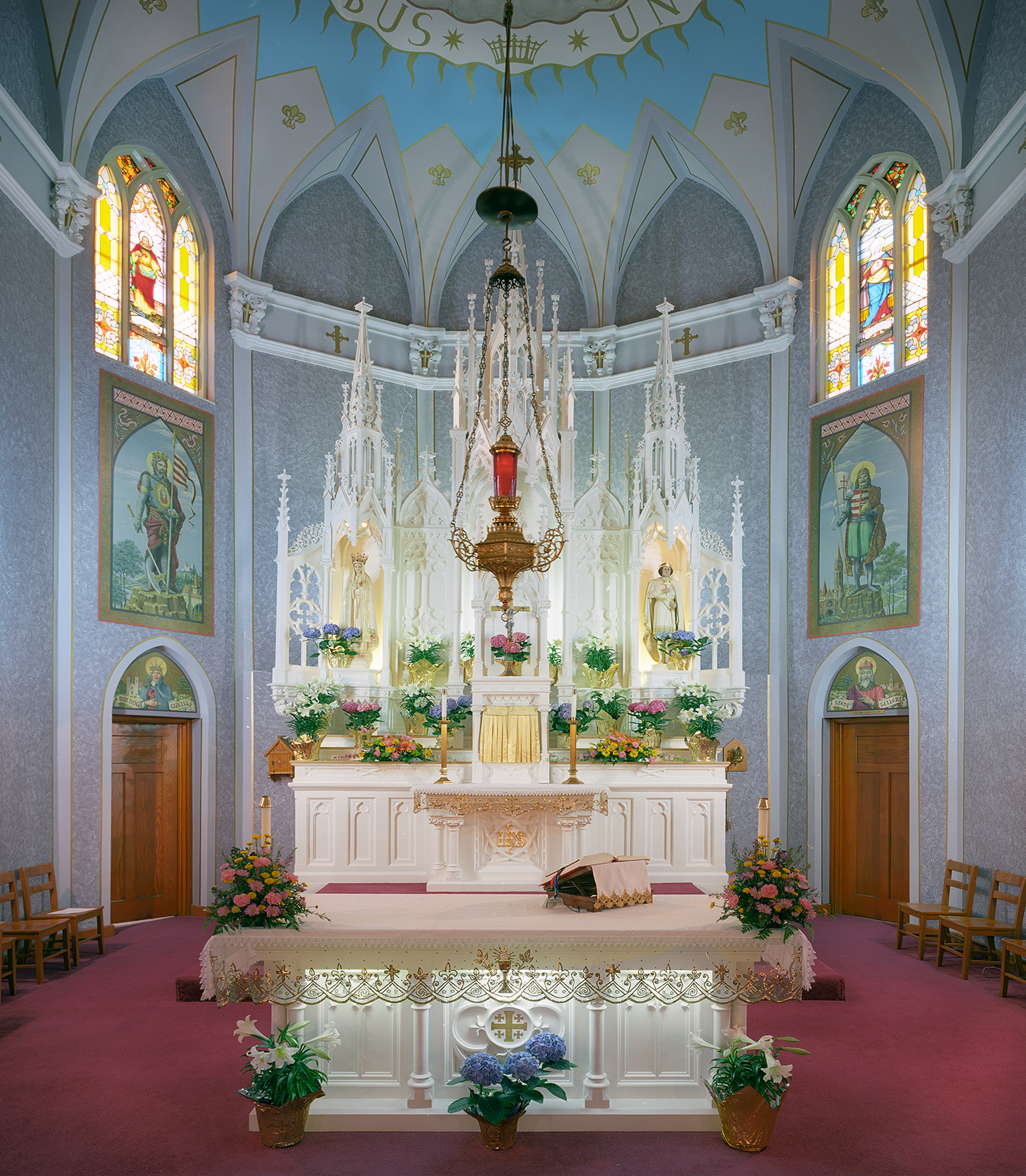
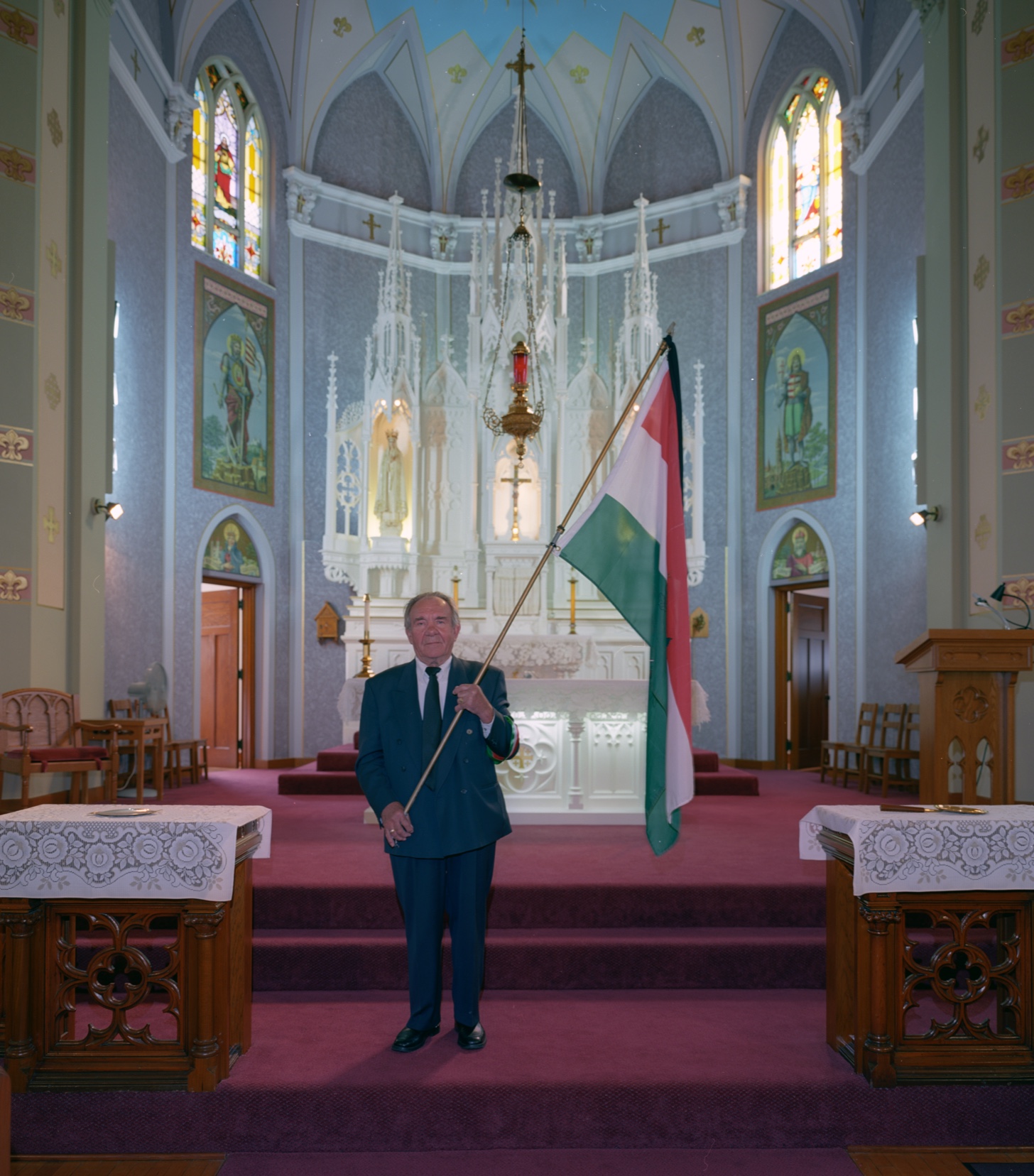
The same story at Saint Emieric on the other side of Lorain Avenue at the edge of duck Island next to the west side market. It too was reopened and continue as a Hungarian parish.Altar, St. Emeic Cathilic ChurchAlthough technically just outside of Duck Island and hemmed in by its own geography as a dead end street, next to the Terminal Rail Cut that sliced it off from greater Duck Island. is the Hungarian Parish, Saint Emeric.
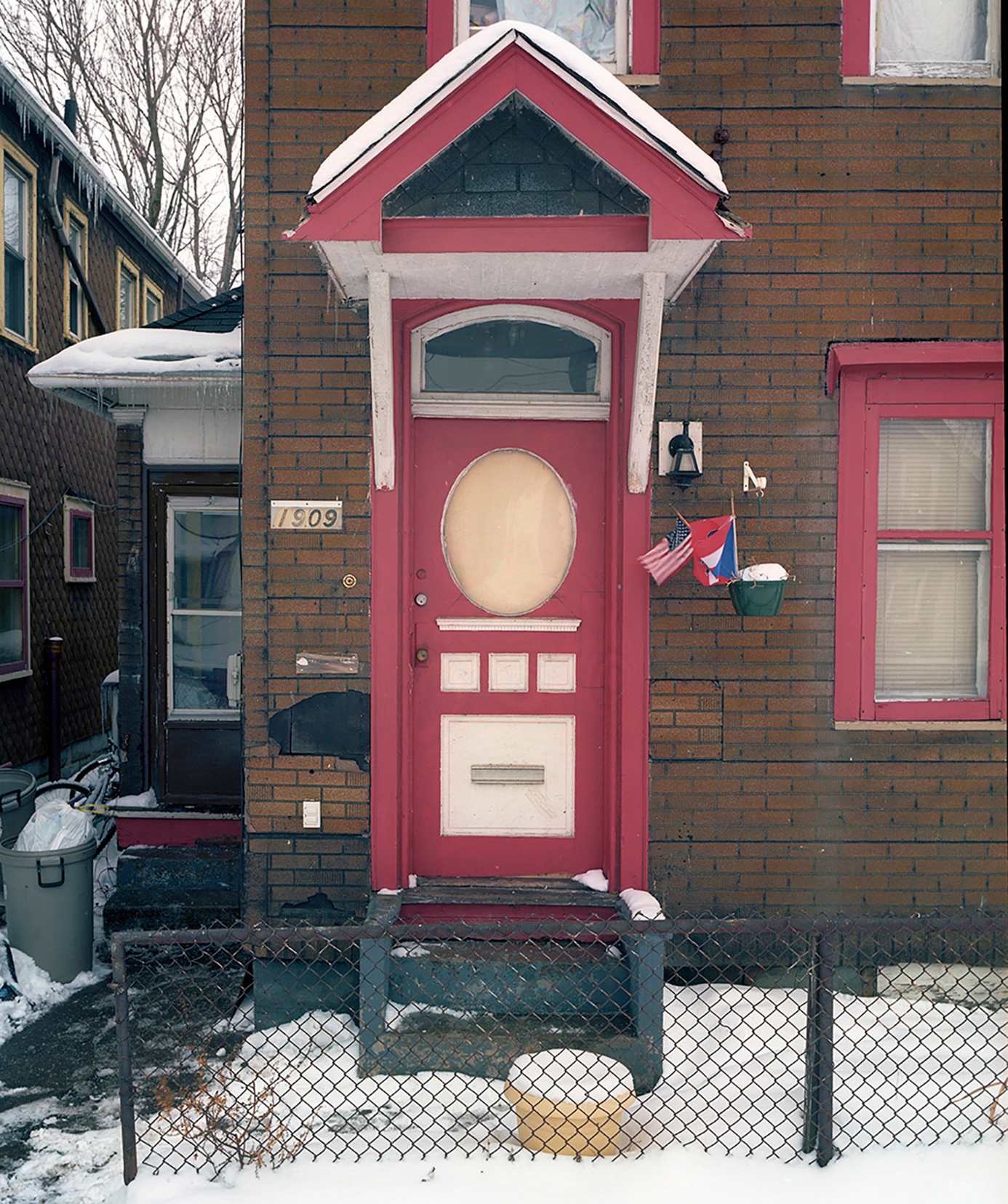
It to, suffered the same faith as the other ethnic churches that were closed in 2009, but, it too, was reopened, miraculously in 2012.Last Mass at St. Emeric, Hungarian ChurchDoor, Columbus RoadCircling north east on Columbus Road a door and building remains fully occupied today. The place has been spiffed up but is essentially the same which is rare on duck Island.Door, Freeman StreetThis was one of a row of asbestos covered homes that were built around 1900. When I was doing the shot for my ladder, one of the residents and owners check me out and asked me what I was doing. I've been through this so many times before I just told him the truth in an effort to preserve a picture of things that have a good chance of disappearing is my mission. They like most others didn't understand it at the time which was 2009.
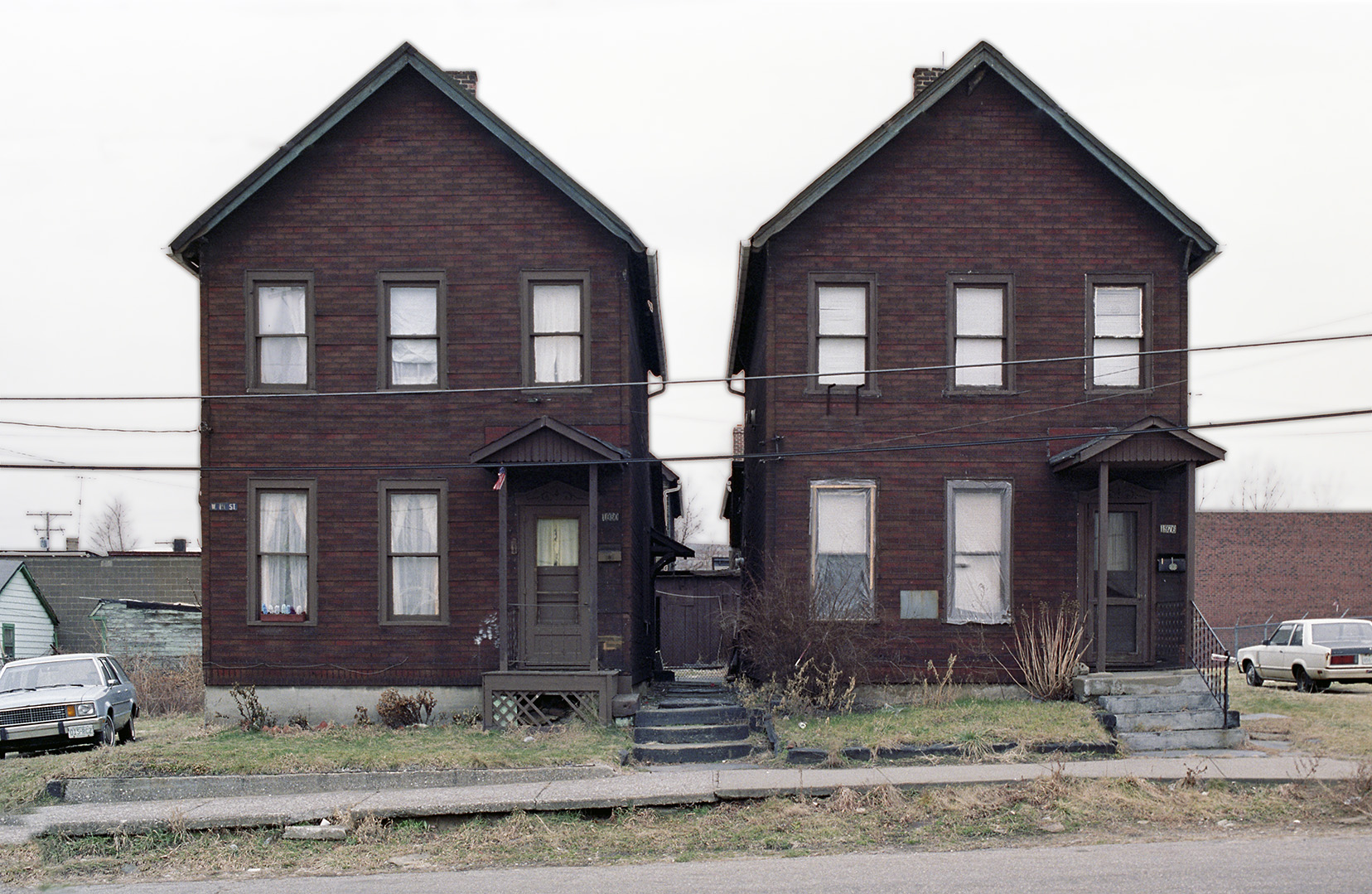
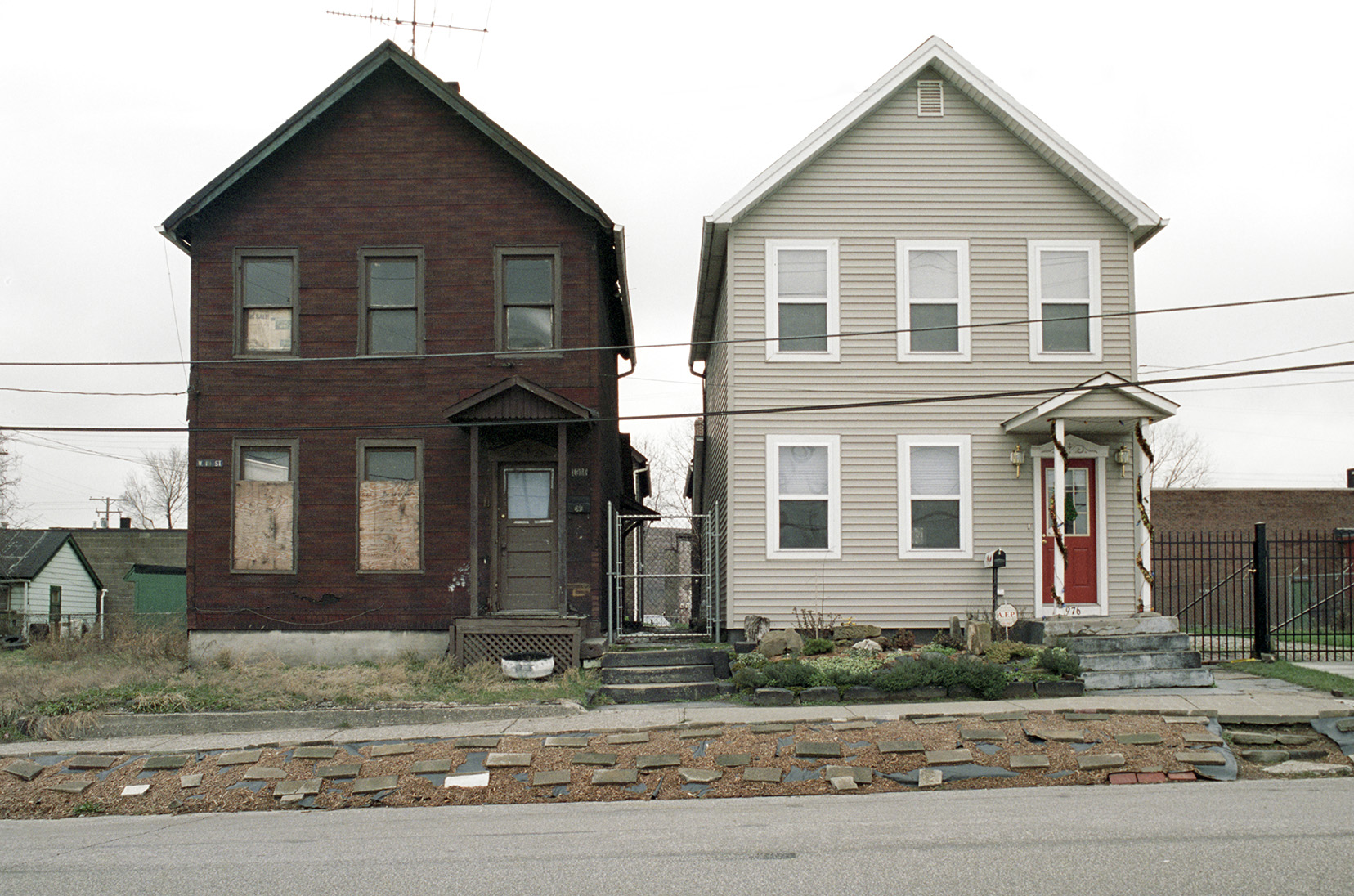
Today every home in the row is gone and it's been replaced by an extremely contemporary row of residences.Homes, West 19th Street, 1989The property the two homes used to sit on, has not been developed, but, when black over is a very big, very contemporary large apartment buildingHomes, West 19th Strett, 1991During the rustbelt times, it was rare to see a home saved like this, particularly a modest working class place. It didn't last long both homes no longer exist, and the whole area has been transformed into large apartment buildings and homes.
Two blocks east on the left-hand side of the street there are still four existing homes from 1900 surrounded by new condominiums.Garage, Eureka Street, 2009Duck Island had many of these small narrow, dead end streets. Eureka Street ran along the northside Bluff and looking at the quality of those houses. It's pretty clear. Nobody really cared about the view. Let the trees grow. We care about being close to church, the store and bar, as well as the 1 mile walk across the Lorain Ave., Bridge into downtown.
New Duck Island homes are probably the highest real estate prices in the city.New Home, West 17th StreetWest 17th Street in 2026. The two new homes replaced the ltwo ittle workers' homes that were once there. After 2006 the property taxes began to rise normally a small workers home would have a tax bill of around 800 bucks per year or less in the 1990s.
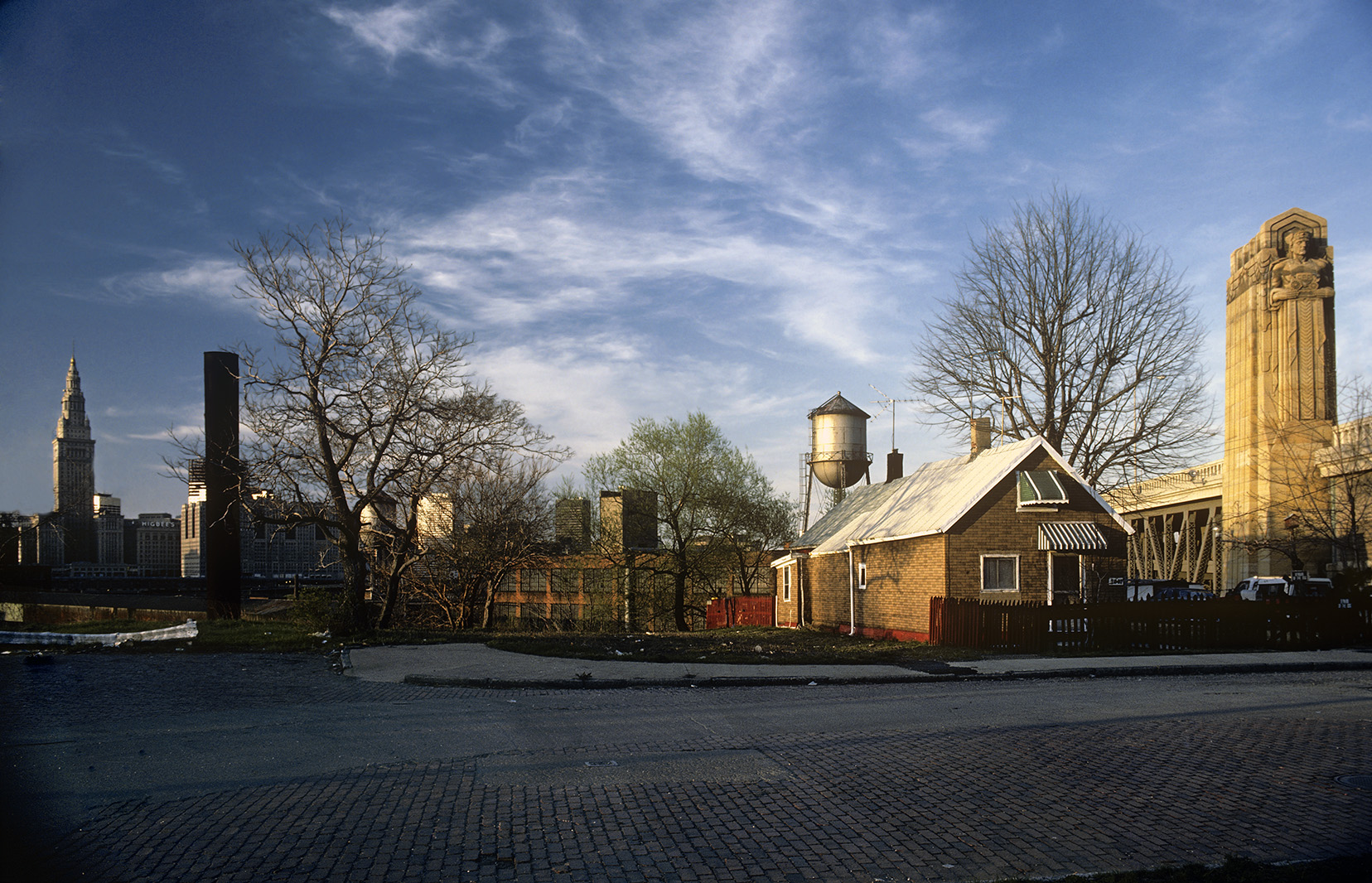
Unlike Baltimore and other cities, they did not grandfather the original residents still living there into the newer tax structure. Just gouge them, what the hell?West 17th Street, 1989The leaves of the trees in the forest city are gone. The downtown skyline and the very top of the Federal Steel and Wire plant, 11 years after it completely closed, in 1989.
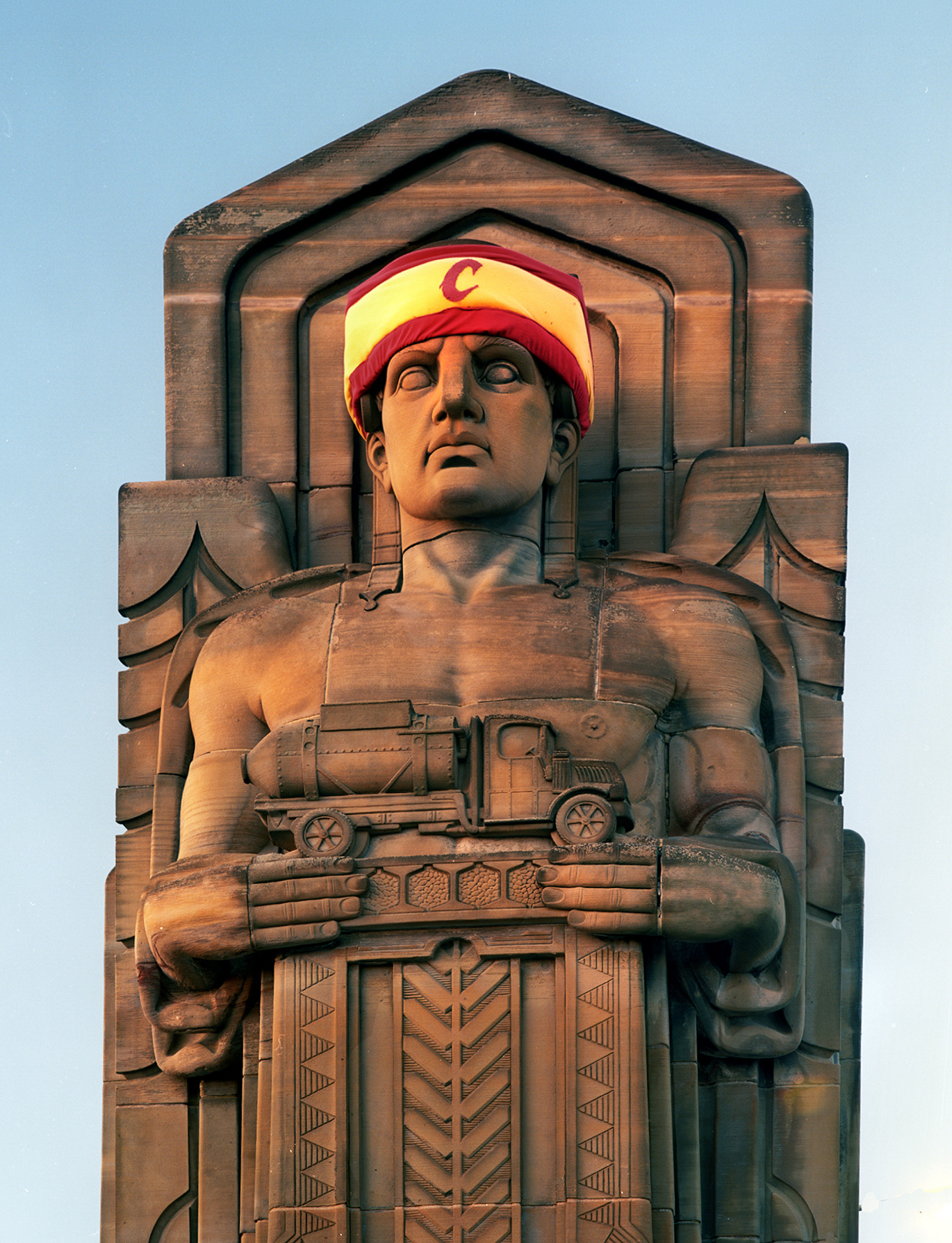
To the right is an asbestos shingle-clad workers cottage, and behind that, unseen, is another smaller red workers cottage.New Home, West 17th StreetWest 17th Street, taknen from the same spot as the previous picture, in 2026.Home & PylonThe red worker's cottage was removed in the 1990s, but the abestos shingled larger cottage lasted intio 2024.Pylon Head With Cavs CapIn a city, absolutely starved for a winner, like no other city, when the Cavs went to the playoffs in 2009 with LeBron James, and choked, it was truly a letdown for this place.
You can see the love for the Cavs who's arena was a half a mile from these guardians or less. Now, of course, the baseball team is named after these memorials to transportation so it sort of.owns them now. Particularly after LeBron went to Miami and made the famous line., I decided to take my talents to Miami. throwing the city of Cleveland into a fit a very big one that only relaxed completely when LeBron returned, and a championship was achieved, followed, of course, by ego clashes between LeBron and his point guard.Home, Freeman StreetFreeman Street in 2026 has three remaining original homes which will change.